
Introduction
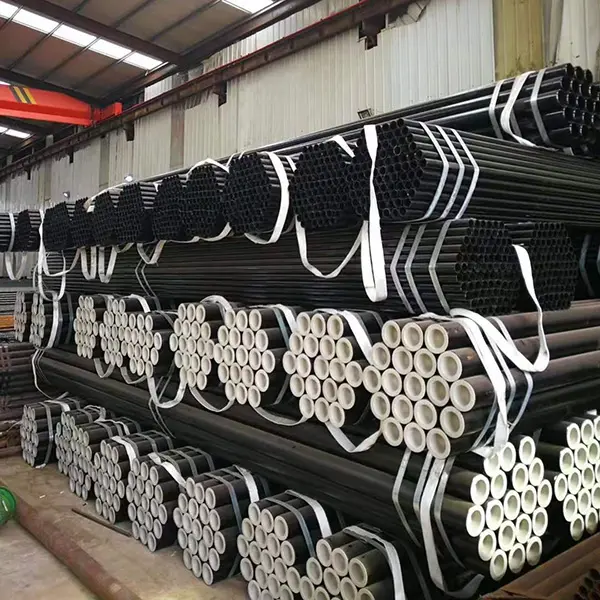
Seamless casing pipe is a hollow, cylindrical steel pipe manufactured without a welded seam. It occupies a critical position in the oil and gas, construction, and automotive industries, functioning primarily as a protective sheath for drilling operations, a structural component in buildings, and a precision component in vehicle manufacturing. Its core performance characteristics are defined by its high tensile strength, pressure resistance, corrosion resistance, and dimensional accuracy. Unlike welded pipes, the absence of a weld seam eliminates a potential point of failure, making it particularly suited for high-pressure, high-temperature, and critical safety applications. The selection of casing pipe depends heavily on the specific application and operational environment, considering factors such as depth, pressure, and corrosive elements present. The escalating demand for energy and infrastructure, coupled with increasingly challenging operating environments, necessitates advanced casing pipe solutions with improved material properties and manufacturing techniques.
Material Science & Manufacturing
Seamless casing pipe is commonly produced from carbon steel, alloy steel (including chromium-molybdenum alloys), and stainless steel, with the specific alloy selected based on the required mechanical properties and corrosion resistance. Carbon steel, such as API 5L grades (B, X42, X52, X60, X65, X70), offers a balance of strength and cost-effectiveness. Alloy steels enhance strength, toughness, and resistance to sour gas environments (H2S). Stainless steel provides superior corrosion resistance, vital in aggressive environments. The manufacturing process begins with solid steel billets. These billets are heated to a plastic state and then pierced using a rotary piercing process, commonly the Mannesmann process. This process involves forcing a mandrel through the heated billet while it rotates, creating the hollow tube. Key parameters in this stage include billet temperature, mandrel speed, and lubrication. Following piercing, the pipe undergoes several stages of hot rolling and cold drawing to achieve the desired dimensions, wall thickness, and surface finish. Precise control of these processes is critical to ensure uniform wall thickness, dimensional accuracy, and the absence of defects. Non-destructive testing (NDT), including ultrasonic testing, eddy current testing, and hydrostatic testing, is performed throughout the manufacturing process to verify structural integrity and adherence to specifications. Heat treatment processes like normalizing, quenching, and tempering are employed to refine the microstructure and enhance mechanical properties, influencing the yield strength, tensile strength, and impact toughness of the finished product.

Performance & Engineering
The performance of seamless casing pipe is fundamentally governed by its ability to withstand internal and external pressures, axial tensile and compressive loads, and corrosive environments. Force analysis considers hoop stress (resulting from internal pressure), longitudinal stress (from axial loads), and radial stress. The pipe’s wall thickness is a critical design parameter, directly influencing its burst pressure and collapse resistance. Environmental resistance is a crucial consideration, particularly in the oil and gas industry. Corrosion can manifest as general corrosion, pitting corrosion, crevice corrosion, or stress corrosion cracking (SCC). Materials are selected based on their compatibility with the fluids and gases they will encounter. Corrosion inhibitors and protective coatings (e.g., epoxy coatings, internal plastic coatings) are often employed to mitigate corrosion. Compliance requirements are dictated by industry standards and regulations, such as API 5CT (casing and tubing specifications), ISO 11960 (casing and tubing for oil and gas well applications), and relevant regional regulations. Functional implementation involves careful consideration of connection types (threaded, coupled, premium connections) and their impact on overall system integrity. Threaded connections require precise machining and tightening torque to ensure a leak-proof seal. Premium connections, featuring metal-to-metal seals, offer enhanced sealing performance and resistance to axial and torsional loads.
Technical Specifications
| Parameter | API 5L Grade B | API 5L Grade X52 | ASTM A36 Steel | 304/304L Stainless Steel |
|---|---|---|---|---|
| Yield Strength (MPa) | 240 | 345 | 250 | 205-275 |
| Tensile Strength (MPa) | 485 | 530 | 400 | 515-725 |
| Elongation (%) | 21 | 20 | 20 | 30-60 |
| Wall Thickness Range (mm) | 6.4 - 25.4 | 6.4 - 40.6 | 3.2 - 50.8 | 2.3 - 20 |
| Outside Diameter Range (mm) | 101.6 - 660.4 | 114.3 - 660.4 | 25.4 - 660.4 | 19.05 - 660.4 |
| Corrosion Rate (mm/year - in seawater) | 0.1 - 0.5 | 0.1 - 0.3 | 0.1 - 1.0 | <0.01 |
Failure Mode & Maintenance
Seamless casing pipe is susceptible to several failure modes, including fatigue cracking, corrosion-related failures (pitting, SCC), thread failure, and collapse. Fatigue cracking occurs under cyclic loading conditions, initiated by microscopic defects or stress concentrations. Corrosion failures, as previously mentioned, depend on the environment and material selection. Thread failure can result from improper installation, over-tightening, or corrosion in the threaded region. Collapse can occur due to excessive external pressure or ovality. Failure analysis typically involves microscopic examination of fracture surfaces, chemical analysis of the material, and non-destructive testing to identify the root cause. Maintenance practices include regular inspection for corrosion, deformation, and thread damage. Ultrasonic testing and electromagnetic crack detection are used for non-destructive evaluation. Protective coatings should be inspected and repaired as necessary. Thread compounds should be reapplied periodically to prevent galling and ensure proper sealing. In environments prone to corrosion, cathodic protection systems are often employed. Preventative maintenance, based on risk assessment and operational history, is crucial to extend the lifespan and ensure the reliable performance of seamless casing pipe.
Industry FAQ
Q: What is the primary advantage of seamless casing pipe over welded casing pipe in high-pressure applications?
A: The absence of a weld seam in seamless pipe eliminates a potential point of failure and stress concentration, providing superior pressure resistance and structural integrity, particularly critical in high-pressure environments like deep oil and gas wells.
Q: How does the chemical composition of alloy steel casing pipe differ from carbon steel, and what performance benefits does this provide?
A: Alloy steel casing pipe typically contains elements like chromium, molybdenum, and nickel. These additions enhance strength, toughness, and resistance to corrosion, particularly in sour gas environments containing hydrogen sulfide (H2S). This results in extended service life and reduced risk of failure in aggressive conditions.
Q: What non-destructive testing (NDT) methods are commonly used to assess the integrity of seamless casing pipe during and after manufacturing?
A: Common NDT methods include Ultrasonic Testing (UT) for detecting internal flaws, Eddy Current Testing (ET) for surface defect detection, Magnetic Particle Inspection (MPI) for detecting surface and near-surface cracks, Radiographic Testing (RT) for volumetric inspection, and Hydrostatic Testing to verify pressure integrity.
Q: What is the role of premium connections in enhancing the performance of seamless casing pipe, and how do they differ from standard threaded connections?
A: Premium connections employ metal-to-metal seals and advanced thread designs to provide superior sealing performance, increased axial and torsional load capacity, and improved resistance to buckling and fatigue failure. They are more robust than standard threaded connections and are often used in demanding applications like deepwater drilling.
Q: What are the key considerations when selecting a corrosion-resistant coating for seamless casing pipe operating in a seawater environment?
A: Considerations include coating adhesion, resistance to abrasion and impact, compatibility with the steel substrate, long-term durability in seawater, and resistance to marine organisms. Epoxy coatings and internal plastic coatings are commonly used, with appropriate surface preparation being crucial for optimal performance.
Conclusion
Seamless casing pipe represents a critical component in numerous industries, demanding careful material selection, precise manufacturing processes, and rigorous quality control. Its inherent advantages—superior strength, pressure resistance, and reliability—stem from the absence of a weld seam, making it the preferred choice for demanding applications. The selection of the appropriate grade of steel, combined with diligent inspection and preventative maintenance, are paramount to ensuring long-term performance and mitigating potential failure modes.
Future trends in seamless casing pipe technology focus on developing advanced alloys with enhanced corrosion resistance, improving manufacturing techniques for tighter dimensional tolerances and reduced defects, and implementing smart monitoring systems for real-time performance assessment. These innovations will further enhance the safety, reliability, and cost-effectiveness of casing pipe solutions in increasingly challenging operating environments.
