
Introduction
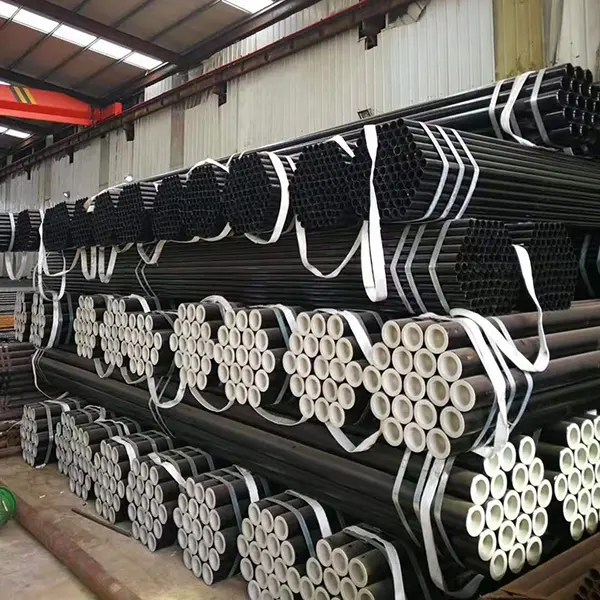
Seamless gas pipe, a crucial component in natural gas transmission and distribution networks, is manufactured without a welded seam. This distinguishes it from welded pipe and imparts superior mechanical properties and safety characteristics. Within the broader pipeline industry, seamless pipe occupies a niche demanding higher material integrity, particularly in high-pressure and critical applications. Core performance characteristics include high tensile strength, resistance to corrosion, and the ability to withstand cyclical pressure fluctuations. The selection of appropriate seamless gas pipe is vital for ensuring safe and reliable gas delivery, minimizing leakage risk, and adhering to stringent regulatory compliance standards. Its technical positioning arises from the limitations of welded pipe in extreme conditions or demanding service, necessitating a production method that eliminates potential weld-related failure points.
Material Science & Manufacturing
The predominant material for seamless gas pipe is carbon steel, specifically grades like API 5L X42, X52, X60, X65, and X70. These grades are selected based on yield strength requirements, with higher numbers indicating greater strength. The key physical properties are tensile strength (typically 42,000 - 70,000 psi), yield strength (varying with grade), elongation, and impact toughness. Chemical composition is tightly controlled, with specifications for carbon, manganese, silicon, phosphorus, sulfur, and trace elements. The manufacturing process begins with high-quality steel billets. These billets are heated and pierced to create a hollow tube, employing processes like rotary piercing or mandrel piercing. The hot, hollow billet is then expanded to the desired diameter and wall thickness through processes like stretching and rolling. Critical parameter control during manufacturing focuses on temperature uniformity, reduction ratios during forming, and cooling rates. These parameters influence the grain structure and mechanical properties. Non-destructive testing (NDT), including ultrasonic testing, radiographic testing, and hydrostatic testing, is employed to verify the integrity of the finished pipe. Hydrogen embrittlement is a key concern during the manufacturing and downstream applications, requiring careful control of hydrogen content in the steel and the surrounding environment.
Performance & Engineering
Performance of seamless gas pipe is governed by principles of pressure vessel design and stress analysis. The Barlow’s formula (σ = PD/2t, where σ is hoop stress, P is internal pressure, D is pipe diameter, and t is wall thickness) is fundamental in determining the required wall thickness to withstand a given operating pressure. Cyclic fatigue is a major consideration; gas pipelines are subjected to pressure fluctuations due to variations in demand and temperature. Finite element analysis (FEA) is frequently used to model stress concentrations around geometric discontinuities or weld connections (even though seamless pipe itself has no weld). Environmental resistance is critical, necessitating consideration of corrosion mechanisms. Internal corrosion can occur due to the presence of water and corrosive gases like hydrogen sulfide (H2S) and carbon dioxide (CO2). External corrosion can arise from soil conditions and atmospheric exposure. Protective coatings (e.g., epoxy, polyethylene) and cathodic protection are employed to mitigate corrosion. Compliance requirements are dictated by regulations from bodies like the Department of Transportation (DOT) in the US and equivalent organizations internationally. These regulations specify material requirements, manufacturing standards, inspection procedures, and operating guidelines. The design must account for potential ground movement and seismic activity.
Technical Specifications
| Parameter | API 5L X42 | API 5L X60 | API 5L X70 | ASTM A106 Grade B |
|---|---|---|---|---|
| Yield Strength (psi) | 42,000 | 60,000 | 70,000 | 36,000 |
| Tensile Strength (psi) | 65,000 | 75,000 | 80,000 | 65,000 |
| Elongation (%) | 21 | 20 | 18 | 23 |
| Charpy V-Notch Impact Energy (ft-lbs @ -20°F) | 40 | 40 | 40 | 40 |
| Maximum Wall Thickness (inches) | 0.500 | 0.500 | 0.500 | Variable |
| Outside Diameter Range (inches) | 6 – 48 | 6 – 48 | 6 – 48 | 1/2 – 8 |
Failure Mode & Maintenance
Common failure modes in seamless gas pipe include stress corrosion cracking (SCC), particularly in environments containing hydrogen sulfide, fatigue cracking due to cyclical pressure, and localized corrosion (pitting, crevice corrosion). Third-party damage from excavation activities is also a significant contributor to failures. Failure analysis often involves fractographic examination to identify the crack initiation point and propagation mechanism. Hydrogen embrittlement can lead to brittle fracture, especially in high-strength steels. Maintenance strategies include regular inspections using in-line inspection (ILI) tools – “smart pigs” – that can detect corrosion, cracks, and other defects. Cathodic protection systems require periodic monitoring and maintenance to ensure their effectiveness. External coatings should be inspected for damage and repaired as needed. Hydrostatic testing is used to verify the integrity of pipelines after repairs or modifications. Preventative maintenance programs focusing on corrosion control and leak detection are crucial. Proper material selection, coupled with adherence to industry best practices, is paramount in extending the service life and ensuring the safety of seamless gas pipelines. Repair welding, while sometimes necessary, should be performed by qualified personnel following established welding procedures to maintain the structural integrity of the pipe.
Industry FAQ
Q: What are the key differences between API 5L X60 and X70 seamless pipe, and how does the higher strength of X70 impact design considerations?
A: API 5L X70 offers a significantly higher yield strength (70,000 psi vs. 60,000 psi for X60), allowing for thinner wall thicknesses for the same operating pressure. However, X70 is more susceptible to hydrogen embrittlement and requires stricter control of manufacturing processes and operating conditions. Design considerations must account for the increased brittleness and potential for stress corrosion cracking, necessitating more robust corrosion protection systems and careful weld procedure qualification.
Q: How does the manufacturing process of seamless pipe influence its susceptibility to defects compared to welded pipe?
A: Seamless pipe eliminates the weld seam, a common location for defects in welded pipe. However, seamless pipe can be susceptible to defects like laps, seams (resulting from the piercing process), and inclusions. While the type of defect differs, both manufacturing methods require rigorous quality control and NDT to ensure integrity.
Q: What are the typical corrosion mitigation strategies employed for seamless gas pipe operating in sour gas environments (containing H2S)?
A: Sour gas environments demand specialized corrosion mitigation strategies. These include the use of hydrogen sulfide resistant (H2S-resistant) steel alloys, internal coatings (e.g., polymeric liners), chemical inhibition (injection of corrosion inhibitors), and tight control of water content in the gas stream. Regular monitoring of corrosion rates is also critical.
Q: What is the role of hydrostatic testing in ensuring the integrity of newly installed or repaired seamless gas pipelines?
A: Hydrostatic testing involves pressurizing the pipeline to a level significantly higher than its maximum operating pressure. This test verifies the structural integrity of the pipe and identifies any leaks or weak points before the pipeline is placed into service. It is a crucial step in validating the quality of the installation or repair.
Q: How do international standards like EN 10208 impact the selection and specification of seamless gas pipe for projects outside of North America?
A: EN 10208 is the European standard for seamless steel tubes for pipeline transportation of fluids. It provides specifications for material properties, manufacturing processes, and testing requirements. Projects outside North America often require compliance with EN 10208 or other relevant international standards (e.g., ISO 3183) depending on the local regulations and project requirements.
Conclusion
Seamless gas pipe remains a critical infrastructure component, offering inherent advantages in high-pressure and safety-critical applications due to the absence of a weld seam. The selection process demands careful consideration of material grade, operating conditions, and potential failure modes. Rigorous adherence to international standards, coupled with robust inspection and maintenance programs, is essential for ensuring the long-term reliability and safety of gas transmission and distribution networks.
Future trends in seamless pipe technology are focused on developing higher-strength, more corrosion-resistant alloys and employing advanced manufacturing techniques to reduce costs and improve quality. Furthermore, the integration of smart monitoring systems and predictive maintenance strategies will play an increasingly important role in extending the service life and optimizing the performance of seamless gas pipelines.
