
Introduction
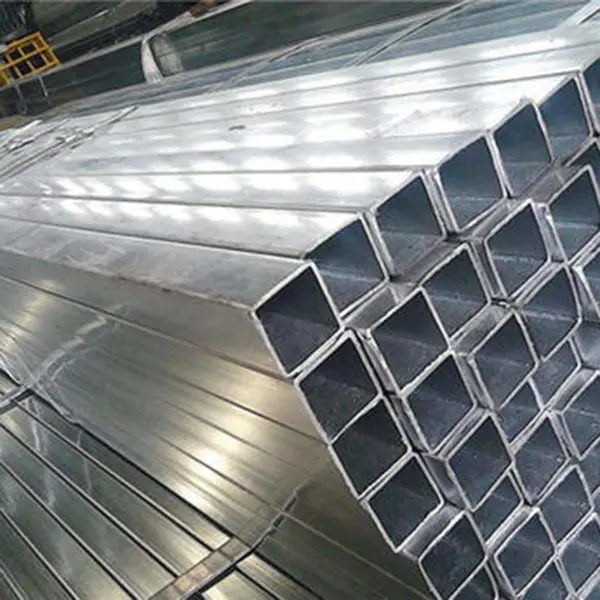
Seamless metric tubing refers to precision-engineered hollow sections manufactured without a welded seam, distinguished by consistent dimensions and superior mechanical properties. Positioned centrally within fluid handling, instrumentation, and structural applications across industries including automotive, aerospace, oil and gas, and pharmaceutical, it serves as a critical component in systems requiring high pressure containment, precise fluid transfer, and structural integrity. Core performance characteristics include dimensional accuracy (outer diameter, wall thickness), burst pressure, yield strength, corrosion resistance, and surface finish. Unlike welded tubing, the seamless construction eliminates potential weld defects – a key differentiator driving adoption in high-reliability scenarios. The prevalence of metric dimensions facilitates integration within globally standardized engineering designs and manufacturing processes, contrasting with imperial-sized tubing commonly found in North American applications.
Material Science & Manufacturing
The primary raw material for seamless metric tubing is carbon steel, though alloy steels (stainless steel, chromium-molybdenum steel), aluminum alloys, titanium alloys, and nickel alloys are also frequently utilized depending on application demands. Carbon steel typically conforms to standards such as EN 10210 or ASTM A53, dictating chemical composition and mechanical property requirements. Manufacturing commences with billet preparation – a solid cylindrical or square block of metal. This billet undergoes hot working, specifically piercing, using a rotary piercer to create a hollow 'shell'. This piercing process requires precise control of temperature (typically 1200-1300°C for steel) and reduction ratio to prevent cracking and ensure uniform wall thickness. Following piercing, the shell is elongated through multiple stages of mandrel milling and drawing. Mandrel milling uses an internal mandrel to refine the inner diameter and wall thickness, while drawing reduces the outer diameter and further improves dimensional accuracy. Cold drawing, performed at room temperature, enhances surface finish and mechanical strength through work hardening. Critical parameters during manufacturing include lubrication (to minimize friction and prevent galling), die geometry (influencing material flow), and reduction schedules (controlling deformation). Non-destructive testing (NDT), including ultrasonic testing and eddy current testing, are performed throughout the process to identify and reject flawed tubing. Heat treatment, such as annealing or normalizing, is often applied to relieve residual stresses induced by cold working and to optimize mechanical properties. Post-treatment processes include pickling (to remove surface scale) and passivation (to enhance corrosion resistance).
Performance & Engineering
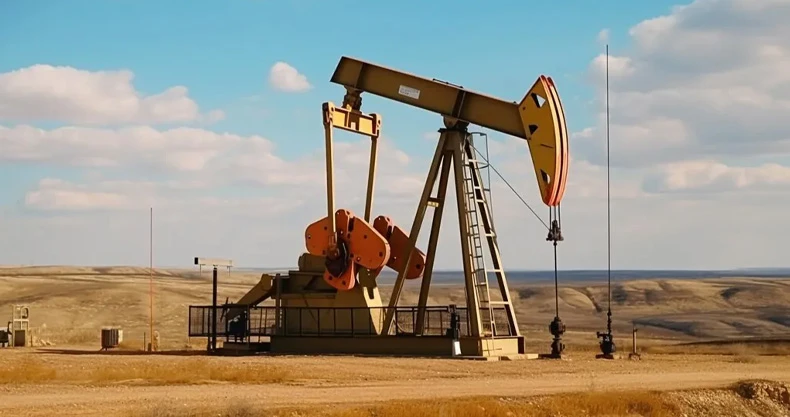
Performance of seamless metric tubing is fundamentally governed by its resistance to internal pressure, external loads, and environmental factors. Burst pressure, calculated using Barlow’s formula (P = 2St/D, where P is pressure, S is tensile strength, t is wall thickness, and D is outer diameter), is a primary design consideration. However, this formula provides a theoretical maximum; safety factors are applied based on application criticality and regulatory requirements. Stress analysis, including finite element analysis (FEA), is routinely used to model complex loading scenarios – bending moments, torsional stresses, and combined loads – to ensure structural integrity. Fatigue life, the number of cycles a tube can withstand under cyclic loading, is critical in applications subject to vibration or pulsating pressures. Environmental resistance is dictated by the material composition. Stainless steels (e.g., 304, 316) provide excellent corrosion resistance in many environments, but may be susceptible to pitting corrosion in chloride-rich environments. Carbon steel tubing requires protective coatings (e.g., galvanizing, epoxy coating) or internal linings to prevent corrosion. Compliance requirements vary by industry. Aerospace applications demand adherence to AMS standards (Aerospace Material Specifications), while oil and gas applications require compliance with API 5L or similar standards. Dimensional tolerances, specified in standards like ISO 2936, are crucial for ensuring proper fit and function within assembled systems. The tubing’s surface roughness, impacting fluid flow characteristics, is also a key engineering parameter.
Technical Specifications
| Material Grade | Outer Diameter (mm) | Wall Thickness (mm) | Minimum Yield Strength (MPa) |
|---|---|---|---|
| EN 10210-S235JR | 10 | 2.0 | 235 |
| ASTM A36 | 12.7 | 2.5 | 250 |
| EN 10210-S355J2H | 15 | 3.0 | 355 |
| AISI 304/304L | 20 | 2.0 | 205 |
| EN 10210-S420J2H | 25 | 3.0 | 420 |
| ASTM A53 Grade B | 30 | 2.5 | 36 |
Failure Mode & Maintenance
Failure modes in seamless metric tubing are diverse, encompassing corrosion, fatigue cracking, erosion, and mechanical damage. Corrosion, as previously discussed, can be localized (pitting, crevice corrosion) or generalized, leading to wall thinning and eventual failure. Fatigue cracking initiates from stress concentrations – scratches, dents, or inclusions – and propagates under cyclic loading. Erosion, caused by abrasive particles in fluid streams, gradually removes material from the inner surface. Mechanical damage, including dents, crushing, and bending beyond the yield point, can compromise structural integrity. Failure analysis often involves microscopic examination of fracture surfaces to determine the root cause. Preventative maintenance includes regular inspections for corrosion, cracks, and dents. Non-destructive testing (NDT) methods, such as ultrasonic testing and radiographic testing, are used to detect internal flaws. Internal cleaning to remove debris and scale prevents erosion and promotes fluid flow. Protective coatings and linings mitigate corrosion. For systems operating at elevated temperatures, periodic stress relief annealing may be necessary to prevent creep rupture. Proper storage conditions – preventing exposure to moisture and corrosive environments – are crucial for minimizing degradation. When replacing damaged tubing, ensure the replacement material meets or exceeds the original specifications. Documentation of inspection and maintenance procedures is vital for tracking component history and identifying potential issues.
Industry FAQ
Q: What are the primary advantages of seamless tubing over welded tubing for high-pressure applications?
A: Seamless tubing, by virtue of its construction, eliminates the weld seam – a potential point of failure in welded tubing. This results in higher burst pressures, improved fatigue resistance, and greater uniformity in mechanical properties, making it ideal for critical high-pressure applications such as hydraulic systems and oil and gas pipelines.
Q: How does wall thickness affect the performance of metric tubing?
A: Wall thickness is a crucial parameter dictating a tube’s ability to withstand internal pressure and external loads. Increasing wall thickness directly increases burst pressure and stiffness, but also increases weight and cost. The optimal wall thickness is determined by a thorough engineering analysis considering the operating conditions and safety factors.
Q: What materials are best suited for tubing used in corrosive environments?
A: Stainless steels, particularly 316 and 316L, offer excellent corrosion resistance in many environments due to their high chromium and molybdenum content. Nickel alloys, such as Inconel and Hastelloy, provide superior resistance to highly corrosive media, but are significantly more expensive. Appropriate material selection depends on the specific corrosive agents present and the operating temperature.
Q: What are the key considerations when specifying dimensional tolerances for metric tubing?
A: Dimensional tolerances must be specified based on the intended application. Tight tolerances are required for applications where precise fit and alignment are critical, such as instrumentation tubing. Looser tolerances are acceptable for less demanding applications, such as structural supports. Standards like ISO 2936 provide guidance on appropriate tolerance ranges.
Q: How important is non-destructive testing (NDT) in ensuring the quality of seamless metric tubing?
A: NDT is paramount in identifying internal flaws – cracks, inclusions, voids – that are not visible to the naked eye. Ultrasonic testing and eddy current testing are commonly used to detect these defects. Implementing a rigorous NDT program ensures the structural integrity and reliability of the tubing, minimizing the risk of premature failure.
Conclusion
Seamless metric tubing represents a critical engineering component, offering superior performance characteristics compared to welded alternatives in demanding applications. Its manufacturing process, reliant on precise control of hot and cold working parameters, dictates its inherent mechanical properties and dimensional accuracy. Careful material selection, informed by environmental considerations and regulatory requirements, is essential for ensuring long-term reliability.
Future developments in seamless tubing technology are likely to focus on advanced materials (e.g., high-entropy alloys, shape memory alloys) and innovative manufacturing processes (e.g., additive manufacturing) to further enhance performance and reduce costs. Continued emphasis on non-destructive testing and rigorous quality control will remain vital for maintaining the integrity and safety of these critical components across a wide range of industries.
