
Introduction
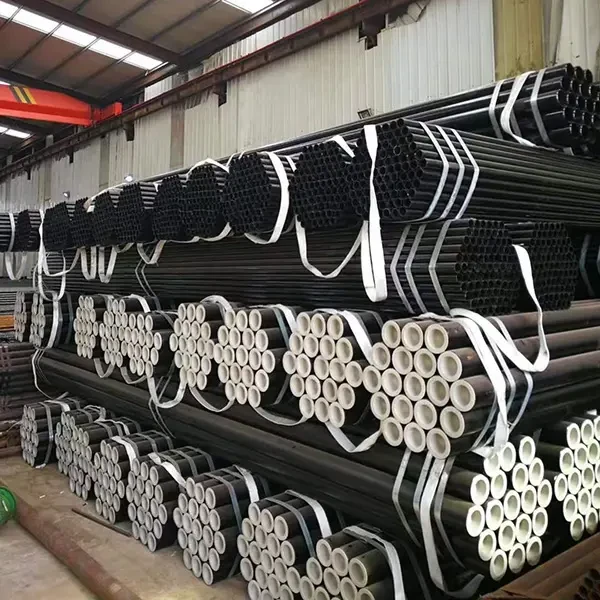
Seamless steel pipe, a fundamental component in numerous industrial applications, is characterized by its construction without a welded seam. This differs significantly from welded steel pipe, imparting superior strength and resistance to pressure. The pricing of seamless steel pipe is a complex function of raw material costs (primarily iron ore, alloying elements), manufacturing processes, pipe dimensions (diameter, wall thickness, length), grade of steel, order quantity, and prevailing market conditions. Understanding these factors is crucial for informed procurement decisions. Within the industry chain, seamless pipe falls between steelmaking and end-user applications like oil & gas transmission, power generation, and structural engineering. Core performance characteristics include high tensile strength, pressure containment capability, corrosion resistance (depending on alloy composition), and dimensional accuracy. Fluctuations in price can significantly impact project budgets, making detailed analysis of cost drivers essential.
Material Science & Manufacturing
The dominant raw material for seamless steel pipe is carbon steel, although alloy steels (containing elements like chromium, molybdenum, nickel) are frequently employed to enhance specific properties. The chemical composition directly influences the mechanical properties, weldability, and corrosion resistance of the final product. Common steel grades include ASTM A53, A106 (carbon steel), and ASTM A335 (low alloy steel). Manufacturing begins with billet preparation – precisely sized rounds of steel are heated and pierced using a rotary piercing process. This process employs a mandrel and rotating rolls to create a hollow tube. Subsequent hot rolling expands the diameter and reduces the wall thickness to achieve the desired dimensions. Key parameters during hot rolling include temperature control (to prevent grain growth and maintain mechanical properties), reduction rate (affecting material flow and dimensional accuracy), and mandrel speed (influencing the internal surface finish). Cold drawing may follow hot rolling to achieve tighter tolerances and improved surface finish. Non-destructive testing (NDT), including ultrasonic testing and eddy current testing, is performed throughout the process to detect defects. Heat treatment (normalizing, quenching, tempering) is often applied to optimize mechanical properties, such as yield strength and ductility. Chemical compatibility is vital; choosing the correct steel grade for the intended service environment prevents corrosion and material degradation.
Performance & Engineering
The performance of seamless steel pipe is critically evaluated through rigorous engineering analysis. Force analysis, particularly pressure containment calculations, is paramount, especially for high-pressure applications. This involves determining the hoop stress (stress acting circumferentially around the pipe) and longitudinal stress (stress acting along the pipe length) using equations like the Barlow formula. Environmental resistance is a key consideration; exposure to corrosive environments (saline atmospheres, acidic solutions) necessitates the selection of corrosion-resistant alloys or the application of protective coatings (epoxy, polyethylene). Compliance requirements vary depending on the application and geographic location. For oil & gas pipelines, API 5L is the dominant specification, dictating steel grade, manufacturing processes, and testing procedures. For high-temperature, high-pressure power generation, ASME Boiler and Pressure Vessel Code Section I provides stringent guidelines. The impact of temperature on mechanical properties is significant; elevated temperatures generally reduce yield strength and tensile strength. Fatigue analysis is essential for applications involving cyclic loading, predicting the lifespan of the pipe under repeated stress. Buckling analysis is critical for long, unsupported spans of pipe, ensuring structural stability.
Technical Specifications
| Steel Grade | Outer Diameter (mm) | Wall Thickness (mm) | Yield Strength (MPa) |
|---|---|---|---|
| ASTM A53 Grade B | 219.1 | 6.4 | 250 |
| ASTM A106 Grade B | 323.9 | 8.0 | 275 |
| ASTM A335 P11 | 273.1 | 10.3 | 290 |
| ASTM A53 Grade A | 114.3 | 4.5 | 240 |
| API 5L X42 | 406.4 | 9.5 | 345 |
| API 5L X52 | 508.0 | 12.7 | 415 |
Failure Mode & Maintenance
Seamless steel pipe, while robust, is susceptible to various failure modes. Corrosion is a primary concern, leading to material loss and reduced wall thickness. Types of corrosion include general corrosion, pitting corrosion, and stress corrosion cracking. Fatigue cracking can occur under cyclic loading, initiating at stress concentrations (e.g., weld defects, dents). Erosion corrosion occurs when abrasive particles impact the pipe surface, removing protective layers. Hydrogen embrittlement can occur in high-strength steels exposed to hydrogen sulfide, reducing ductility and causing cracking. Defects introduced during manufacturing (e.g., inclusions, porosity) can serve as crack initiation sites. Maintenance strategies include regular inspection (visual inspection, ultrasonic testing, radiographic testing), application of protective coatings, cathodic protection (to mitigate corrosion), and pipeline pigging (to remove debris and corrosion products). Preventive maintenance, based on risk assessment and operating conditions, is crucial for extending the lifespan and ensuring the safe operation of the pipeline. Proper welding procedures and qualified welders are essential to prevent weld-related failures. Regular monitoring of internal pressure and flow rate can help detect leaks and anomalies.
Industry FAQ
Q: What is the primary driver of seamless steel pipe price fluctuations?
A: The dominant driver is the price of raw materials, particularly iron ore and alloying elements like molybdenum and nickel. Changes in global steel demand, energy costs, and transportation rates also significantly influence pricing. Geopolitical events impacting supply chains can cause rapid price swings.
Q: How does the manufacturing process impact the cost of seamless pipe compared to welded pipe?
A: Seamless pipe production is generally more expensive than welded pipe due to the more complex manufacturing process (rotary piercing, hot rolling). It requires greater precision and tighter process control, resulting in higher production costs. However, the superior strength and reliability of seamless pipe often justify the higher price in critical applications.
Q: What are the key differences between ASTM A53 and ASTM A106 seamless steel pipe?
A: ASTM A53 is typically produced using killed steel, suitable for general-purpose applications. ASTM A106 uses killed steel with more stringent compositional requirements, providing improved notch toughness and weldability, making it better suited for high-temperature, high-pressure services.
Q: How do corrosion-resistant alloys affect the price of seamless steel pipe?
A: Corrosion-resistant alloys (e.g., stainless steel, chrome-moly alloys) are significantly more expensive than carbon steel due to the higher cost of alloying elements and the more complex manufacturing processes required. The extent of the price increase depends on the specific alloy composition and the level of corrosion resistance needed.
Q: What non-destructive testing (NDT) methods are commonly used to ensure the quality of seamless steel pipe?
A: Common NDT methods include ultrasonic testing (UT) to detect internal flaws, eddy current testing (ET) to detect surface defects, radiographic testing (RT) using X-rays or gamma rays to visualize internal structure, and hydrostatic testing to verify pressure containment capability. These tests are critical for ensuring the integrity of the pipe.
Conclusion
The pricing of seamless steel pipe is a multifaceted issue driven by material costs, manufacturing complexity, and performance requirements. Understanding the underlying material science, engineering principles, and industry standards is paramount for procuring the appropriate pipe for specific applications. Selecting the correct steel grade and ensuring adherence to relevant specifications (API 5L, ASME, ASTM) are critical for maintaining structural integrity and operational safety.
Future trends in seamless steel pipe technology are focused on developing higher-strength, more corrosion-resistant alloys and optimizing manufacturing processes to reduce costs and environmental impact. The increasing demand for energy-efficient pipelines and the growing adoption of advanced inspection techniques will further shape the industry landscape, requiring continuous innovation and a commitment to quality control.
