
Introduction
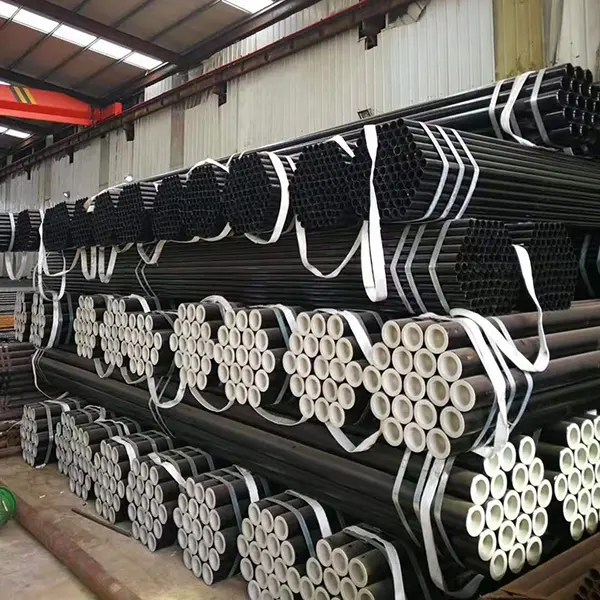
Seamless welded pipe represents a critical component in numerous industrial applications, differing from standard welded pipe in its manufacturing process and resultant mechanical properties. Often produced by electric resistance welding (ERW) or high-frequency induction welding (HFIW) followed by subsequent heat treatment, seamless welded pipe offers a combination of strength, durability, and cost-effectiveness. Its position in the industry chain lies between raw steel production (typically carbon, alloy, or stainless steel billets) and final application in sectors like oil & gas transmission, structural engineering, automotive manufacturing, and power generation. Core performance characteristics center around its ability to withstand high pressures, temperatures, and corrosive environments, dictated by factors such as wall thickness, material composition, and the quality of the welding and heat treatment processes. The primary advantage lies in its improved structural integrity compared to traditional welded pipe, minimizing the risk of longitudinal seam failure.
Material Science & Manufacturing
The manufacturing of seamless welded pipe commences with the selection of raw materials, predominantly carbon steel (e.g., A53 Grade B, API 5L X42), alloy steel (e.g., ASTM A335 P11), or stainless steel (e.g., 304/304L, 316/316L). These materials are chosen based on desired tensile strength, yield strength, ductility, and corrosion resistance. The core process involves forming steel strips into a tubular shape, either through roll forming or pressing. Crucially, unlike traditional welded pipe relying on filler metal, seamless welded pipe achieves fusion through localized heating – typically using electric resistance or induction – to bring the edges into a molten state and forge a weld seam. Critical manufacturing parameters include forming speed, current density (for ERW), frequency (for HFIW), welding temperature, and cooling rate. Post-welding, a normalizing or stress-relieving heat treatment is applied to refine the grain structure, minimize residual stress, and enhance mechanical properties. Non-destructive testing (NDT) methods such as ultrasonic testing (UT), radiographic testing (RT), and eddy current testing (ET) are then employed to detect any imperfections in the weld seam or base material. Chemical composition is tightly controlled to meet specified standards, ensuring adequate weldability and corrosion resistance. The microstructure of the weld seam is a key consideration, with optimal structures exhibiting fine grains and minimal segregation.
Performance & Engineering
Performance evaluation of seamless welded pipe centers on its ability to withstand internal and external pressure, axial tensile and compressive loads, bending moments, and torsional stresses. Force analysis relies heavily on thin-walled pressure vessel theory, employing equations like Barlow’s formula (for hoop stress) and Lamé’s equations (for radial and tangential stresses). Environmental resistance is paramount, especially in corrosive applications. Material selection dictates resistance to various forms of corrosion, including general corrosion, pitting corrosion, crevice corrosion, and stress corrosion cracking. Protective coatings (e.g., epoxy, polyurethane, galvanized) or cathodic protection systems can further enhance corrosion resistance. Compliance with industry standards (API 5L, ASTM A106, EN 10208) necessitates rigorous testing, including hydrostatic testing to verify pressure tightness and mechanical property testing (tensile, yield, elongation, impact resistance). Furthermore, fatigue analysis is essential for applications involving cyclic loading, determining the pipe’s lifespan under fluctuating stress conditions. Factors like weld seam geometry, surface finish, and residual stresses significantly influence fatigue performance. Thermal expansion and contraction must also be considered during design, particularly in high-temperature applications, to prevent excessive stress buildup.
Technical Specifications
| Parameter | ASTM A53 Grade B (Carbon Steel) | ASTM A335 P11 (Alloy Steel) | ASTM A312 304/304L (Stainless Steel) | API 5L X42 (Carbon Steel) |
|---|---|---|---|---|
| Tensile Strength (MPa) | 400-530 | 415-550 | 517-724 | 485-620 |
| Yield Strength (MPa) | 240-310 | 276-414 | 205-290 | 345-485 |
| Elongation (%) | 23-33 | 18-24 | 30-50 | 22-34 |
| Wall Thickness Range (mm) | 2-25 | 3-60 | 1.24-25 | 3-25 |
| Outside Diameter Range (mm) | 21.3-660 | 19.1-660 | 6.35-660 | 21.3-1219 |
| Corrosion Rate (mm/year - Seawater) | 0.05-0.5 | 0.01-0.1 | <0.01 | 0.05-0.5 |
Failure Mode & Maintenance
Seamless welded pipe, while robust, is susceptible to several failure modes. Fatigue cracking, particularly at weld seams, arises from cyclic stress and can lead to catastrophic failure. Corrosion, as previously mentioned, weakens the material and promotes pitting or stress corrosion cracking. Delamination, though less common, can occur due to inadequate weld fusion or material defects. Creep, at elevated temperatures, causes slow deformation and eventual rupture. Hydrogen embrittlement, particularly in high-strength steels, reduces ductility and promotes cracking. Maintenance practices are crucial for mitigating these risks. Regular inspection using NDT methods (UT, RT, ET, MT) identifies potential flaws before they escalate. Protective coatings should be routinely inspected for damage and repaired as needed. Internal cleaning removes debris and prevents corrosion. Cathodic protection systems require periodic monitoring and maintenance. Proper operating procedures, adhering to pressure and temperature limits, are essential for preventing overstressing. For critical applications, scheduled replacements based on predicted lifespan and usage patterns are recommended. Maintaining accurate records of inspections, repairs, and operating conditions is vital for long-term reliability.
Industry FAQ
Q: What is the primary difference between seamless welded pipe and standard welded pipe concerning weld seam integrity?
A: Seamless welded pipe utilizes a welding process (ERW or HFIW) that fuses the edges without adding filler metal, creating a homogenous weld seam. Standard welded pipe often employs filler metal, introducing potential metallurgical differences and increasing the susceptibility to weld seam defects like porosity and slag inclusions. The heat treatment process post-welding in seamless welded pipe further refines the weld structure, enhancing its integrity.
Q: How does material selection impact the corrosion resistance of seamless welded pipe in a sour gas environment?
A: In sour gas environments (containing H2S), low-alloy steels are particularly vulnerable to sulfide stress cracking. Stainless steels (316/316L) and specialized alloy steels (e.g., containing chromium, molybdenum, and nickel) offer superior resistance. Material selection must be based on the concentration of H2S, temperature, pressure, and chloride content of the environment, often guided by NACE MR0175/ISO 15156 standards.
Q: What role does hydrostatic testing play in ensuring the quality of seamless welded pipe?
A: Hydrostatic testing involves pressurizing the pipe with water to a level significantly exceeding its design operating pressure. This test verifies the pipe’s ability to withstand pressure without leakage or permanent deformation, revealing any defects in the weld seam or base material. It’s a crucial quality control measure mandated by API 5L and other relevant standards.
Q: What are the typical failure mechanisms associated with fatigue loading in seamless welded pipe used in offshore applications?
A: Fatigue failure in offshore applications is often initiated at the weld toe or root due to stress concentrations. Wave loading, platform motion, and internal pressure fluctuations contribute to cyclic stresses. Corrosion fatigue, where corrosion accelerates crack initiation and propagation, is a significant concern in seawater environments. Proper weld profile control and fatigue-resistant materials are critical for mitigation.
Q: What maintenance procedures are recommended for seamless welded pipelines transporting abrasive fluids?
A: Pipelines conveying abrasive fluids (e.g., slurry) require regular inspection for erosion and wall thinning. Internal inspections using intelligent pigging technology can map the pipeline's internal condition. Applying erosion-resistant coatings (e.g., hardfacing) or using sacrificial liners can extend the pipeline’s lifespan. Monitoring flow velocities and particle sizes can help optimize operating conditions to minimize erosion rates.
Conclusion
Seamless welded pipe represents a sophisticated engineered product vital to a multitude of industries. Its manufacturing process, reliant on precise control of welding parameters and heat treatment, dictates its superior mechanical properties and resistance to failure. Understanding the material science, performance characteristics, and potential failure modes is crucial for ensuring safe and reliable operation. Proper material selection, rigorous quality control (including NDT), and proactive maintenance are paramount for maximizing lifespan and minimizing downtime.
Looking forward, advancements in welding technologies (e.g., laser welding) and alloy development will further enhance the performance and durability of seamless welded pipe. The increasing demand for high-strength, corrosion-resistant materials in challenging environments will continue to drive innovation in this field. Furthermore, the integration of digital technologies, such as predictive maintenance based on sensor data and machine learning, promises to optimize pipeline integrity management and reduce operational costs.
