

Introduction
Small square tubing, typically defined as hollow structural sections with equal sides, constitutes a fundamental component in a diverse range of industrial applications. Characterized by a square cross-section and relatively thin walls, these tubes offer an optimal strength-to-weight ratio, making them advantageous over solid bars in many structural designs. Positioned within the broader category of steel products—specifically, hollow structural sections (HSS)—small square tubing serves as a critical intermediary material between raw steel production and finished goods in sectors including construction, automotive, manufacturing, and furniture. Core performance characteristics center around its load-bearing capacity (axial, bending, and torsional), weldability, corrosion resistance (dependent on surface treatment and alloy composition), and dimensional accuracy. Understanding these performance aspects is vital for selecting appropriate grades and specifications to meet specific engineering requirements.
Material Science & Manufacturing
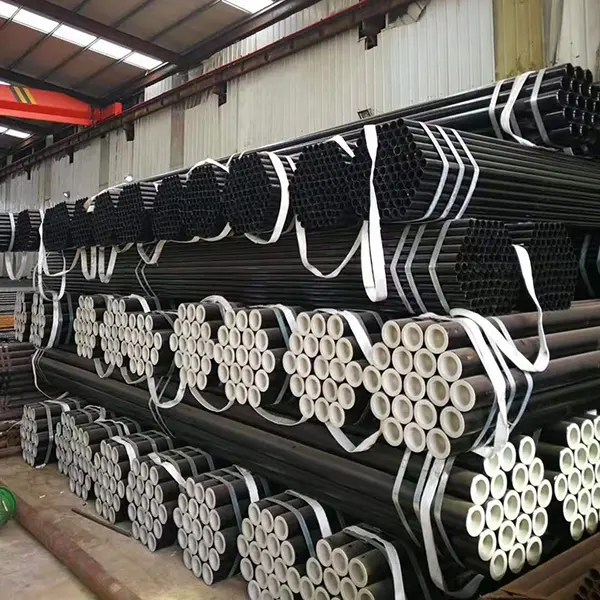
The predominant raw material for small square tubing is carbon steel, specifically low-carbon steel grades such as 1018, 1020, or A36. Stainless steel (304, 316) and alloy steels (containing elements like manganese, molybdenum, and chromium) are employed in applications demanding enhanced corrosion resistance or mechanical properties. The physical properties of these steels vary based on composition; yield strength, tensile strength, and elongation are primary considerations. Manufacturing commonly begins with steel strip, which is then cold-formed into the desired square shape. This cold forming process utilizes rollers and dies to progressively shape the steel, increasing its yield strength through work hardening. Subsequent welding, typically employing Electric Resistance Welding (ERW) or High-Frequency Induction (HFI) welding, joins the edges to create the hollow tube. Critical parameters during welding include welding current, frequency, and electrode pressure, as these directly impact weld seam integrity. Post-welding processes often include annealing (heat treatment) to relieve stresses induced by cold forming and welding, followed by sizing (to ensure dimensional accuracy), straightening, cutting to length, and surface finishing (galvanizing, painting, or powder coating). Chemical composition verification via techniques like Optical Emission Spectroscopy (OES) is essential for quality control. Residual stress analysis using X-ray diffraction further validates the effectiveness of the annealing process. Dimensional tolerances are maintained through continuous in-process monitoring using laser micrometers and coordinate measuring machines (CMMs).
Performance & Engineering
The structural performance of small square tubing is governed by several engineering principles. Bending strength is directly related to the section modulus, which is a geometric property of the square cross-section. Axial load capacity is determined by Euler’s buckling formula, accounting for the tube’s length, diameter, and material’s Young’s modulus. Torsional rigidity depends on the tube's shear modulus and polar moment of inertia. When subjected to external loads, stress concentrations typically occur at weld seams and points of geometric discontinuity (e.g., holes). Finite Element Analysis (FEA) is frequently utilized to predict stress distribution and identify potential failure points under various loading conditions. Environmental resistance is paramount; exposure to corrosive environments (salt spray, humidity) can induce localized corrosion, reducing the tube’s load-bearing capacity. Protective coatings, such as galvanizing (zinc coating) or epoxy powder coating, mitigate corrosion. Compliance requirements often dictate specific material grades and coating thicknesses based on the intended application. For example, construction applications may necessitate adherence to ASTM A500 standards for welded steel tubes, outlining minimum yield strength and weld quality criteria. In automotive applications, stringent fatigue testing is essential to ensure long-term durability under cyclic loading conditions. The design must also consider potential for galvanic corrosion if dissimilar metals are in contact.
Technical Specifications
| Parameter | Grade A36 Steel (Typical) | Grade 304 Stainless Steel (Typical) | Unit |
|---|---|---|---|
| Yield Strength | 250 | 205 | MPa |
| Tensile Strength | 400 | 550 | MPa |
| Elongation | 20 | 30 | % |
| Wall Thickness | 1.2 - 3.0 | 1.2 - 3.0 | mm |
| Outside Dimension | 12.7 - 50.8 | 12.7 - 50.8 | mm |
| Corrosion Resistance | Low (Requires Coating) | High (Passivation Layer) | Qualitative |
Failure Mode & Maintenance
Small square tubing is susceptible to several failure modes. Corrosion, as previously noted, is a common issue, leading to section loss and reduced strength. Weld seam failure can occur due to incomplete fusion, porosity, or cracking caused by inadequate welding parameters or material defects. Fatigue cracking initiates at stress concentrations (weld seams, corners) under cyclic loading, progressively growing until catastrophic failure. Buckling, particularly in long, slender tubes, occurs when compressive loads exceed the critical buckling load. Denting can occur due to localized impacts. Failure analysis often involves visual inspection (crack detection), Non-Destructive Testing (NDT) methods such as ultrasonic testing (UT) and radiographic testing (RT) to identify internal flaws, and metallurgical examination (microscopy) to determine the root cause of failure. Maintenance strategies involve regular inspection for corrosion, protective coating maintenance (repairing damaged coatings), and load monitoring to prevent overloading. For stainless steel tubes, periodic cleaning to remove contaminants that can initiate pitting corrosion is recommended. Welded joints should be periodically inspected for cracking. Preventative maintenance programs, including scheduled inspections and coating repairs, are crucial for extending the service life of small square tubing structures.
Industry FAQ
Q: What is the difference between ERW and HFI welding in small square tubing production, and how does this affect the final product's quality?
A: Both ERW (Electric Resistance Welding) and HFI (High-Frequency Induction) welding are used to join the edges of the steel strip. ERW uses electrical resistance to generate heat for welding, while HFI utilizes electromagnetic induction. HFI generally offers better weld quality due to more localized and controlled heating, resulting in a narrower heat-affected zone and reduced distortion. This translates to higher weld strength and improved resistance to cracking, particularly in high-strength steel grades. However, ERW is often more cost-effective for lower-grade materials.
Q: How does the wall thickness of small square tubing influence its buckling resistance?
A: Buckling resistance is directly proportional to the wall thickness. Increasing the wall thickness significantly increases the section modulus and moment of inertia, which are key parameters in buckling calculations. A thicker wall provides greater stiffness and requires a higher compressive load to initiate buckling. However, increasing wall thickness also increases the material cost and weight.
Q: What are the common surface treatments applied to small square tubing, and what are their respective benefits?
A: Common surface treatments include galvanizing (zinc coating), painting, powder coating, and oiling. Galvanizing provides excellent corrosion protection, particularly in outdoor environments. Painting and powder coating offer aesthetic appeal and additional corrosion resistance, with powder coating generally being more durable. Oiling provides temporary corrosion protection during storage and transportation.
Q: What are the key considerations when selecting a material grade (e.g., A36 vs. 304 Stainless Steel) for a specific application?
A: Material selection depends on the operating environment and performance requirements. A36 carbon steel is cost-effective for general structural applications with minimal corrosion concerns. 304 Stainless Steel is preferred for corrosive environments, high-temperature applications, and situations requiring hygienic surfaces. Other alloy steels are chosen for specific strength, toughness, or weldability requirements.
Q: How important is dimensional accuracy in small square tubing, and what are the typical tolerances?
A: Dimensional accuracy is crucial for ensuring proper fit-up and structural integrity in assembled structures. Typical tolerances for outside dimensions are ±0.1 to ±0.3 mm, and for wall thickness, ±0.1 mm. Tighter tolerances may be required for critical applications demanding precise dimensional control. Maintaining these tolerances requires careful control of the manufacturing process and continuous in-process monitoring.
Conclusion
Small square tubing represents a versatile and essential building block in numerous industries, offering a favorable balance of strength, weight, and cost-effectiveness. Its widespread adoption is driven by efficient manufacturing processes—cold forming and welding—and the availability of diverse material grades to suit varying application needs. Understanding the material science principles governing its performance, including considerations for corrosion resistance, buckling stability, and weld integrity, is paramount for ensuring structural reliability and longevity.
Future advancements in small square tubing technology will likely focus on developing higher-strength alloys, improving welding techniques to minimize heat-affected zones, and implementing more advanced coating technologies to enhance corrosion protection. Furthermore, the increasing demand for lightweight structures will drive innovation in thinner-walled tubing designs and optimized cross-sectional geometries. Continued adherence to rigorous quality control standards and international regulations will remain critical to maintain the integrity and safety of structures employing this fundamental material.
