

Introduction
Solid square tubing is a hollow structural section with a square cross-section, manufactured from a variety of metallic and polymeric materials. Positioned within the broader category of hollow structural sections (HSS), it serves as a fundamental building block in diverse industries including construction, manufacturing, automotive, and infrastructure. Unlike hollow structural sections featuring welded or seamless construction, solid square tubing is formed from a solid billet and subsequently shaped into its final form through processes like extrusion or drawing. Its key performance characteristics – high strength-to-weight ratio, torsional rigidity, and uniform section properties – dictate its suitability for applications demanding structural integrity and dimensional stability. This guide provides an in-depth examination of the material science, manufacturing processes, performance engineering, failure modes, and industry standards associated with solid square tubing.
Material Science & Manufacturing
The material selection for solid square tubing significantly impacts its mechanical properties and application suitability. Common materials include carbon steel (ASTM A500 Grade B being a prevalent standard), stainless steel (304/316 grades offering corrosion resistance), aluminum alloys (6061-T6 is widely used for its strength and weldability), and occasionally specialized alloys like titanium. The manufacturing process begins with the production of a solid billet, typically through continuous casting or forging. For steel and aluminum, extrusion is a common method. This involves forcing the heated billet through a die with a square aperture, reducing the cross-sectional area and forming the tube. Extrusion parameters such as die temperature, extrusion speed, and lubrication are critical. Higher temperatures reduce yield strength and increase ductility, while slower speeds minimize residual stresses. Aluminum alloys often undergo solution heat treatment followed by artificial aging to enhance strength. For smaller dimensions and tighter tolerances, cold drawing may be employed, involving pulling the extruded tube through a series of progressively smaller dies. Cold working increases strength and hardness but reduces ductility. Quality control at each stage, including dimensional checks, non-destructive testing (NDT) such as ultrasonic testing, and material composition analysis, ensures adherence to specifications. Polymer-based solid square tubing typically utilizes materials like PVC, CPVC, or Polypropylene, manufactured via extrusion processes optimized for each resin's thermal properties and melt flow index.
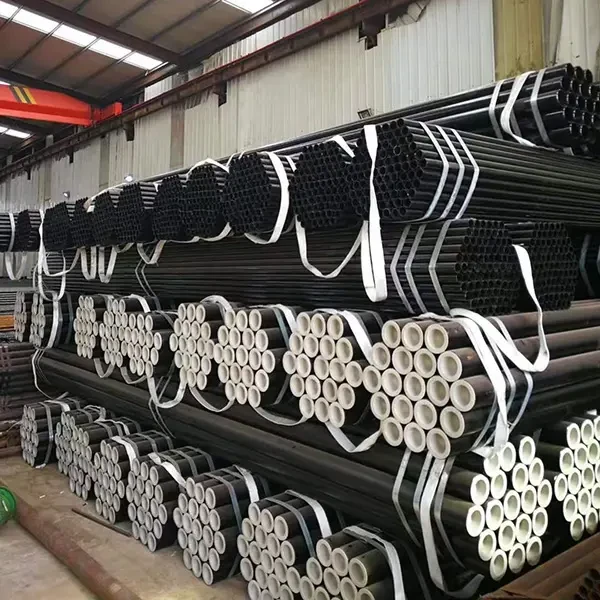
Performance & Engineering
The performance of solid square tubing is heavily dependent on its geometric properties (wall thickness, side length), material characteristics (yield strength, tensile strength, modulus of elasticity), and the applied load conditions. Force analysis, often employing Finite Element Analysis (FEA), is crucial for predicting structural behavior under bending, axial compression, torsion, and shear. Buckling is a primary concern in compression applications, necessitating calculations based on Euler's buckling formula, incorporating effective length factors based on end support conditions. Torsional rigidity is a key advantage, making it suitable for applications involving resisting twisting forces. Environmental resistance, particularly corrosion, is a critical design consideration. Steel tubing is often galvanized or coated with epoxy resins to protect against rust. Stainless steel provides inherent corrosion resistance, but passivation treatments can further enhance performance. Aluminum alloys form a protective oxide layer, but may require anodizing for increased durability. Compliance requirements vary by industry. Construction applications demand adherence to building codes (IBC, Eurocode), which specify load-bearing capacities and safety factors. Automotive applications require compliance with crashworthiness standards and material specifications (SAE). Furthermore, weldability is a significant engineering aspect. Carbon steel is readily weldable using standard techniques, but stainless steel and aluminum require specialized welding procedures to prevent oxidation and maintain mechanical properties.
Technical Specifications
| Material Grade | Yield Strength (MPa) | Tensile Strength (MPa) | Wall Thickness Range (mm) |
|---|---|---|---|
| ASTM A500 Grade B (Steel) | 250 | 450 | 2.0 – 12.7 |
| 304 Stainless Steel | 205 | 550 | 1.5 – 6.35 |
| 6061-T6 Aluminum | 276 | 310 | 1.2 – 5.0 |
| PVC | 55 | 62 | 2.0 – 10.0 |
| CPVC | 70 | 85 | 2.0 – 10.0 |
| Polypropylene | 35 | 45 | 2.0 – 8.0 |
Failure Mode & Maintenance
Solid square tubing is susceptible to several failure modes depending on the material, loading conditions, and environmental factors. Fatigue cracking is a common issue in cyclic loading applications, initiated by stress concentrations at corners or weldments. Corrosion, particularly pitting corrosion in chloride-rich environments, weakens the material and reduces its load-bearing capacity. Galvanized coatings can spall or corrode, exposing the underlying steel. For aluminum alloys, galvanic corrosion can occur when in contact with dissimilar metals. Buckling is a catastrophic failure mode in compression, often preceded by localized yielding. Weld defects, such as porosity or incomplete fusion, create stress risers and reduce joint strength. Maintenance practices include regular visual inspections for signs of corrosion, cracks, or deformation. Protective coatings should be reapplied as needed. Welds should be inspected periodically using NDT methods. For high-stress applications, stress relieving heat treatment may be necessary to reduce residual stresses. Proper handling and storage are crucial to prevent damage. Avoid impact loading and ensure adequate support to prevent bending. Regular cleaning to remove contaminants that promote corrosion is also recommended.
Industry FAQ
Q: What is the impact of heat treatment on the mechanical properties of solid square tubing made from 6061-T6 aluminum?
A: Heat treatment, specifically solution heat treatment and artificial aging, is critical for achieving the T6 temper of 6061 aluminum. Solution heat treatment dissolves the alloying elements, creating a solid solution. Rapid quenching prevents re-precipitation. Subsequent artificial aging allows controlled precipitation of strengthening phases, significantly increasing yield strength and tensile strength. Without proper heat treatment, the aluminum will exhibit lower mechanical properties and reduced corrosion resistance.
Q: How does wall thickness affect the buckling resistance of steel square tubing under axial compression?
A: Buckling resistance is directly proportional to the square of the wall thickness. Increasing the wall thickness dramatically increases the critical buckling load. This is reflected in the Euler buckling formula where the moment of inertia (related to wall thickness) is a key parameter. However, increasing wall thickness also increases weight and cost, so an optimized design is necessary.
Q: What are the primary considerations when selecting a coating for carbon steel square tubing exposed to marine environments?
A: Marine environments are highly corrosive due to high salinity. Galvanizing provides a sacrificial barrier, but may not be sufficient for prolonged exposure. Epoxy coatings offer superior corrosion resistance, particularly multi-layer systems. Thermal spray coatings, like aluminum metallization, provide a durable and long-lasting protective layer. Regular inspection and maintenance of the coating are essential to prevent corrosion.
Q: What Non-Destructive Testing (NDT) methods are commonly used to assess the integrity of welded joints in solid square tubing?
A: Common NDT methods include Visual Testing (VT) for surface defects, Ultrasonic Testing (UT) for internal flaws, Radiographic Testing (RT) for detecting porosity and cracks, and Magnetic Particle Inspection (MPI) for surface and near-surface defects in ferromagnetic materials. The choice of method depends on the material, weld geometry, and the type of defect being sought.
Q: How does the modulus of elasticity influence the deflection characteristics of solid square tubing used as a structural beam?
A: The modulus of elasticity (Young's modulus) is a measure of a material's stiffness. A higher modulus of elasticity indicates a stiffer material, resulting in less deflection under a given load. For a fixed load and geometry, a material with a higher modulus will exhibit significantly less bending. This is a critical parameter in beam design to ensure adequate stiffness and prevent excessive deformation.
Conclusion
Solid square tubing remains a versatile and essential structural component across numerous industries. Its performance is fundamentally governed by material selection, manufacturing precision, and a thorough understanding of engineering principles. Optimizing wall thickness, material grade, and surface treatments based on the intended application and environmental conditions is critical for ensuring structural integrity and longevity. Careful consideration of potential failure modes, coupled with proactive maintenance strategies, further enhances the reliability and service life of these critical components.
Looking ahead, advancements in materials science, particularly the development of high-strength, lightweight alloys and improved corrosion-resistant coatings, will continue to expand the applications of solid square tubing. Further integration of digital technologies, such as advanced FEA modeling and predictive maintenance algorithms, will enable more precise design optimization and proactive failure prevention. The enduring demand for robust, cost-effective structural solutions ensures the continued relevance of solid square tubing in modern engineering and construction.
