
Introduction
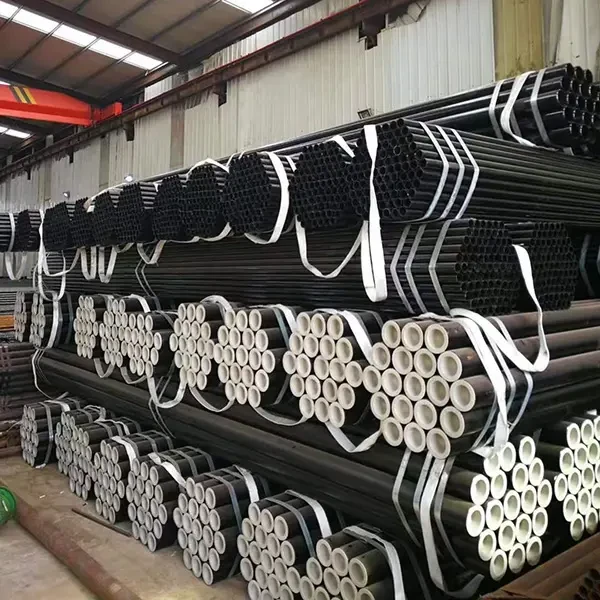
Square box pipe, also known as square hollow section (SHS), is a structural steel profile characterized by its hollow, square cross-section. It occupies a critical position within the construction, manufacturing, and transportation industries as a versatile load-bearing and aesthetic element. Unlike solid bars or round tubes, SHS offers a high strength-to-weight ratio, making it ideal for applications where minimizing weight is paramount. Its uniform wall thickness and consistent dimensions facilitate ease of fabrication and integration into complex structures. Core performance characteristics include bending resistance, torsional rigidity, and weldability. The increasing demand for lighter, stronger, and more aesthetically pleasing structural components drives the continual evolution of SHS production and application methodologies. This guide provides an in-depth technical analysis of square box pipe, covering its material science, manufacturing processes, performance characteristics, potential failure modes, and relevant industry standards.
Material Science & Manufacturing
Square box pipe is predominantly manufactured from carbon steel, typically grades such as ASTM A500 Grade B, Q235, and S235JR. The primary raw material is hot-rolled steel strip, which undergoes a series of forming operations. The chemical composition of the steel dictates its mechanical properties; carbon content influences hardness and strength, manganese enhances strength and weldability, and silicon improves oxidation resistance. Manufacturing processes generally fall into two categories: cold-formed and hot-formed. Cold-formed SHS is produced by bending and welding steel strip at room temperature. This process results in tighter tolerances and a smoother surface finish, but is limited to smaller pipe sizes and thinner wall thicknesses. Hot-formed SHS involves heating the steel strip to a high temperature (typically above 900°C) before forming and welding. This allows for the production of larger pipes with thicker walls. Key parameters controlled during manufacturing include welding parameters (current, voltage, travel speed, shielding gas composition) to ensure complete fusion and prevent defects such as porosity and incomplete penetration. Critical quality control measures involve non-destructive testing (NDT) methods like ultrasonic testing (UT) and radiographic testing (RT) to detect internal flaws. Furthermore, dimensional accuracy and straightness are verified using precision measuring instruments. The annealing process following welding is crucial for relieving residual stresses and improving ductility.
Performance & Engineering
The performance of square box pipe is heavily influenced by its geometric properties (side length, wall thickness) and material properties (yield strength, tensile strength, Young's modulus). Structural engineering calculations for SHS typically involve considerations of bending moment capacity, shear force capacity, and buckling resistance. The section modulus (S) and moment of inertia (I) are crucial parameters in determining bending resistance. Torsional resistance is a key factor in applications involving twisting loads. Finite element analysis (FEA) is commonly employed to accurately predict the stress distribution within the pipe under complex loading conditions. Environmental resistance is another critical performance attribute. Exposure to corrosive environments (e.g., marine atmospheres, industrial pollutants) can lead to corrosion, compromising the structural integrity of the pipe. Protective coatings, such as galvanizing, epoxy coatings, and powder coatings, are applied to mitigate corrosion. Furthermore, compliance with relevant building codes and industry standards (e.g., Eurocode 3, AISC 360) is essential to ensure structural safety and reliability. The design must account for potential dynamic loads, such as wind loads and seismic loads, and incorporate appropriate safety factors.
Technical Specifications
| Parameter | ASTM A500 Grade B | Q235 | S235JR | Typical Wall Thickness Range (mm) |
|---|---|---|---|---|
| Yield Strength (MPa) | 345 | 235 | 235 | 1.5 - 12 |
| Tensile Strength (MPa) | 450 | 375 | 360 | N/A |
| Elongation (%) | 20 | 21 | 20 | N/A |
| Carbon Equivalent (CE) | 0.31 | 0.21 | 0.23 | N/A |
| Typical Size Range (mm x mm) | 20x20 to 300x300 | 20x20 to 400x400 | 20x20 to 600x600 | N/A |
| Minimum Weld Seam Tensile Strength (MPa) | Equivalent to base metal | Equivalent to base metal | Equivalent to base metal | N/A |
Failure Mode & Maintenance
Square box pipe is susceptible to several failure modes in practical applications. Corrosion is a prevalent issue, particularly in exposed environments, leading to section loss and reduced load-bearing capacity. Fatigue cracking can occur under cyclic loading, initiating at stress concentrations such as weld defects or corners. Buckling is a common failure mode for long, slender pipes subjected to compressive loads. Welding defects, including porosity, incomplete penetration, and lack of fusion, can significantly weaken the pipe. Dents and deformations caused by impact loads can also compromise structural integrity. Maintenance strategies include regular visual inspections to identify signs of corrosion, cracking, or deformation. Protective coatings should be reapplied as necessary to maintain corrosion resistance. Periodic non-destructive testing (NDT) can detect internal flaws before they lead to catastrophic failure. For heavily loaded applications, stress monitoring using strain gauges can provide early warning of potential overload conditions. Repair options may include weld repairs (for minor defects) or section replacement (for severe damage). Proper storage and handling practices are crucial to prevent damage during transportation and installation. Avoid dragging or dropping pipes, and protect them from exposure to harsh weather conditions.
Industry FAQ
Q: What are the primary differences between hot-formed and cold-formed square box pipe, and how do these differences affect their applications?
A: Hot-formed SHS is produced at higher temperatures, enabling larger sizes and thicker walls. However, it generally has less precise dimensions and a rougher surface finish. Cold-formed SHS offers tighter tolerances and a smoother finish, but is limited to smaller sizes and thinner gauges. Applications requiring high precision and aesthetic appeal often favor cold-formed SHS, while structural applications demanding high load-bearing capacity utilize hot-formed SHS.
Q: How does the carbon equivalent (CE) of the steel impact its weldability?
A: A higher carbon equivalent indicates a greater concentration of alloying elements that can influence weldability. Higher CE values generally lead to increased hardness and reduced ductility in the weld zone, making the weld more susceptible to cracking. Lower CE steels are preferred for welding applications to minimize the risk of weld defects.
Q: What types of corrosion protection are most effective for square box pipe used in marine environments?
A: Galvanizing (hot-dip galvanizing or electrogalvanizing) provides excellent corrosion protection in marine environments. Epoxy coatings and polyurethane coatings also offer robust corrosion resistance. Cathodic protection, which involves using a sacrificial anode, can further enhance corrosion resistance by preventing oxidation. Regular inspection and maintenance of the coating are crucial.
Q: What is the significance of the section modulus when selecting square box pipe for a structural application?
A: The section modulus (S) is a geometric property that represents the pipe’s resistance to bending. A higher section modulus indicates a greater ability to resist bending moments without exceeding the material’s yield strength. Selecting a pipe with an appropriate section modulus is essential to ensure structural stability and prevent bending failure.
Q: How does the welding process affect the mechanical properties of the square box pipe?
A: The welding process introduces a heat-affected zone (HAZ) around the weld, which can alter the material's microstructure and mechanical properties. Improper welding parameters can lead to reduced strength, increased hardness, and susceptibility to cracking in the HAZ. Proper weld procedure qualification and quality control are critical to ensure that the weld maintains the integrity of the pipe.
Conclusion
Square box pipe remains a vital structural element across diverse industries, underpinned by its favorable strength-to-weight ratio, ease of fabrication, and versatility. The selection of appropriate materials, manufacturing processes, and protective coatings is paramount to ensuring long-term performance and reliability. Understanding the potential failure modes, coupled with implementing proactive maintenance strategies, is crucial for maximizing service life and preventing catastrophic failures.
Future developments in SHS technology will likely focus on the development of high-strength, lightweight alloys, advanced corrosion protection systems, and automated manufacturing processes. The integration of digital technologies, such as Building Information Modeling (BIM) and digital twin technologies, will facilitate more efficient design, fabrication, and monitoring of SHS structures. Continued adherence to international standards and best practices will be essential for maintaining the integrity and safety of these critical structural components.
