
Introduction
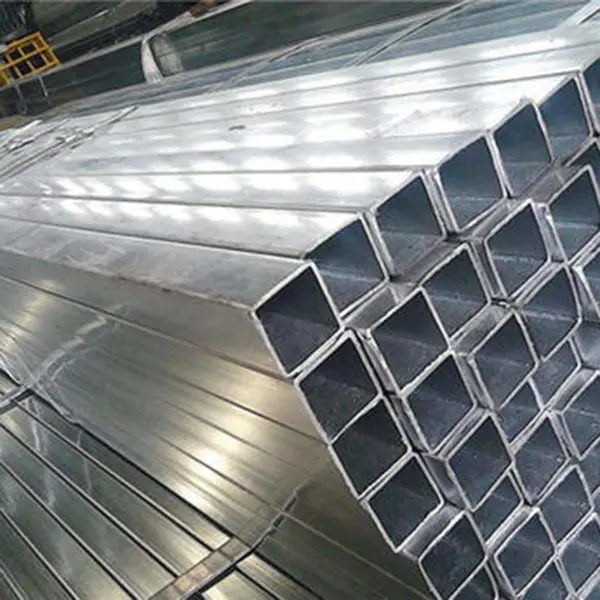
Square overflow pipe, a critical component in fluid management systems, represents a specialized subset of structural piping. Unlike conventional round pipes, its square cross-section offers distinct advantages in specific applications, particularly where space optimization and ease of integration with flat surfaces are paramount. Commonly employed in drainage, ventilation, and coolant systems within industrial facilities, commercial buildings, and increasingly, in specialized agricultural setups, its technical position lies between standard steel piping and more complex, custom-fabricated ductwork. Core performance characteristics center around hydraulic capacity, structural rigidity under load, resistance to corrosion, and compatibility with various joining methods, including welding, threading, and flanging. This guide provides an in-depth examination of its material science, manufacturing processes, performance attributes, potential failure modes, and relevant industry standards, intended for engineers, procurement specialists, and maintenance personnel involved in its selection, installation, and operation.
Material Science & Manufacturing
Square overflow pipe is predominantly manufactured from carbon steel (ASTM A53 Grade B, API 5L), stainless steel (304/316L – ASTM A312), and occasionally, aluminum alloys (6061-T6 – ASTM B210). The choice of material dictates the pipe’s resistance to corrosion, temperature range, and mechanical strength. Carbon steel, while cost-effective, necessitates protective coatings (epoxy, galvanization) to mitigate corrosion, especially in humid or chemically aggressive environments. Stainless steel offers superior corrosion resistance but at a higher cost. Aluminum alloys are selected for applications demanding lightweight solutions and specific corrosion resistance profiles. Manufacturing typically involves hot-rolled steel forming followed by precision cutting and welding. Seamless square pipe is produced through extrusion processes, offering higher strength and uniformity, while welded square pipe (ERW – Electric Resistance Welding) is more economical for larger diameters. Critical parameters during manufacturing include weld quality (penetration, porosity, heat-affected zone), dimensional accuracy (squareness, wall thickness), and surface finish (roughness, presence of scale). Welding processes must adhere to AWS D1.1 standards, employing appropriate shielding gases to prevent oxidation and ensure structural integrity. Post-weld heat treatment (PWHT) is often applied to relieve residual stresses and improve ductility, particularly in high-strength steel grades. The flatness and squareness of the corners are also meticulously controlled via automated calibration during the forming process, ensuring proper sealing with compatible fittings.
Performance & Engineering
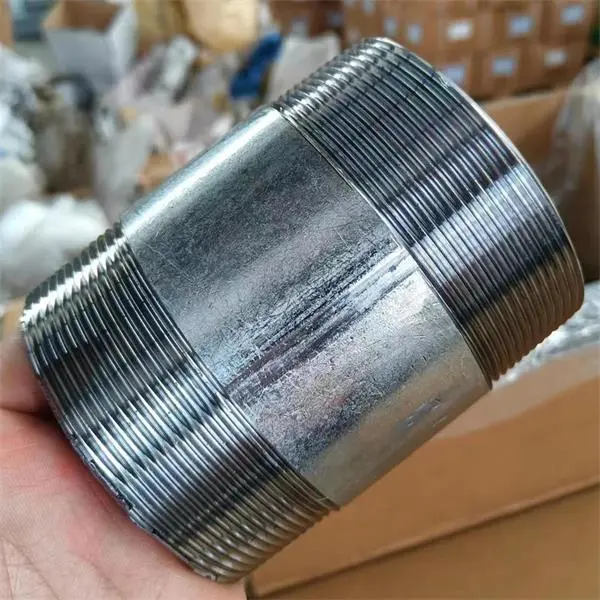
Performance evaluation of square overflow pipe necessitates a multifaceted engineering approach, considering hydraulic flow characteristics, structural load-bearing capacity, and environmental resistance. Unlike circular pipes, square profiles introduce higher frictional losses due to the increased wetted perimeter. Therefore, flow velocity calculations must account for the Darcy-Weisbach equation and the Moody diagram, adjusting for the shape factor. Structural analysis involves determining the pipe's resistance to bending moments, shear forces, and axial loads. Finite Element Analysis (FEA) is commonly employed to simulate stress distributions under various loading scenarios, ensuring compliance with ASME B31.3 (Process Piping) or EN 13480 (Metallic Industrial Piping) standards, depending on the region and application. Environmental resistance assessment includes evaluating the pipe's susceptibility to corrosion (galvanic, pitting, crevice), erosion, and UV degradation. Protective coatings are selected based on the specific operating environment and chemical exposure levels. For drainage applications, the pipe’s ability to withstand hydrostatic pressure and prevent collapse under soil load is crucial. Connections, whether welded, threaded, or flanged, represent potential weak points and require meticulous design and installation to ensure leak-proof performance. Expansion and contraction due to temperature fluctuations must also be accounted for via expansion loops or flexible connectors to prevent stress buildup and potential failure.
Technical Specifications
| Parameter | Carbon Steel (A53 Grade B) | Stainless Steel (304/316L) | Aluminum Alloy (6061-T6) | Units |
|---|---|---|---|---|
| Typical Wall Thickness | 2.0 – 6.0 mm | 2.0 – 8.0 mm | 2.0 – 5.0 mm | mm |
| Common Sizes (Side Length) | 50mm – 300mm | 50mm – 200mm | 50mm – 150mm | mm |
| Yield Strength | 250 MPa | 205 MPa (304) / 290 MPa (316L) | 276 MPa | MPa |
| Tensile Strength | 450 MPa | 517 MPa (304) / 586 MPa (316L) | 310 MPa | MPa |
| Corrosion Rate (in seawater) | > 1.0 mm/year (without coating) | < 0.1 mm/year | < 0.5 mm/year | mm/year |
| Maximum Operating Temperature | 400°C | 870°C | 200°C | °C |
Failure Mode & Maintenance
Square overflow pipe is susceptible to several failure modes, primarily dependent on material, operating conditions, and maintenance practices. Corrosion is a prevalent issue with carbon steel pipes, leading to pitting, perforation, and eventual leakage. Crevice corrosion can occur at joints and weld seams, particularly in chloride-rich environments. Welded pipes are prone to fatigue cracking due to stress concentration at weld defects or residual stresses. Erosion, caused by abrasive particles in the fluid stream, can gradually wear away the pipe wall, particularly at elbows and bends. Impact damage from external sources can cause dents and fractures, compromising structural integrity. Furthermore, thermal expansion and contraction cycles can induce stresses leading to buckling or cracking. Maintenance strategies should include regular visual inspections for signs of corrosion, erosion, or damage. Non-destructive testing (NDT) methods, such as ultrasonic testing (UT) and radiographic testing (RT), can detect subsurface defects in welds. Protective coatings should be inspected for integrity and reapplied as needed. Periodic hydrostatic testing can verify the pipe's pressure-holding capacity. For stainless steel pipes, passivation treatment can restore the protective chromium oxide layer. Addressing any detected defects promptly is critical to prevent catastrophic failure and ensure operational safety. Proper support structures are also essential to prevent excessive bending stresses and maintain alignment.
Industry FAQ
Q: What are the key differences in selecting between carbon steel and stainless steel for a drainage application in a wastewater treatment plant?
A: The primary difference lies in corrosion resistance. Wastewater contains corrosive elements. Carbon steel requires significant and ongoing protective coating maintenance, which adds lifecycle costs. Stainless steel (316L specifically) offers vastly superior resistance to corrosion in this environment, minimizing maintenance and extending the pipe’s service life, despite the higher initial cost. Consider the chemical composition of the wastewater – higher chloride content favors stainless steel.
Q: How does the square shape affect pressure drop compared to a circular pipe of equivalent cross-sectional area?
A: The square shape introduces a larger wetted perimeter for a given cross-sectional area, resulting in increased frictional losses and a higher pressure drop. This necessitates a larger pipe size or higher pump capacity to achieve the same flow rate as a circular pipe. The increase in pressure drop needs to be factored into the hydraulic design calculations.
Q: What weld qualification standards are critical when constructing square overflow pipe systems?
A: AWS D1.1 (Structural Welding Code – Steel) is the fundamental standard for welding carbon steel. For stainless steel, AWS D1.6 (Prequalified Welding Procedures for Stainless Steel) applies. Welders must be qualified according to these standards, and all welding procedures must be documented and approved. Proper shielding gas selection is paramount to prevent oxidation and ensure weld integrity.
Q: What is the significance of hydrostatic testing, and what acceptance criteria should be used?
A: Hydrostatic testing verifies the structural integrity and leak-tightness of the pipe system. The pipe is filled with water and pressurized to a level exceeding its normal operating pressure (typically 1.5 times the maximum operating pressure). Acceptance criteria include no visible leaks, no permanent deformation, and a pressure hold time of at least 30 minutes. ASME B31.3 provides detailed guidelines for hydrostatic testing procedures.
Q: What considerations should be made when installing square overflow pipe to accommodate thermal expansion and contraction?
A: Thermal expansion and contraction can induce significant stresses. Expansion loops, flexible connectors (e.g., rubber bellows), or sliding supports should be incorporated into the design to accommodate these movements. Proper anchoring and guiding of the pipe are also crucial to control the direction of expansion and prevent stress buildup at connections.
Conclusion
Square overflow pipe provides a viable and often advantageous solution in fluid management applications where space optimization and integration with flat surfaces are critical. However, its performance characteristics differ significantly from circular pipes, demanding careful consideration of hydraulic losses, structural integrity, and material selection. Successful implementation hinges on a thorough understanding of material science, manufacturing processes, and relevant industry standards.
Ultimately, the long-term reliability and cost-effectiveness of square overflow pipe systems depend on diligent maintenance practices, including regular inspections, proactive corrosion prevention, and adherence to established quality control procedures. Ongoing monitoring of operating conditions and prompt addressing of any detected defects are essential to ensuring safe and efficient operation.
