
Introduction
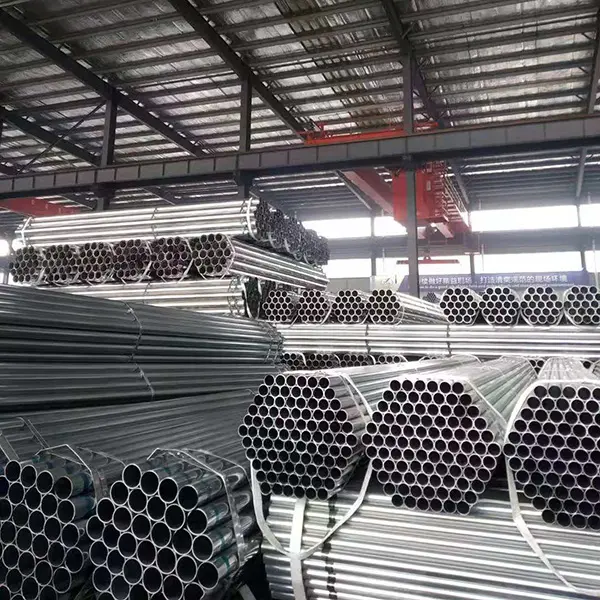
Galvanized Iron (GI) Square Pipe represents a significant component within structural engineering, construction, and various industrial applications. It is manufactured through hot-rolling or cold-forming steel into a square cross-section, followed by a galvanization process – typically hot-dip galvanizing – to coat the steel with a protective zinc layer. This coating fundamentally alters the steel’s corrosion resistance and extends its service life. Within the broader steel pipe industry, GI square pipe occupies a niche requiring a balance between structural rigidity, weldability, and cost-effectiveness. Its key performance characteristics include yield strength, tensile strength, dimensional accuracy, and, crucially, its resistance to atmospheric corrosion. A primary industry pain point centers on ensuring consistent zinc coating thickness and adherence, directly impacting long-term performance and warranty claims. Another challenge is mitigating the risk of hydrogen embrittlement during the galvanization process, especially in higher-strength steel grades.
Material Science & Manufacturing
The fundamental material for GI square pipe is carbon steel, commonly utilizing grades such as Q235, Q345 (Chinese standards), or equivalent ASTM A53 Grade B or ASTM A500. These steels possess varying levels of carbon content, manganese, silicon, and phosphorus, influencing their weldability and mechanical properties. The manufacturing process begins with steel billet production, followed by rolling or pressing into a square profile. Welding, typically employing Electric Resistance Welding (ERW) or Submerged Arc Welding (SAW), is used to create seamless or welded square pipes. Critical parameters during welding include current, voltage, welding speed, and electrode type. Post-welding, the pipes undergo normalizing and pickling to remove mill scale and surface impurities. The galvanization process, most commonly hot-dip galvanizing, involves immersing the prepared steel pipe in a molten zinc bath (typically 98% pure zinc) at temperatures between 440°C and 460°C. The iron-zinc alloy layer formed is metallurgically bonded to the steel substrate. Controlling the bath temperature, immersion time, and steel surface preparation are crucial for achieving a uniform and adherent zinc coating. Electrolytic galvanizing is an alternative, offering thinner, more uniform coatings but typically providing less corrosion protection than hot-dip galvanizing. Zinc’s sacrificial anodic protection mechanism is fundamental – the zinc corrodes preferentially, protecting the underlying steel. The microstructure of the galvanized layer consists of four distinct layers: Zeta, Delta, Gamma, and Eta, each with varying zinc-to-iron ratios and corrosion resistance characteristics.
Performance & Engineering
The performance of GI square pipe is fundamentally governed by its load-bearing capacity, corrosion resistance, and long-term durability. Structural engineering calculations, based on principles of bending moment, shear stress, and buckling resistance, are essential for determining appropriate pipe dimensions and wall thickness for specific applications. The yield strength and tensile strength of the underlying steel dictate the pipe's ability to withstand static and dynamic loads. Corrosion resistance is directly proportional to the zinc coating thickness and uniformity; thicker coatings offer extended protection. Environmental factors, such as humidity, salinity, and exposure to industrial pollutants, significantly influence the rate of zinc corrosion. Finite Element Analysis (FEA) is commonly used to simulate stress distribution under various loading conditions, optimizing pipe design and minimizing the risk of failure. The galvanized layer also provides a degree of cathodic protection, even when damaged, slowing down corrosion of the exposed steel. Compliance requirements vary depending on the application and geographic location. For example, structural applications often require adherence to building codes (e.g., IBC in the US, Eurocode in Europe) specifying minimum steel grade, weld quality, and corrosion protection standards. The potential for galvanic corrosion when GI pipe is in contact with dissimilar metals must also be considered, and appropriate isolation measures implemented.
Technical Specifications
| Parameter | Unit | ASTM A53 Grade B (Typical) | Q235 (Typical) |
|---|---|---|---|
| Yield Strength | MPa | 250 | 235 |
| Tensile Strength | MPa | 370 | 375 |
| Zinc Coating Thickness | μm | 55-85 (per ASTM A123) | 50-100 (per GB/T 13912) |
| Wall Thickness | mm | 1.0-6.0 | 1.0-6.0 |
| Outer Diameter (Square) | mm | 20x20 to 300x300 | 20x20 to 300x300 |
| Elongation | % | 23 | 21 |
Failure Mode & Maintenance
Common failure modes for GI square pipe include uniform corrosion (gradual thinning of the zinc layer), localized corrosion (e.g., pitting, crevice corrosion), and mechanical damage (e.g., denting, cracking). Red rust formation indicates complete depletion of the zinc coating and the onset of steel corrosion. Hydrogen embrittlement, a consequence of the galvanization process, can lead to brittle fracture, particularly in high-strength steels. This occurs when hydrogen atoms diffuse into the steel lattice, reducing its ductility. Weld defects, such as porosity and incomplete fusion, can compromise structural integrity. Maintenance strategies include regular visual inspections for corrosion and damage, cleaning to remove dirt and debris, and application of protective coatings (e.g., paint, epoxy) to areas where the zinc coating has been compromised. Periodic re-galvanizing may be necessary for structures exposed to harsh environments. For pipelines, internal inspection using ultrasonic testing or radiographic testing can detect corrosion and wall thinning. Proper handling and storage are crucial to prevent mechanical damage during transportation and installation. Addressing galvanic corrosion by using compatible materials or implementing isolation techniques is also essential. Failure analysis should include metallographic examination to determine the root cause of failure and inform future design and material selection.
Industry FAQ
Q: What is the typical lifespan of galvanized square pipe in a coastal environment?
A: The lifespan varies significantly depending on zinc coating thickness, exposure conditions (salinity, temperature, humidity), and maintenance practices. However, a well-maintained galvanized square pipe in a moderately corrosive coastal environment can typically last 20-30 years, sometimes longer with appropriate protective coatings and regular inspections. Severe environments will reduce this significantly.
Q: How does the quality of the steel substrate affect the galvanizing process and final product performance?
A: The quality of the steel substrate is paramount. Surface imperfections, such as mill scale, rust, or oil contamination, can hinder zinc adhesion and result in a non-uniform coating. Higher steel grades with lower impurity levels generally exhibit better galvanizing performance. The steel’s chemical composition also influences the formation of the iron-zinc alloy layers.
Q: What are the advantages and disadvantages of using ERW versus SAW welded square pipe for galvanized applications?
A: ERW (Electric Resistance Welding) is typically more cost-effective for smaller diameter and thinner-walled pipes. However, SAW (Submerged Arc Welding) provides superior weld strength and integrity, making it preferable for larger diameters and heavier-duty applications. ERW welds may require more stringent inspection to ensure quality.
Q: How is hydrogen embrittlement mitigated during hot-dip galvanizing?
A: Hydrogen embrittlement is addressed through several methods. Using a proper steel grade (lower carbon content), controlling the galvanizing temperature and immersion time, and applying a post-galvanizing passivation treatment can reduce hydrogen uptake. Some galvanizers employ techniques like thermal annealing to remove hydrogen from the steel.
Q: What are the common standards used to evaluate the quality of galvanized coatings?
A: Common standards include ASTM A123 (Standard Specification for Zinc (Hot-Dip Galvanized) Coatings on Iron and Steel Products), ASTM A153 (Standard Specification for Zinc Coating (Hot-Dip) on Iron and Steel Hardware), ISO 1461 (Metallic coatings - Hot dip galvanizing), and GB/T 13912 (Hot-dip galvanizing of iron and steel). These standards specify requirements for coating thickness, adhesion, and uniformity.
Conclusion
GI square pipe remains a widely utilized structural element due to its favorable combination of strength, corrosion resistance, and cost. The performance of this material is inextricably linked to the quality of the underlying steel, the meticulous control of the galvanization process, and the implementation of appropriate maintenance protocols. Understanding the potential failure modes – from uniform corrosion to hydrogen embrittlement – is critical for ensuring long-term structural integrity and minimizing life-cycle costs.
Future advancements in materials science, such as the development of higher-strength steel grades with improved weldability and enhanced corrosion resistance, will further elevate the capabilities of GI square pipe. Furthermore, innovations in coating technologies, including duplex systems (e.g., galvanizing followed by powder coating), promise to extend service life and broaden the range of applications. Continued adherence to international standards and a proactive approach to inspection and maintenance will remain essential for maximizing the value of this fundamental construction material.
