
Introduction
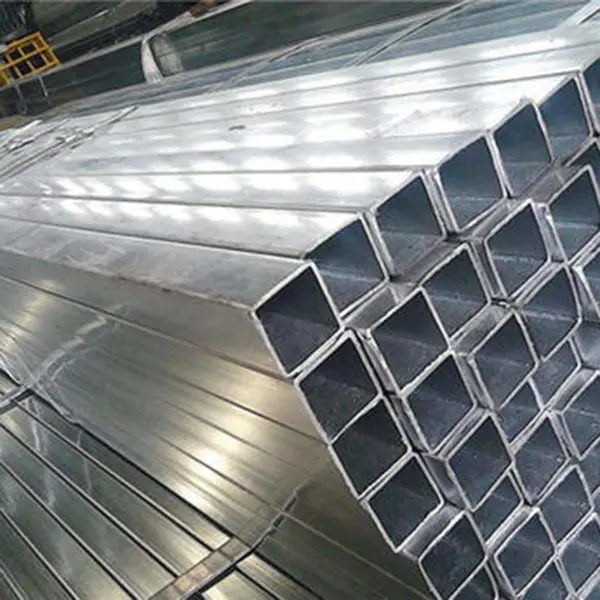
Square pipe, also known as square hollow section (SHS), is a tubular structural component characterized by its square cross-section. It occupies a critical position within the broader steel industry supply chain, serving as a foundational element in construction, infrastructure, manufacturing, and various engineering applications. Its primary function is to provide structural support and rigidity with a favorable strength-to-weight ratio. Core performance characteristics include bending strength, torsional stiffness, compressive strength, and weldability. Unlike open sections (like angles or channels), SHS offers omnidirectional resistance, making it ideal for applications where load direction is variable. The industry is currently focused on optimizing production processes for thinner wall thicknesses, improved dimensional accuracy, and enhanced corrosion resistance through advanced coating technologies. A significant pain point for end-users is consistent dimensional tolerances and traceability of material composition for critical applications requiring adherence to stringent engineering codes.
Material Science & Manufacturing
Square pipe is predominantly manufactured from carbon steel, although stainless steel, aluminum alloys, and occasionally plastic composites are also utilized depending on application requirements. Carbon steel grades commonly employed include ASTM A500 Grade B (common structural steel), A53 Grade B (for general purpose piping), and A36 (a lower strength, more ductile grade). The raw material, typically hot-rolled steel strip or coil, undergoes several processing steps. The most common manufacturing process is Electric Resistance Welding (ERW), where the steel strip is formed into a square shape and welded along the seam using high-frequency electrical resistance. Alternatively, seamless square pipe is produced through mandrel rolling or extrusion processes.
Material Properties: The mechanical properties of the steel directly influence the performance of the square pipe. Yield strength, typically ranging from 235 MPa to 345 MPa for common carbon steel grades, determines the load-bearing capacity before permanent deformation. Tensile strength, generally between 400 MPa and 550 MPa, indicates the ultimate load the pipe can withstand before fracture. Elongation, a measure of ductility, ranges from 15% to 25% and influences the pipe’s ability to deform before failure. Hardness, measured using Rockwell or Brinell scales, reflects resistance to indentation and wear. Chemical composition is crucial; controlling the carbon equivalent (CE) is essential to ensure weldability and prevent hydrogen-induced cracking.
Manufacturing Parameter Control: Critical parameters in ERW include welding current, welding speed, forming roll pressure, and cooling rate. Precise control of these parameters is essential to create a uniform, defect-free weld seam. Mandrel rolling requires precise control of mandrel diameter, rolling force, and heating temperature to achieve desired dimensional accuracy and wall thickness. Post-welding heat treatment (PWHT) may be applied to relieve residual stresses and improve the weld's mechanical properties. Dimensional accuracy is maintained through continuous online monitoring and automated adjustments during the forming and welding processes.
Performance & Engineering
The performance of square pipe in structural applications is governed by principles of structural mechanics. Bending moment resistance is a critical parameter, determined by the section modulus (S) of the square cross-section, which dictates its capacity to resist bending forces. Torsional stiffness is particularly important in applications where the pipe is subjected to twisting loads. Buckling analysis is essential, especially for long, slender pipes under compressive loads. The Euler buckling formula provides a theoretical basis for predicting the critical buckling load, but practical design must account for imperfections and material nonlinearities.
Environmental Resistance: Corrosion is a major concern, particularly in marine or chemically aggressive environments. Galvanizing (zinc coating) is a common method for providing corrosion protection, forming a sacrificial barrier layer. Epoxy coatings and polyurethane coatings offer more durable long-term protection, but require careful surface preparation and application. For highly corrosive environments, stainless steel grades (e.g., 304, 316) are preferred, offering superior corrosion resistance due to their chromium content.
Compliance Requirements: Square pipe used in construction must comply with relevant building codes and standards, such as the International Building Code (IBC) in the United States and Eurocode 3 in Europe. These codes specify minimum material properties, weld quality requirements, and design methodologies. Pressure vessels and piping systems require compliance with ASME Boiler and Pressure Vessel Code Section VIII, Division 1, which outlines stringent design, fabrication, and inspection procedures. The transportation of square pipe is also subject to regulations related to load securement and vehicle weight limits.
Technical Specifications
| Parameter | ASTM A500 Grade B | ASTM A36 | Stainless Steel 304 | Aluminum 6061-T6 |
|---|---|---|---|---|
| Yield Strength (MPa) | 235 | 250 | 205 | 276 |
| Tensile Strength (MPa) | 345 | 400 | 517 | 310 |
| Elongation (%) | 21 | 20 | 30 | 12 |
| Wall Thickness Range (mm) | 2-12 | 2-10 | 2-8 | 2-6 |
| Typical Outside Dimension (mm) | 20x20 to 300x300 | 20x20 to 300x300 | 15x15 to 200x200 | 20x20 to 150x150 |
| Corrosion Resistance | Low (requires coating) | Low (requires coating) | High | Moderate (requires coating) |
Failure Mode & Maintenance
Square pipe is susceptible to several failure modes in practical applications. Corrosion, as previously mentioned, can lead to material loss and structural weakening. Fatigue cracking can occur under cyclical loading, initiating at weld seams or areas of stress concentration. Buckling is a common failure mode for slender pipes under compressive loads. Denting can result from impact or localized loading, reducing the pipe's load-carrying capacity. Weld defects, such as porosity, slag inclusions, or incomplete fusion, can compromise the weld's integrity and lead to premature failure. Creep, a time-dependent deformation under sustained load, can occur at elevated temperatures.
Failure Analysis: Fractographic analysis (examination of fracture surfaces) can reveal the root cause of failure. Microscopic examination can identify weld defects or material microstructural abnormalities. Finite element analysis (FEA) can be used to simulate stress distributions and predict potential failure locations. Non-destructive testing (NDT) methods, such as ultrasonic testing (UT) and radiographic testing (RT), are essential for detecting internal flaws and assessing the integrity of welds.
Maintenance: Regular inspection for corrosion and damage is crucial. Protective coatings should be reapplied as needed. Weld seams should be periodically inspected for cracks. Damaged sections should be repaired or replaced. Proper load management and avoidance of overstressing are essential for preventing fatigue and buckling failures. For critical applications, a preventative maintenance schedule should be implemented, including periodic NDT inspections and material testing.
Industry FAQ
Q: What is the impact of carbon equivalent (CE) on the weldability of square pipe steel?
A: Carbon Equivalent (CE) is a mathematical calculation that estimates the combined effect of various alloying elements on the hardenability of steel during welding. Higher CE values indicate greater hardenability and increased susceptibility to hydrogen-induced cracking. For square pipe intended for welding, a low CE value (typically below 0.40%) is preferred to ensure adequate weldability and prevent cracking. Controlling the CE requires precise control of the steel's chemical composition.
Q: How do dimensional tolerances affect the suitability of square pipe for precision fabrication?
A: Dimensional tolerances, particularly for outside diameter and wall thickness, are critical for precision fabrication. Tight tolerances are essential for applications where square pipe is used in welded assemblies, structural frameworks, or machinery components. Significant deviations from specified tolerances can lead to fit-up problems, increased fabrication costs, and compromised structural integrity. Manufacturing processes like mandrel rolling generally offer tighter tolerances compared to ERW.
Q: What are the differences between galvanized and epoxy coatings in terms of corrosion protection for square pipe?
A: Galvanizing provides sacrificial corrosion protection, meaning the zinc coating corrodes preferentially to the steel. It's a cost-effective solution for moderate environments. Epoxy coatings, on the other hand, form a barrier layer that prevents corrosive agents from reaching the steel. Epoxy coatings generally offer superior long-term corrosion resistance, particularly in harsh environments, but require careful surface preparation and application.
Q: Can Finite Element Analysis (FEA) be used to predict buckling behavior in square pipe structures?
A: Yes, FEA is a powerful tool for predicting buckling behavior. By accurately modeling the geometry, material properties, and boundary conditions, FEA can identify potential buckling modes and estimate the critical buckling load. This allows engineers to optimize the design of square pipe structures to ensure they are safe and stable under compressive loads. However, the accuracy of FEA results depends on the quality of the input data and the appropriate selection of analysis parameters.
Q: What non-destructive testing (NDT) methods are commonly used to inspect square pipe welds?
A: Common NDT methods for inspecting square pipe welds include Visual Testing (VT) for surface defects, Ultrasonic Testing (UT) for detecting internal flaws, Radiographic Testing (RT) using X-rays to reveal internal discontinuities, Magnetic Particle Testing (MT) for detecting surface and near-surface cracks in ferromagnetic materials, and Liquid Penetrant Testing (PT) for detecting surface-breaking defects. The selection of NDT method depends on the type of defect being sought, the material being inspected, and the applicable industry standards.
Conclusion
Square pipe stands as a versatile and essential structural component across diverse industries. Its performance is intrinsically linked to material selection, manufacturing precision, and adherence to stringent engineering standards. Understanding the material science fundamentals, including yield strength, tensile strength, and corrosion resistance, is paramount to ensuring structural integrity. The choice between carbon steel, stainless steel, or aluminum alloys depends critically on the intended application and environmental exposure.
Future advancements are focused on developing high-strength, lightweight square pipe alloys, enhancing corrosion protection through advanced coatings, and optimizing manufacturing processes to achieve tighter dimensional tolerances and reduced production costs. Continued research into non-destructive testing techniques and failure analysis methodologies will further improve the reliability and lifespan of square pipe structures. The successful implementation of these advancements will drive innovation and efficiency in construction, manufacturing, and infrastructure development.
