
Introduction
Square section tube, a fundamental structural component in numerous industries, represents a significant segment within the broader hollow structural section (HSS) market. Distinguished by its consistent square profile, this tubing provides uniform strength and stability in all directions, making it a preferred choice over circular or rectangular sections in specific applications. Its position in the industry chain begins with raw material production (typically steel, aluminum, or stainless steel), proceeds through forming processes like welding or extrusion, and culminates in fabrication for end-use applications spanning construction, machinery, automotive, and furniture. Core performance characteristics include high strength-to-weight ratio, ease of welding and fabrication, and consistent dimensional accuracy. Understanding these parameters is crucial for engineers and procurement specialists aiming to optimize structural designs and minimize material costs.
Material Science & Manufacturing
Square section tubes are predominantly manufactured from carbon steel (ASTM A500 grades), stainless steel (304, 316), and aluminum alloys (6061, 6063). Carbon steel, due to its cost-effectiveness and high yield strength, dominates the market for structural applications. Stainless steel is chosen for corrosive environments requiring high durability. Aluminum alloys offer superior weight-to-strength ratios for applications where weight reduction is critical. The manufacturing process typically involves either cold-formed welding or seamless extrusion. Cold-formed welding involves rolling steel sheets into the desired square shape and then welding the seam longitudinally. Key parameter control during welding includes precise temperature regulation, shielding gas composition (argon/CO2 mixtures), and weld bead geometry to minimize residual stress and ensure full penetration. Extrusion, commonly used for aluminum tubes, forces heated material through a square die, resulting in a seamless product with superior mechanical properties. For aluminum, alloy composition and heat treatment (T6 temper) significantly influence strength and corrosion resistance. Quality control measures at this stage include dimensional checks, non-destructive testing (NDT) such as ultrasonic testing, and hydrostatic testing to verify weld integrity and material soundness. Surface treatments like galvanizing (for steel) or anodizing (for aluminum) further enhance corrosion protection.
Performance & Engineering
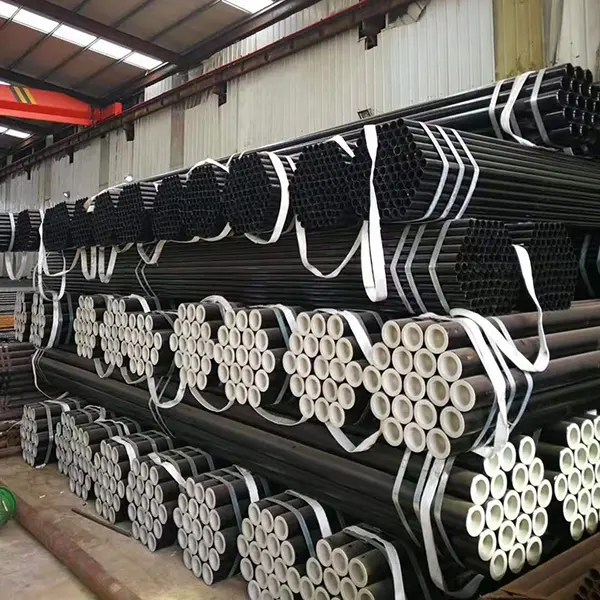
The structural performance of square section tubes is governed by several engineering principles. Section modulus, a geometric property representing the tube’s resistance to bending, is significantly higher for square sections compared to equivalent circular sections, particularly under multi-axial loading. Force analysis requires consideration of axial compression, bending moments, shear forces, and torsional loads. Buckling is a critical failure mode under compressive loading, and the tube’s wall thickness and length directly influence its buckling resistance. Environmental resistance is paramount in outdoor applications. Steel tubes are susceptible to corrosion, requiring protective coatings or the use of corrosion-resistant alloys like stainless steel. Aluminum tubes exhibit excellent corrosion resistance in most environments but can suffer from galvanic corrosion when in contact with dissimilar metals. Compliance requirements vary depending on the application. In construction, square section tubes must adhere to building codes (IBC, Eurocode 3) specifying minimum yield strength, weld quality, and fire resistance. Automotive applications require compliance with safety standards (FMVSS) regarding crashworthiness and material durability. Fatigue resistance is crucial for applications involving cyclical loading, necessitating careful consideration of material properties, weld quality, and stress concentration points.
Technical Specifications
| Material Grade | Wall Thickness (mm) | Outer Dimension (mm) | Yield Strength (MPa) |
|---|---|---|---|
| ASTM A500 Grade B | 2.0 | 50x50 | 345 |
| ASTM A500 Grade C | 3.0 | 100x100 | 345 |
| Stainless Steel 304 | 2.5 | 40x40 | 205 |
| Aluminum Alloy 6061-T6 | 2.0 | 75x75 | 276 |
| ASTM A500 Grade B | 4.0 | 150x150 | 345 |
| Stainless Steel 316 | 3.0 | 60x60 | 205 |
Failure Mode & Maintenance
Square section tubes are susceptible to several failure modes. Corrosion, particularly in steel tubes exposed to harsh environments, leads to material degradation and reduced load-bearing capacity. Fatigue cracking can occur under cyclical loading, initiating at stress concentration points like welds or corners. Buckling, as previously mentioned, is a common failure mode under compressive loads, especially with thin-walled tubes. Weld defects, such as porosity or incomplete penetration, significantly weaken the tube and can lead to catastrophic failure. Denting and deformation can occur due to impact or excessive loads, altering the tube's geometric properties and reducing its strength. Maintenance involves regular inspection for signs of corrosion, cracks, or deformation. Protective coatings should be reapplied as needed. Welded joints should be periodically inspected using non-destructive testing methods. For heavily loaded structures, regular load monitoring and structural health assessment are recommended. Preventive maintenance, including proper surface preparation before coating application and avoidance of overloads, significantly extends the service life of square section tubes. If corrosion is detected, localized repairs using welding or patching may be possible, but complete replacement is often the most reliable solution for severely corroded sections.
Industry FAQ
Q: What is the primary difference in performance between a welded and a seamless square tube?
A: Seamless tubes, produced through extrusion, generally exhibit superior mechanical properties – particularly in terms of tensile and yield strength – and a higher resistance to fatigue cracking compared to welded tubes. This is due to the absence of a weld seam, which can be a potential point of weakness. However, welded tubes are often more cost-effective for larger diameters and are suitable for many structural applications where the weld quality is rigorously controlled.
Q: How does wall thickness impact the buckling resistance of a square tube?
A: Buckling resistance is directly proportional to the square of the wall thickness. Increasing the wall thickness significantly enhances the tube’s ability to withstand compressive loads without buckling. This relationship is crucial for structural engineers when designing columns and load-bearing members.
Q: What are the common corrosion protection methods for steel square tubes used in outdoor environments?
A: Common corrosion protection methods include galvanizing (hot-dip or electrogalvanizing), painting with corrosion-resistant coatings (epoxy, polyurethane), powder coating, and the application of specialized corrosion inhibitors. Selecting the appropriate method depends on the severity of the environment and the desired lifespan of the structure.
Q: How do different aluminum alloy temper designations (e.g., T6) affect the performance of square aluminum tubing?
A: Temper designation refers to the heat treatment process applied to the aluminum alloy. T6 temper, a solution heat-treated and artificially aged alloy, provides an optimal balance of strength and ductility. Different tempers offer varying levels of strength and corrosion resistance, and the selection should be based on the specific application requirements.
Q: What Non-Destructive Testing (NDT) methods are typically used to ensure the quality of welded square tubes?
A: Common NDT methods include visual inspection, ultrasonic testing (UT) to detect internal flaws, radiographic testing (RT) using X-rays to reveal weld defects, magnetic particle inspection (MPI) for surface and near-surface defects, and dye penetrant inspection (DPI) to identify surface cracks. The choice of method depends on the type of defect being sought and the accessibility of the weld.
Conclusion
Square section tubing remains a cornerstone material in numerous industries, offering a versatile combination of strength, cost-effectiveness, and ease of fabrication. A thorough understanding of its material science, manufacturing processes, and performance characteristics is critical for engineers and procurement specialists. Optimizing material selection based on application requirements—considering factors like corrosion resistance, load-bearing capacity, and fatigue life—is paramount for ensuring structural integrity and longevity.
Future trends will likely focus on the development of higher-strength alloys, advanced manufacturing techniques (such as laser welding and additive manufacturing), and enhanced corrosion protection methods. Furthermore, increased emphasis on sustainable materials and circular economy principles will drive demand for recycled square section tubing and environmentally friendly coatings. Continued research and development will refine design methodologies and predictive modeling, leading to more efficient and reliable structural solutions.
