
Introduction
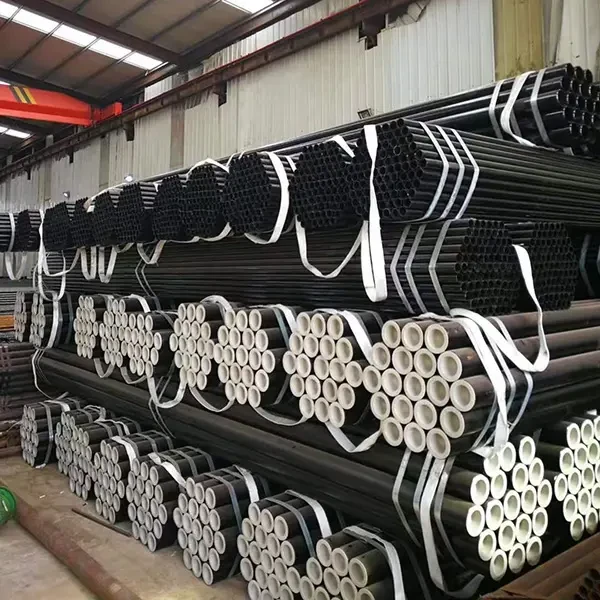
Square stock metal tubing represents a fundamental structural component across numerous industries, ranging from construction and manufacturing to automotive and aerospace. Distinguished by its hollow cross-section and square profile, it offers a high strength-to-weight ratio, making it a cost-effective alternative to solid bars or other structural shapes. Its utility stems from its versatility in welding, machining, and joining, facilitating its integration into complex assemblies. The material composition significantly impacts performance, with common alloys including carbon steel, stainless steel, aluminum, and various alloy steels. This guide provides an in-depth technical examination of square stock metal tubing, covering material science, manufacturing processes, performance characteristics, failure modes, and relevant industry standards. A core pain point in procurement and engineering is ensuring consistency in dimensional accuracy and material properties, as variations can drastically affect structural integrity and fabrication efficiency. Proper understanding of these factors is crucial for successful implementation.
Material Science & Manufacturing
The selection of raw material dictates the tubing's mechanical and corrosion resistance properties. Carbon steel (e.g., ASTM A500 Grade B) is frequently employed due to its affordability and weldability, but exhibits susceptibility to corrosion. Stainless steel (e.g., 304, 316) offers superior corrosion resistance but at a higher cost. Aluminum alloys (e.g., 6061-T6) provide an excellent strength-to-weight ratio and corrosion resistance, suitable for applications where weight is a critical factor. Alloy steels, incorporating elements like chromium, molybdenum, and nickel, are utilized for demanding applications requiring high strength and toughness. Manufacturing typically begins with the production of a flat steel strip or billet. The two primary manufacturing processes are: (1) Cold-Forming: This involves bending and welding a flat strip into a square tube. Precise roll forming and automated welding (typically using gas metal arc welding – GMAW or laser welding) are critical for dimensional accuracy and weld quality. Parameter control includes roll pressure, welding current, and shielding gas composition. (2) Seamless Tubing: This method, often employing a mandrel mill process, starts with a solid billet heated to a malleable temperature, then pierced and drawn over a mandrel to create a hollow tube. This process yields superior mechanical properties but is generally more expensive. Key parameter control focuses on temperature uniformity, drawing speed, and mandrel alignment. Post-manufacturing, processes like heat treatment (annealing, quenching, tempering) are employed to modify the material's microstructure and mechanical properties. Surface finishing, including pickling, passivation, and coating, are applied to enhance corrosion resistance and aesthetic appeal. Dimensional tolerances are typically governed by ASTM A500 or EN 10210 standards.

Performance & Engineering
The performance of square stock metal tubing is fundamentally governed by its structural integrity under load. Force analysis, utilizing techniques like Finite Element Analysis (FEA), is vital to determine stress distribution and deflection characteristics. Buckling is a critical failure mode, particularly for thin-walled tubing subjected to compressive loads. The critical buckling load is determined by the material's Young's modulus, the tube's dimensions (wall thickness and side length), and the boundary conditions. Environmental resistance is paramount. Exposure to corrosive environments (e.g., saltwater, industrial chemicals) can induce pitting corrosion, crevice corrosion, and galvanic corrosion, significantly reducing the tubing’s load-bearing capacity. Protective coatings (e.g., galvanizing, powder coating) and material selection (stainless steel) are employed to mitigate these effects. Compliance requirements vary by industry. In the construction sector, tubing must meet building codes and seismic design standards. Automotive applications necessitate adherence to stringent safety regulations and fatigue life requirements. Aerospace applications demand traceability of materials and adherence to rigorous quality control procedures (e.g., AS9100). Functional implementation often involves welding, machining, and joining. Welding introduces residual stresses and potential distortion, necessitating post-weld heat treatment and careful quality control. Machining operations must consider the material's machinability and the potential for work hardening. Joining methods (e.g., bolting, riveting) must be appropriately sized and designed to distribute loads effectively.
Technical Specifications
| Parameter | Carbon Steel (ASTM A500 Grade B) | Stainless Steel (304) | Aluminum Alloy (6061-T6) | Units |
|---|---|---|---|---|
| Yield Strength | 230 | 205 | 276 | MPa |
| Tensile Strength | 350 | 517 | 310 | MPa |
| Elongation | 22 | 30 | 12 | % |
| Wall Thickness Tolerance | ±0.13 | ±0.13 | ±0.13 | mm |
| Surface Roughness (Ra) | 1.6 | 1.6 | 1.6 | μm |
| Corrosion Rate (Salt Spray) | 168 | >1000 | >80 | Hours to Red Rust |
Failure Mode & Maintenance
Square stock metal tubing is susceptible to several failure modes. Fatigue cracking occurs due to cyclic loading, initiating at stress concentrators (e.g., welds, corners). Corrosion (as previously discussed) weakens the material and accelerates cracking. Denting and Deformation can result from impact loads, particularly for thin-walled tubing. Buckling is a catastrophic failure mode under compressive loads, especially for long, unsupported spans. Weld defects (e.g., porosity, cracks) compromise structural integrity. Delamination can occur in composite tubing, separating layers and reducing load-carrying capacity. Maintenance strategies include regular visual inspections for signs of corrosion, cracks, and deformation. Non-destructive testing (NDT) methods, such as ultrasonic testing (UT) and radiographic testing (RT), can detect internal defects. Protective coatings should be inspected and reapplied as necessary. Welds should be periodically examined for cracks and corrosion. Proper lubrication of moving parts and avoidance of excessive loading are crucial for extending the tubing’s service life. For damaged tubing, repair options include welding (for minor cracks) or replacement (for severe damage). Preventative maintenance programs, including corrosion inhibitors and regular cleaning, significantly reduce the risk of premature failure. Galvanic corrosion can be mitigated by utilizing compatible materials or applying isolating coatings.
Industry FAQ
Q: What is the impact of varying wall thickness on the buckling resistance of square tubing?
A: Buckling resistance is heavily dependent on wall thickness. The critical buckling load is proportional to the cube of the wall thickness. Therefore, a small increase in wall thickness results in a substantial increase in buckling resistance. Thin-walled tubing is considerably more susceptible to buckling under compressive loads and requires additional support or bracing.
Q: How does the welding process affect the mechanical properties of the tubing near the weld zone?
A: Welding introduces a Heat Affected Zone (HAZ) where the material's microstructure is altered. This can lead to reduced yield strength and toughness in the HAZ. Residual stresses from welding can also contribute to stress corrosion cracking. Proper welding procedures, including preheating, post-weld heat treatment, and appropriate filler metal selection, are crucial to minimize these effects.
Q: What are the key differences between hot-rolled and cold-drawn square tubing, and how do these impact their applications?
A: Hot-rolled tubing is manufactured at high temperatures, resulting in a coarser grain structure and lower dimensional accuracy. It is typically less expensive and suitable for applications where precise dimensions are not critical. Cold-drawn tubing is processed at room temperature, resulting in a finer grain structure, higher strength, and improved dimensional accuracy. It is preferred for applications requiring tight tolerances and higher mechanical properties.
Q: What considerations should be made when selecting a coating for square tubing exposed to a marine environment?
A: Marine environments are highly corrosive. Galvanizing (hot-dip or electrogalvanizing) provides excellent corrosion protection. Powder coating, particularly with epoxy or polyurethane formulations, can further enhance corrosion resistance. Duplex systems (e.g., galvanizing followed by powder coating) offer the highest level of protection. Regular inspection and maintenance of the coating are essential to prevent corrosion.
Q: What role does grain size play in the fatigue life of square tubing?
A: Smaller grain sizes generally improve fatigue life. A finer grain structure provides more obstacles to crack propagation, increasing the energy required for a crack to initiate and grow. Cold working processes, such as cold drawing, refine the grain structure and enhance fatigue resistance. However, excessive cold working can lead to work hardening and reduced ductility, potentially offsetting the benefits.
Conclusion
Square stock metal tubing serves as a vital structural element across diverse industries, offering a compelling balance of strength, weight, and cost-effectiveness. The material selection and manufacturing process are intrinsically linked to the final performance characteristics, requiring careful consideration of factors like corrosion resistance, weldability, and dimensional accuracy. Understanding potential failure modes, such as fatigue cracking and buckling, alongside implementing appropriate maintenance strategies, is paramount to ensuring long-term reliability and structural integrity.
Future advancements in manufacturing techniques, such as additive manufacturing (3D printing) of metal tubing, promise to unlock new possibilities for complex geometries and customized material properties. Further research into high-performance coatings and corrosion-resistant alloys will continue to enhance the durability and longevity of square stock metal tubing in challenging environments. A comprehensive approach to material selection, fabrication, and maintenance is critical for optimizing the performance and extending the service life of this versatile structural component.
