

Introduction
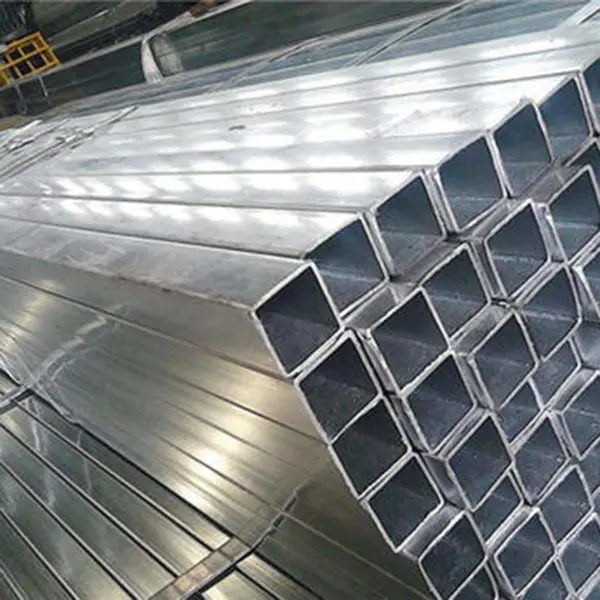
Square tube 1x1, referencing a nominal 1-inch by 1-inch cross-section, is a fundamental structural element widely utilized across diverse industrial sectors, including construction, manufacturing, automotive, and infrastructure. It falls within the category of hollow structural sections (HSS), providing an excellent strength-to-weight ratio, making it a cost-effective material choice. Its technical position in the industry chain begins with raw material production (typically steel), followed by forming processes such as cold-forming or hot-rolling, and culminating in fabrication and application. Core performance characteristics center around its load-bearing capacity (both axial and bending loads), weldability, corrosion resistance (dependent on coating and material grade), and dimensional accuracy. A key pain point in the industry is ensuring consistent material properties and dimensional tolerances to facilitate efficient and reliable fabrication processes, particularly within automated welding and robotic assembly lines. Furthermore, long-term durability and resistance to specific environmental conditions are paramount concerns, necessitating careful material selection and protective coating application.
Material Science & Manufacturing
The predominant material for square tube 1x1 is carbon steel, specifically grades such as ASTM A500 Grade B or equivalent EN 10210-1 S235JR. The steel’s composition dictates its mechanical properties; carbon content influences hardness and strength, while alloying elements like manganese, silicon, and phosphorus contribute to ductility, weldability, and corrosion resistance. Stainless steel (304, 316L) is also employed for applications demanding superior corrosion resistance, albeit at a higher cost. Manufacturing typically involves either cold-forming or hot-rolling. Cold-forming utilizes processes like press braking and roll forming, applied to steel sheet or strip, resulting in tighter dimensional tolerances and a smoother surface finish but limited to simpler geometries and thinner wall thicknesses. Hot-rolling involves passing heated steel billets through a series of rollers to achieve the desired shape. This process is more versatile for larger dimensions and thicker walls, but typically results in less precise dimensions and a scaled surface that requires further processing (pickling or shot blasting). Key parameter control during manufacturing includes precise control of forming speeds, roller pressures, annealing temperatures (for cold-formed tubes), and cooling rates (for hot-rolled tubes). Welding processes used in fabrication – Shielded Metal Arc Welding (SMAW), Gas Metal Arc Welding (GMAW), and Flux-Cored Arc Welding (FCAW) – demand stringent control of welding parameters (current, voltage, travel speed) to minimize heat-affected zones and prevent defects like porosity and cracking.
Performance & Engineering
The performance of square tube 1x1 is fundamentally governed by its section modulus and moment of inertia, dictating its resistance to bending and buckling. Force analysis considers both axial compression and bending moments, with buckling being a critical failure mode, particularly for longer unsupported lengths. Environmental resistance is a key consideration; carbon steel is susceptible to corrosion, necessitating protective coatings like galvanizing, powder coating, or epoxy painting. Galvanizing provides a sacrificial zinc layer, while powder coating and epoxy painting offer a barrier against moisture and corrosive agents. Compliance requirements vary depending on the application and geographical region. Structural applications often necessitate adherence to building codes (e.g., IBC in the US, Eurocodes in Europe) that specify load-bearing capacity, fire resistance, and seismic performance. For automotive applications, material specifications and testing protocols are dictated by industry standards (e.g., SAE International). Finite element analysis (FEA) is frequently employed to simulate structural behavior under various loading conditions, optimizing tube dimensions and wall thickness for specific applications. The weldability of the steel is critically assessed, considering the potential for hydrogen-induced cracking and the need for proper pre- and post-weld heat treatments. Fatigue performance, particularly in dynamic loading scenarios, is evaluated through S-N curves and fatigue life prediction models.
Technical Specifications
| Parameter | ASTM A500 Grade B (Typical) | EN 10210-1 S235JR (Typical) | 304 Stainless Steel (Typical) |
|---|---|---|---|
| Yield Strength (MPa) | 250 | 235 | 205 |
| Tensile Strength (MPa) | 345 | 360 | 520 |
| Elongation (%) | 18 | 16 | 30 |
| Wall Thickness Range (mm) | 1.2 – 6.35 | 1.0 – 8.0 | 1.0 – 6.0 |
| Outside Dimension (mm) | 25.4 (1 inch nominal) | 25.0 | 25.4 |
| Corrosion Resistance | Low (Requires Coating) | Low (Requires Coating) | High |
Failure Mode & Maintenance
Common failure modes for square tube 1x1 include corrosion-induced degradation, fatigue cracking, buckling under compressive loads, and weld defects. Corrosion manifests as rust formation, leading to material loss and reduced load-bearing capacity. Fatigue cracking initiates from stress concentrations (e.g., welds, notches) and propagates under cyclic loading. Buckling occurs when compressive stresses exceed the material’s critical buckling load, especially in slender sections. Weld defects, such as porosity, slag inclusions, and incomplete penetration, weaken the joint and compromise structural integrity. Preventative maintenance involves regular inspection for corrosion, cracks, and deformation. Protective coatings should be reapplied periodically to maintain corrosion resistance. For fatigue-critical applications, non-destructive testing (NDT) methods like ultrasonic testing and radiographic inspection are employed to detect cracks before they reach critical size. If corrosion is detected, cleaning and recoating are necessary. Buckling can be mitigated by providing adequate lateral bracing or increasing the wall thickness. Damaged welds should be repaired by qualified welders following established welding procedures. Periodic assessment of weld integrity is essential to prevent catastrophic failure. Furthermore, proper storage practices, preventing exposure to harsh environments, contribute significantly to extending the service life of the product.
Industry FAQ
Q: What is the primary difference between hot-rolled and cold-formed square tubing in terms of application suitability?
A: Hot-rolled tubing is generally preferred for applications requiring higher load-bearing capacity and larger dimensions where precise tolerances are less critical, such as general construction and structural supports. Cold-formed tubing excels in applications demanding tighter dimensional control, smoother surface finishes, and intricate geometries, like furniture frames and precision machinery components.
Q: How does the choice of coating impact the long-term performance of square tubing in corrosive environments?
A: The coating is critical. Galvanizing provides excellent sacrificial protection, absorbing corrosion before it reaches the steel. Powder coating and epoxy paints offer a barrier, but their effectiveness depends on proper application and resistance to abrasion. The severity of the environment (e.g., saltwater exposure, chemical exposure) dictates the appropriate coating thickness and type.
Q: What are the key considerations when welding square tubing to prevent distortion and cracking?
A: Minimize heat input by using appropriate welding parameters. Employ intermittent welding techniques and clamping fixtures to control distortion. Preheating may be necessary for thicker sections or high-carbon steels. Proper weld joint preparation and filler metal selection are also crucial to avoid cracking.
Q: How does wall thickness affect the buckling resistance of a 1x1 square tube?
A: Buckling resistance is directly proportional to the cube of the wall thickness. Increasing the wall thickness significantly enhances the tube’s ability to withstand compressive loads without buckling, but also increases weight and cost.
Q: What non-destructive testing (NDT) methods are commonly used to inspect square tubing for defects?
A: Ultrasonic testing (UT) is widely used to detect internal flaws like cracks and porosity. Radiographic inspection (RT) provides a visual image of the material’s internal structure. Magnetic particle inspection (MPI) is effective for detecting surface cracks in ferromagnetic materials. Visual inspection is always the first step, followed by more advanced NDT methods as needed.
Conclusion
Square tube 1x1 serves as a versatile and economical structural component across numerous industries. Its performance is intrinsically linked to material selection, manufacturing processes, and application-specific engineering considerations. Understanding the interplay between material properties, load-bearing capacity, and environmental resistance is crucial for ensuring long-term durability and structural integrity. Careful attention to detail throughout the entire lifecycle, from material sourcing to fabrication and maintenance, is essential to mitigate potential failure modes and optimize performance.
Future developments in square tube 1x1 technology are likely to focus on advancements in high-strength steel alloys, improved corrosion-resistant coatings, and optimized manufacturing processes to reduce weight and cost. The integration of smart sensing technologies for structural health monitoring will also play an increasingly important role in proactive maintenance and failure prevention. Continued research into welding techniques and non-destructive testing methods will further enhance the reliability and safety of structures utilizing this ubiquitous building block.
