Introduction
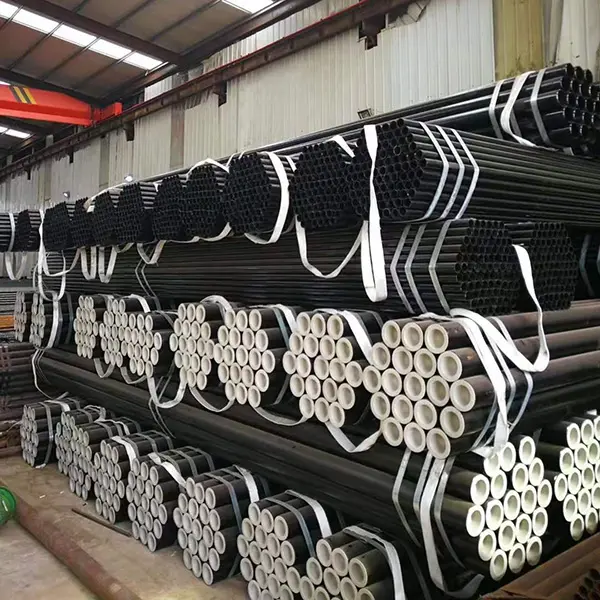
Square tube 20 x 20, referring to a hollow structural section with a 20mm x 20mm cross-section, is a fundamental building block in a diverse range of industries including construction, manufacturing, automotive, and infrastructure. Its ubiquity stems from its favorable strength-to-weight ratio, cost-effectiveness, and ease of fabrication. Within the steel product chain, it sits downstream from primary steel production, undergoing forming and welding processes to achieve its final dimensions and properties. Core performance characteristics encompass its load-bearing capacity – both tensile and compressive – its resistance to bending and torsion, and its weldability. Understanding these characteristics is crucial for engineers and procurement professionals to ensure structural integrity and project success. This guide provides a comprehensive technical overview of square tube 20 x 20, covering material science, manufacturing processes, performance parameters, potential failure modes, and relevant industry standards.
Material Science & Manufacturing
Square tube 20 x 20 is most commonly manufactured from carbon steel, specifically grades such as Q235 (Chinese standard), A36 (ASTM), or S235JR (EN). These steels possess a primary composition of iron with varying percentages of carbon, manganese, silicon, and phosphorus. The carbon content, typically ranging from 0.05% to 0.25% in these grades, dictates the steel's hardness and weldability. Manganese improves strength and toughness, while silicon acts as a deoxidizer during steelmaking. The manufacturing process generally involves several stages: steel strip forming, longitudinal seam welding, and finishing operations. Strip forming is typically done via roll forming, where a flat steel strip is progressively bent into a square shape. High-frequency resistance welding (HFRW) is the predominant welding method, utilizing electromagnetic induction to heat the edges of the strip and forge them together. Key parameters during HFRW include welding frequency, welding speed, and applied force. Precise control of these parameters is critical to achieving a strong, consistent weld seam free from defects such as porosity or incomplete fusion. Post-welding, the tubes undergo processes like deburring, normalizing (heat treatment to refine grain structure), pickling (acid cleaning to remove scale), and coating (e.g., galvanizing or painting) for corrosion protection. The mechanical properties of the finished tube, like yield strength and tensile strength, are heavily influenced by the steel grade and the heat treatment applied.
Performance & Engineering
The performance of square tube 20 x 20 in structural applications is governed by its section modulus, moment of inertia, and torsional rigidity. The section modulus (S) represents the tube's resistance to bending stress and is calculated as the area divided by the distance to the neutral axis. A larger section modulus indicates higher bending resistance. The moment of inertia (I) quantifies the tube's resistance to rotational acceleration. Torsional rigidity, which is a measure of resistance to twisting, is crucial in applications experiencing torque loads. Furthermore, the tube's susceptibility to buckling needs careful consideration, particularly for slender members subjected to compressive loads. Euler's buckling formula is frequently employed to determine the critical buckling load. Environmental resistance is also paramount. Exposure to corrosive environments, such as marine or industrial atmospheres, can lead to accelerated corrosion, compromising the tube's structural integrity. Protective coatings, like galvanizing or epoxy powder coating, are essential to mitigate corrosion. Compliance requirements vary depending on the application and geographic location. Construction applications typically adhere to building codes (e.g., IBC in the US, Eurocode in Europe) which specify minimum material properties and design safety factors. Automotive applications demand adherence to stringent standards related to crashworthiness and fatigue performance.
Technical Specifications
| Parameter | Unit | Q235 (Typical) | A36 (Typical) |
|---|---|---|---|
| Yield Strength | MPa | 235 | 250 |
| Tensile Strength | MPa | 375 | 400 |
| Elongation | % | 21 | 20 |
| Wall Thickness | mm | 1.0 - 3.0 | 1.2 - 3.5 |
| Outer Dimension | mm | 20 x 20 | 20 x 20 |
| Weight per Meter | kg/m | 0.88 – 2.64 (depending on wall thickness) | 0.95 - 3.15 (depending on wall thickness) |
Failure Mode & Maintenance
Square tube 20 x 20 is susceptible to several failure modes in practical applications. Corrosion is a primary concern, particularly in exposed environments, leading to material loss and reduced load-bearing capacity. Fatigue cracking can occur under cyclic loading, initiating at stress concentrators like weld seams or sharp corners. This is particularly relevant in dynamic applications such as vehicle chassis or vibrating machinery. Buckling failure is common in compression members, especially those with high slenderness ratios. Weld defects, such as porosity or incomplete fusion, can significantly reduce the tube's strength and ductility. Denting or localized deformation can occur due to impact loads. Maintenance strategies focus on preventative measures. Regular inspection for corrosion is crucial, with prompt repair or replacement of corroded sections. Protective coatings should be periodically inspected and reapplied as needed. Weld seams should be visually inspected for cracks or defects. For applications involving cyclic loading, periodic non-destructive testing (NDT), such as ultrasonic testing or radiographic inspection, is recommended to detect fatigue cracks before they reach critical size. Load monitoring can also help identify potential overload conditions. Appropriate cleaning and surface treatment can help prevent corrosion. Avoidance of sharp impacts or excessive loads will mitigate denting and deformation.
Industry FAQ
Q: What is the difference between Q235 and A36 steel for square tube applications?
A: While both Q235 and A36 are common carbon steels used for square tubing, A36 generally exhibits slightly higher yield and tensile strength. Q235 is a Chinese standard, and its properties can vary slightly depending on the manufacturer, whereas A36 is more consistently specified according to ASTM standards. For many general construction applications, the difference is negligible, but for critical load-bearing applications, A36 might be preferred due to its more defined mechanical properties.
Q: How does the wall thickness affect the load-bearing capacity of a 20x20 square tube?
A: The load-bearing capacity is directly proportional to the wall thickness. Increasing the wall thickness significantly increases the section modulus and moment of inertia, leading to a substantial increase in bending resistance and compressive strength. However, increasing wall thickness also increases the tube's weight and cost.
Q: What type of corrosion protection is most effective for square tubes used in marine environments?
A: Hot-dip galvanizing provides excellent corrosion protection in marine environments due to the formation of a zinc coating that sacrificially corrodes, protecting the underlying steel. Epoxy powder coating over a galvanized surface offers even greater protection, providing a barrier against moisture and salt spray. Regular inspection and maintenance of the coating are essential.
Q: What is the impact of welding on the mechanical properties of the square tube?
A: Welding can introduce residual stresses and alter the microstructure of the steel near the weld zone, potentially reducing its strength and ductility. Proper welding procedures, including preheating, controlled cooling, and post-weld heat treatment (PWHT), are crucial to minimize these effects. Welder qualification and adherence to relevant welding codes (e.g., AWS) are also vital.
Q: What are the key considerations when selecting a square tube for a structural application involving cyclic loading?
A: Fatigue resistance is the primary consideration. Select a steel grade with good fatigue strength and ensure that the weld seams are of high quality and free from defects. Stress concentration points should be minimized through careful design. Consider using a higher safety factor to account for the uncertainty in fatigue life prediction. Periodic NDT is recommended to monitor for crack initiation.
Conclusion
Square tube 20 x 20 represents a versatile and cost-effective structural component widely used across numerous industries. Its performance characteristics, dictated by material selection, manufacturing quality, and proper engineering design, are crucial for ensuring structural integrity and longevity. Understanding the nuances of its material science, potential failure modes, and relevant industry standards is paramount for engineers and procurement professionals.
Future developments will likely focus on advancements in steel alloys with enhanced corrosion resistance and higher strength-to-weight ratios, as well as improved welding techniques to minimize residual stresses and improve weld quality. Sustainable manufacturing practices, including the use of recycled steel and energy-efficient production processes, will also gain prominence. Proper maintenance and inspection routines remain critical for maximizing the service life and reliability of square tube structures.
