

Introduction
SS316 seamless pipe is an austenitic stainless steel pipe known for its exceptional corrosion resistance, high tensile strength, and suitability for demanding applications. It occupies a critical position in industries requiring robust fluid and gas transfer systems, including chemical processing, pharmaceutical manufacturing, food and beverage production, oil and gas, and marine engineering. Unlike welded pipe, the seamless construction eliminates the weld seam, a potential point of failure, offering superior pressure containment and enhanced reliability. Core performance characteristics revolve around its resistance to pitting and crevice corrosion due to the molybdenum content, its ability to withstand high temperatures, and its consistent mechanical properties throughout the pipe’s cross-section. The industry faces challenges relating to consistent alloy composition, maintaining dimensional tolerances during manufacturing, and verifying traceability of materials for critical applications. SS316 seamless pipe addresses these challenges by offering a high-quality, durable solution optimized for longevity and operational safety.
Material Science & Manufacturing
SS316 seamless pipe derives its properties from a carefully balanced chemical composition. The primary alloying elements include iron (Fe), chromium (16-18%), nickel (10-14%), and molybdenum (2-3%). Chromium provides the foundation for corrosion resistance by forming a passive chromium oxide layer on the surface. Nickel stabilizes the austenitic structure, enhancing ductility and toughness, especially at cryogenic temperatures. Molybdenum significantly improves resistance to pitting and crevice corrosion in chloride environments. Carbon content is typically limited to 0.08% to minimize carbide precipitation, which can compromise corrosion resistance. Manufacturing begins with the production of a solid billet of SS316 alloy. This billet is then heated and pierced using a rotary or mandrel piercing process to create a hollow tube. Subsequent hot rolling and cold drawing operations refine the dimensions and improve the surface finish. Key parameter control during manufacturing includes precise temperature control during heating and rolling to avoid grain growth or defects. Dimensional tolerances are maintained through rigorous quality checks utilizing non-destructive testing (NDT) methods like ultrasonic testing and eddy current testing. The pickling and passivation process is crucial to remove surface contaminants and maximize the effectiveness of the chromium oxide passive layer. Residual stress relief annealing is often employed to improve the pipe’s resistance to stress corrosion cracking.
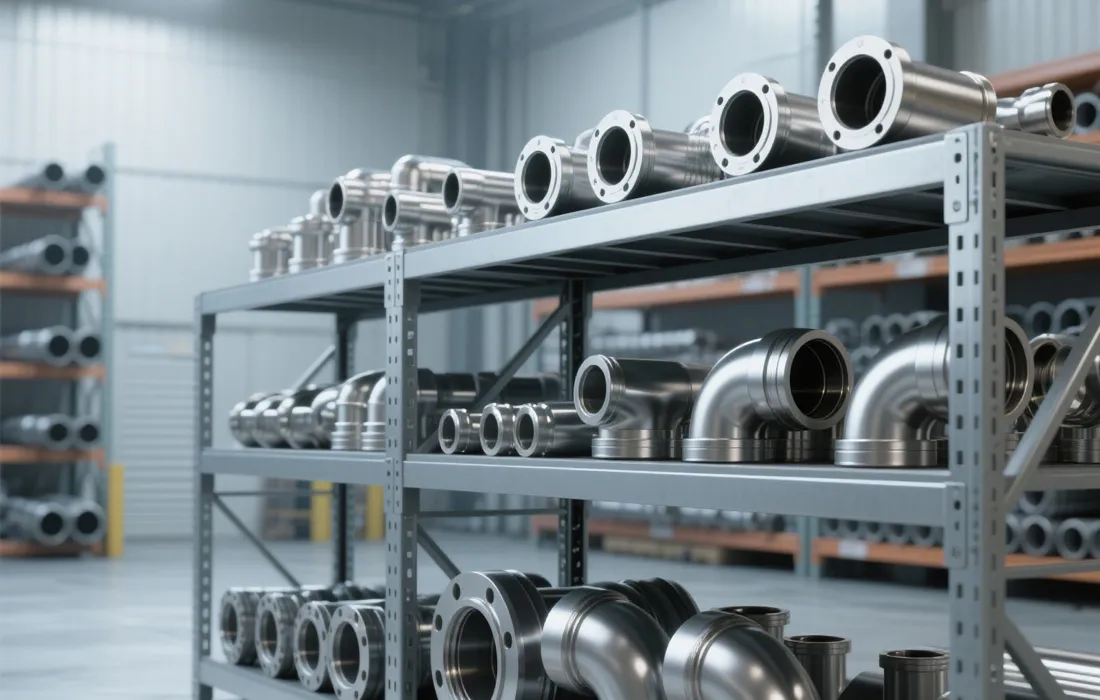
Performance & Engineering
The performance of SS316 seamless pipe is heavily influenced by its mechanical properties and environmental resistance. Tensile strength typically ranges from 630-830 MPa, with yield strength around 205-275 MPa, and elongation between 30-60%. These values ensure the pipe can withstand substantial internal and external pressures. The pipe’s resistance to corrosion is paramount, particularly in aggressive environments. Pitting resistance equivalent number (PREN) is a key metric, typically exceeding 24 for SS316, indicating strong resistance to localized corrosion. Force analysis must account for internal pressure, external loads, thermal expansion, and potential vibration. Stress calculations adhering to ASME B31.3 (Process Piping) or similar standards are essential for safe operation. Environmental resistance extends to elevated temperatures; SS316 can maintain its strength and corrosion resistance up to approximately 870°C. However, prolonged exposure to high temperatures can lead to sensitization (carbide precipitation), reducing intergranular corrosion resistance. Compliance requirements vary depending on the application; for example, food and beverage applications require compliance with 3-A Sanitary Standards, while oil and gas applications necessitate adherence to NACE MR0175/ISO 15156 for sour service. Functional implementation often involves welding the pipe into a larger system; proper welding procedures and filler metal selection are critical to maintain the corrosion resistance and mechanical integrity of the joint.
Technical Specifications
| Parameter | Unit | Specification (Typical) | Testing Standard |
|---|---|---|---|
| Outer Diameter | mm | 1/2" – 8" (12.7 – 203.2) | ASTM E29 |
| Wall Thickness | mm | SCH 10 – SCH 160 (2.3 – 12.7) | ASTM E29 |
| Tensile Strength | MPa | 630-830 | ASTM A370 |
| Yield Strength | MPa | 205-275 | ASTM A370 |
| Elongation | % | 30-60 | ASTM A370 |
| Pitting Resistance Equivalent (PREN) | - | >24 | Calculated per formula |
Failure Mode & Maintenance
SS316 seamless pipe, despite its inherent durability, is susceptible to several failure modes. Stress corrosion cracking (SCC) can occur in chloride-containing environments under tensile stress, especially if sensitization has occurred. Pitting and crevice corrosion are prevalent in stagnant fluids or areas with localized contamination. Fatigue cracking can result from cyclic loading, particularly at weld joints or areas of stress concentration. Erosion corrosion occurs when abrasive particles in the fluid flow erode the protective passive layer. General corrosion, though slow, can occur in highly acidic or alkaline environments. Oxidation at elevated temperatures can also lead to material degradation over extended periods. Maintenance strategies involve regular visual inspections for signs of corrosion, pitting, or cracking. Non-destructive testing (NDT) methods like ultrasonic testing, radiography, and eddy current testing should be performed periodically to detect internal flaws or corrosion. Proper cleaning and removal of corrosive contaminants are essential. Cathodic protection can be used in specific applications to mitigate corrosion. For systems operating at high temperatures, periodic annealing may be required to restore ductility and prevent sensitization. If cracks are detected, repair welding using appropriate filler metals and post-weld heat treatment may be necessary. Preventative maintenance programs should include regular fluid analysis to monitor for corrosive species and adjust operating parameters accordingly.
Industry FAQ
Q: What is the primary difference between SS316 and SS304 seamless pipe in terms of corrosion resistance?
A: The key difference lies in the molybdenum content. SS316 contains 2-3% molybdenum, which significantly enhances its resistance to pitting and crevice corrosion, particularly in chloride environments. SS304 lacks this molybdenum addition, making it more susceptible to localized corrosion in similar conditions. Therefore, SS316 is preferred for applications involving saltwater, chemical processing, or environments with high chloride concentrations.
Q: How does the manufacturing process of seamless pipe affect its mechanical properties compared to welded pipe?
A: Seamless pipe, having no weld seam, eliminates a potential weak point in the structure. The hot rolling and cold drawing processes involved in seamless pipe manufacturing result in a more uniform grain structure and mechanical properties throughout the pipe’s cross-section. Welded pipe, while generally acceptable for many applications, can exhibit localized variations in strength and ductility at the weld joint.
Q: What is sensitization in SS316 and how can it be prevented?
A: Sensitization refers to the precipitation of chromium carbides at grain boundaries during exposure to temperatures between 425-815°C. This depletes the chromium content in the surrounding areas, making the pipe susceptible to intergranular corrosion. Prevention includes using low-carbon grades of SS316 (e.g., 316L), solution annealing followed by rapid cooling, or stabilization with titanium or niobium.
Q: What non-destructive testing (NDT) methods are commonly used to inspect SS316 seamless pipe?
A: Common NDT methods include ultrasonic testing (UT) for detecting internal flaws, radiography (RT) for imaging the internal structure, eddy current testing (ET) for surface and near-surface defects, and liquid penetrant testing (PT) for detecting surface cracks. Hydrostatic testing is also used to verify the pipe’s pressure-holding capacity.
Q: What are the limitations of SS316 seamless pipe in highly corrosive environments?
A: While SS316 offers excellent corrosion resistance, it's not immune to all corrosive attacks. In extremely acidic or alkaline environments, or in the presence of specific highly corrosive chemicals (e.g., concentrated sulfuric acid), SS316 may experience general corrosion. In such cases, more corrosion-resistant alloys like Hastelloy or titanium may be required.
Conclusion
SS316 seamless pipe represents a critical engineering material offering a robust and reliable solution for fluid and gas transfer across a wide range of industries. Its superior corrosion resistance, high mechanical strength, and seamless construction provide distinct advantages over alternative materials and manufacturing methods. Understanding the material science, manufacturing processes, performance characteristics, and potential failure modes is crucial for ensuring the safe and efficient operation of systems utilizing this pipe.
Future advancements will likely focus on refining manufacturing techniques to further minimize dimensional variations and enhance surface finish. Research into improved alloy compositions with even greater corrosion resistance, particularly in emerging applications like carbon capture and hydrogen transportation, is also ongoing. Selecting the correct grade of SS316 and implementing appropriate maintenance procedures remain essential for maximizing the lifespan and minimizing the risk of failure in demanding industrial environments.
