
Introduction
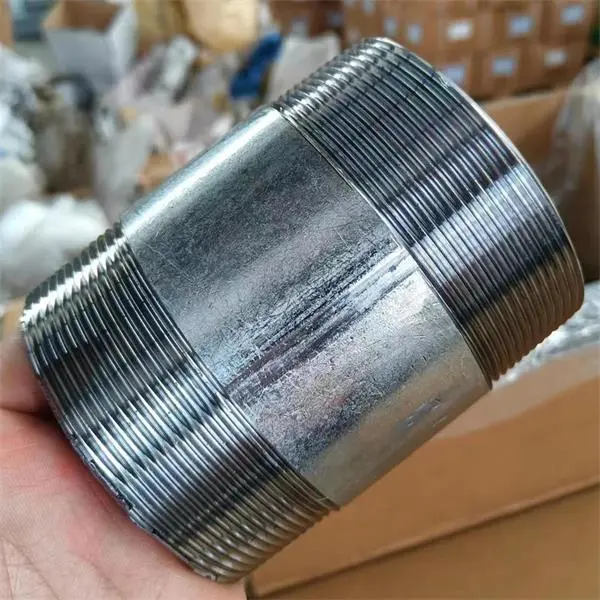
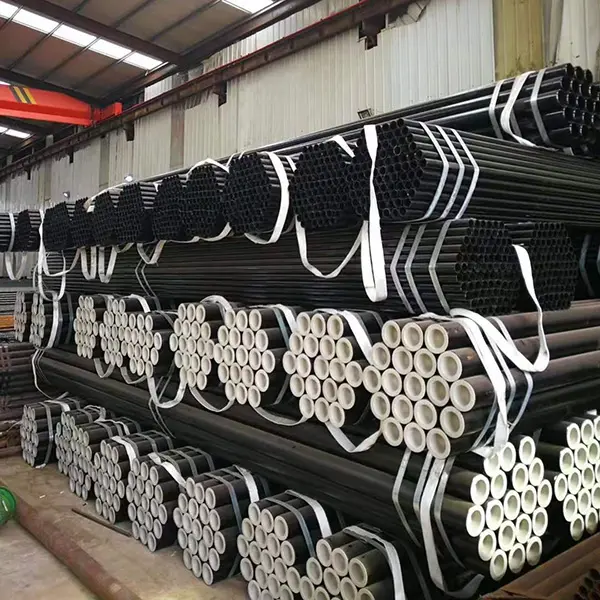
St52 seamless pipe is a hot-finished structural steel pipe manufactured without a welded seam, conforming to DIN 2440/EN 10210 standards. Its position within the industrial chain is as a critical component in pressure applications, mechanical structures, and fluid transport systems. The core performance characteristics revolve around its high tensile strength, weldability, and ability to withstand elevated temperatures and pressures. Primarily utilized in power generation, oil & gas, chemical processing, and general engineering, st52 pipe offers a reliable solution where material integrity is paramount. The seamless construction minimizes potential failure points associated with welds, contributing to enhanced safety and longevity in critical applications. A significant pain point in the industry surrounds consistent chemical composition control and achieving required mechanical properties across the entire pipe length, directly impacting stress corrosion cracking resistance and overall service life.
Material Science & Manufacturing
The raw material for st52 seamless pipe is carbon steel, typically containing approximately 0.24-0.37% carbon, 0.15-0.40% manganese, 0.025% maximum phosphorus, and 0.025% maximum sulfur. The steel's microstructure is primarily ferritic-pearlitic, influencing its ductility and toughness. Manufacturing begins with billet heating to approximately 1200°C. The hot working process employs rotary piercing, where a mandrel is forced through a heated rotating billet, forming the hollow pipe. Subsequent processes include reheating, rolling (to achieve the desired outer diameter and wall thickness), and sizing. Critical parameter control during rotary piercing involves precise mandrel alignment and speed synchronization to avoid eccentricity and wall thickness variations. Rolling parameters – temperature, reduction ratio, and roll pass sequence – are crucial for achieving the specified mechanical properties. Non-destructive testing (NDT), including ultrasonic testing and eddy current testing, is employed to detect internal and surface defects. Chemical composition verification is performed through spectral analysis, ensuring adherence to DIN 2440/EN 10210 specifications. The cooling rate after hot working significantly impacts the microstructure and therefore the final mechanical properties. Controlled cooling minimizes residual stresses and promotes optimal ferrite-pearlite distribution. Variations in sulfur content can influence machinability but also increase the susceptibility to hydrogen-induced cracking during welding.
Performance & Engineering
St52 seamless pipe exhibits a minimum yield strength of 275 MPa and a tensile strength of 410-510 MPa, governed by EN 10210. Force analysis in pressure applications requires consideration of hoop stress (σh = PD/2t, where P is pressure, D is diameter, and t is wall thickness) and longitudinal stress (σl = PD/4t). These stresses must remain below the allowable stress determined by a safety factor applied to the yield strength. Environmental resistance is a key performance parameter. St52 steel is susceptible to corrosion in humid environments, particularly in the presence of chlorides. Protective coatings, such as epoxy or polyurethane, are commonly applied to mitigate corrosion. Compliance requirements include Pressure Equipment Directive (PED) 2014/68/EU for pressure vessels and piping systems, and conformity to relevant national codes and standards (e.g., ASME B31.3 for process piping). Functional implementation considerations include weldability; preheating is often required to minimize hydrogen absorption and prevent cracking during welding. The pipe’s dimensional accuracy and straightness are critical for proper fit-up and alignment in complex piping systems. Fatigue resistance is also a critical design consideration, especially in applications involving cyclic loading. Surface finish impacts fatigue life; smoother surfaces exhibit higher fatigue strength. Understanding the Charpy impact energy at various temperatures is essential for applications in cold climates.
Technical Specifications
| Parameter | Unit | Specification (Typical) | Testing Standard |
|---|---|---|---|
| Outer Diameter | mm | 10.2 – 660.4 | EN 10210 |
| Wall Thickness | mm | 2 – 25 | EN 10210 |
| Yield Strength | MPa | ≥ 275 | EN 10002-1 |
| Tensile Strength | MPa | 410 – 510 | EN 10002-1 |
| Elongation | % | ≥ 21 | EN 10002-1 |
| Impact Energy (Charpy V-notch, 20°C) | J | ≥ 27 | EN 10002-2 |
Failure Mode & Maintenance
Common failure modes in st52 seamless pipe include corrosion, stress corrosion cracking (SCC), fatigue cracking, and pitting corrosion. SCC is particularly prevalent in environments containing chlorides or hydrogen sulfide, leading to brittle fracture. Fatigue cracking originates from stress concentrations, such as at weld defects or surface scratches, and propagates under cyclic loading. Pitting corrosion occurs due to localized breakdown of the protective passive layer. Oxidation at elevated temperatures can lead to material thinning and loss of mechanical properties. Maintenance practices include regular visual inspection for signs of corrosion, pitting, or cracking. Non-destructive testing (NDT) methods, such as ultrasonic testing and radiographic testing, are essential for detecting internal flaws. Protective coatings should be inspected periodically and repaired as needed. Internal cleaning to remove deposits and debris is crucial to prevent localized corrosion. Cathodic protection can be employed in buried pipelines to mitigate corrosion. For critical applications, stress relief annealing after welding is recommended to reduce residual stresses. Proper weld procedure qualification and welder certification are vital to minimizing weld defects and ensuring long-term reliability. The implementation of a comprehensive corrosion monitoring program is recommended in harsh environments.
Industry FAQ
Q: What is the primary difference between st52 seamless pipe and welded pipe in terms of mechanical properties?
A: Seamless pipe, by eliminating the weld seam, inherently avoids the potential for weld-related defects such as porosity, slag inclusions, and weld metal embrittlement. This results in more uniform mechanical properties – particularly higher impact toughness and fatigue resistance – throughout the pipe body. Welded pipe, while cost-effective, requires rigorous quality control of the welding process to achieve comparable performance.
Q: How does the carbon equivalent (CE) of the steel affect weldability?
A: A higher carbon equivalent (calculated using the %C, %Mn, %Si, %Mo, %V, %Cr, %Ni) indicates a greater tendency for hardening during welding, increasing the risk of cracking. St52 steel has a relatively moderate CE, generally requiring preheating and controlled cooling rates to ensure weldability. Lower CE steels are preferable for applications demanding high ductility welds.
Q: What are the considerations when using st52 pipe in high-temperature applications?
A: At elevated temperatures, the yield strength and creep resistance of st52 steel decrease. Oxidation becomes a significant concern, leading to material loss. Scaling can also occur. Selection must consider the operating temperature, stress levels, and duration of exposure. Protective coatings or alloy selection may be necessary for temperatures exceeding approximately 300°C.
Q: What is the typical surface roughness requirement for st52 pipe intended for hydraulic applications?
A: For hydraulic applications, a relatively smooth surface finish is desired to minimize friction losses and prevent premature wear of seals. A typical surface roughness (Ra) requirement would be ≤ 0.8 μm. Surface preparation techniques, such as honing or polishing, may be employed to achieve this level of smoothness.
Q: What NDT methods are most commonly used to verify the integrity of st52 seamless pipe after installation?
A: Ultrasonic testing (UT) is the most common NDT method for detecting internal flaws such as cracks, inclusions, and laminations. Radiographic testing (RT) provides a visual image of the internal structure and is effective for detecting volumetric defects. Eddy current testing (ET) can detect surface cracks and corrosion. Liquid penetrant testing (PT) is used to identify surface-breaking flaws. Selection of the appropriate NDT method depends on the specific application and the type of defect being sought.
Conclusion
St52 seamless pipe remains a crucial material in numerous industrial applications demanding reliable performance under pressure and stress. Its advantageous combination of mechanical strength, weldability, and cost-effectiveness solidifies its position in sectors like oil & gas, power generation, and chemical processing. However, careful consideration of environmental factors, particularly corrosion potential, is essential for ensuring long-term integrity.
Future trends point towards increased utilization of advanced NDT techniques for real-time monitoring of pipe condition and predictive maintenance strategies. Furthermore, research into improved corrosion-resistant coatings and the development of higher-strength steel alloys will continue to enhance the performance and longevity of seamless pipe systems. Implementing a holistic approach, encompassing material selection, manufacturing control, and diligent maintenance practices, is paramount to maximizing the service life and minimizing the risk of failure.
