
Introduction
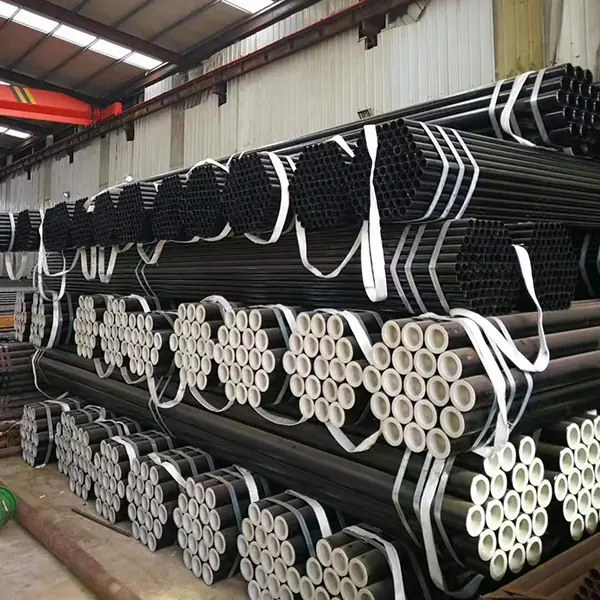
Steel pipes are cylindrical hollow sections utilized extensively in various industries including oil & gas, construction, water conveyance, and manufacturing. Classified by manufacturing process, material composition, and application, they represent a critical component in fluid and gas transport systems, structural support, and mechanical applications. This guide provides a comprehensive technical overview of steel pipes, encompassing material science, manufacturing techniques, performance characteristics, failure modes, and industry standards. Core industry pain points revolve around ensuring corrosion resistance, maintaining pressure integrity, and selecting the appropriate steel grade for specific operating conditions. The prevalence of substandard materials and improper welding procedures necessitate detailed technical understanding for reliable and safe operation.
Material Science & Manufacturing
The primary raw material for steel pipe production is carbon steel, though alloy steels incorporating elements like chromium, nickel, molybdenum, and vanadium are frequently used to enhance specific properties. Carbon content dictates hardness and weldability, with lower carbon content generally improving ductility. Manufacturing processes include Seamless pipe production – utilizing processes like Extrusion or piercing, resulting in a uniform structure and high pressure handling capacity. Welded pipe production – utilizing Electric Resistance Welding (ERW), Submerged Arc Welding (SAW), or High-Frequency Induction Welding (HFIW). ERW is cost-effective for smaller diameters, while SAW is suited for larger, heavier-walled pipes. HFIW offers high speed and quality. Key parameter control during manufacturing includes maintaining precise temperature profiles during welding to prevent defects, controlling reduction ratios during forming operations to prevent wall thinning, and rigorous dimensional inspection to ensure adherence to specifications. Chemical composition is critical; deviations from specified tolerances can compromise corrosion resistance and mechanical strength. Heat treatment processes, such as normalizing and quenching & tempering, are used to refine the metallurgical structure and achieve desired mechanical properties. The grain structure significantly affects toughness and susceptibility to stress corrosion cracking.
Performance & Engineering
Performance is dictated by several factors, including tensile strength, yield strength, elongation, impact toughness (Charpy V-notch), and corrosion resistance. Force analysis, particularly pressure vessel calculations, is paramount in determining appropriate wall thickness to withstand internal or external pressure. Environmental resistance is crucial; exposure to corrosive environments, such as seawater or acidic fluids, necessitates selection of appropriate materials and protective coatings. Compliance requirements vary by region and application. For instance, ASME B31.3 governs power piping, while API 5L covers line pipe used in the petroleum industry. Detailed stress analysis, including finite element analysis (FEA), is often employed to evaluate the structural integrity of steel pipes under complex loading conditions. Fatigue analysis is essential for applications involving cyclic loading. Consideration must also be given to thermal expansion and contraction, and appropriate expansion joints must be incorporated into the design to prevent excessive stress. The cathodic protection method is frequently utilized to mitigate corrosion in submerged applications. Galvanic corrosion, arising from dissimilar metal contact, must be carefully addressed through material selection and insulation techniques.
Technical Specifications
| Steel Grade | Yield Strength (MPa) | Tensile Strength (MPa) | Wall Thickness Range (mm) |
|---|---|---|---|
| ASTM A53 Grade B | 250 | 450 | 2.8 – 12.7 |
| ASTM A106 Grade B | 276 | 517 | 3.4 – 40.6 |
| API 5L X42 | 345 | 485 | 4.0 – 25.4 |
| API 5L X52 | 379 | 531 | 4.0 – 30.0 |
| ASTM A333 Grade 6 | 276 | 483 | 2.8 - 19.1 |
| 304/304L Stainless Steel | 205 | 517 | 1.2 – 12.7 |
Failure Mode & Maintenance
Common failure modes include corrosion (uniform, pitting, galvanic, stress corrosion cracking), fatigue cracking (due to cyclic loading), weld defects (porosity, slag inclusions, lack of fusion), and mechanical damage (dents, gouges). Failure analysis often involves fractographic examination to determine the initiation site and propagation mechanism. Corrosion is arguably the most prevalent failure mode, particularly in aggressive environments. Regular inspection using non-destructive testing (NDT) methods – such as ultrasonic testing (UT), radiographic testing (RT), magnetic particle inspection (MPI), and liquid penetrant inspection (LPI) – is crucial for detecting cracks and corrosion. Preventive maintenance strategies include applying protective coatings (epoxy, polyurethane, polyethylene), implementing cathodic protection, and conducting regular hydrostatic testing. For pipelines, internal inspection using intelligent pigging systems provides comprehensive assessment of wall condition and defect mapping. Addressing corrosion proactively significantly extends the service life of steel pipes. Proper weld procedure qualification and welder certification are essential to minimize weld-related failures. Periodic re-tightening of bolted connections is also important to prevent leaks.
Industry FAQ
Q: What is the difference between seamless and welded steel pipe, and when would you choose one over the other?
A: Seamless pipe is manufactured without a weld seam, offering superior strength and resistance to pressure. Welded pipe, conversely, is manufactured by welding steel plates together. Seamless pipe is preferred for high-pressure applications, critical services, and where uniform mechanical properties are essential. Welded pipe is more cost-effective and readily available, making it suitable for lower-pressure applications, structural support, and general fluid transport. The choice depends on the specific application requirements and budget constraints.
Q: How does the carbon content in steel pipe affect its properties and application?
A: Higher carbon content increases hardness and tensile strength but reduces ductility and weldability. Lower carbon content offers better ductility and weldability but reduces hardness and strength. For applications requiring high strength and wear resistance, higher carbon steels are preferred. For applications requiring good formability and weldability, lower carbon steels are more suitable. Specific applications dictate the optimal carbon content.
Q: What are the common corrosion mitigation techniques for steel pipes?
A: Common techniques include applying protective coatings (epoxy, polyurethane, polyethylene), implementing cathodic protection (sacrificial anode or impressed current), using corrosion-resistant alloys (stainless steel, duplex stainless steel), and employing corrosion inhibitors in the fluid stream. The selection of the appropriate technique depends on the severity of the corrosive environment and the operating conditions.
Q: What is the role of NDT in ensuring the integrity of steel pipes?
A: Non-destructive testing (NDT) is vital for detecting flaws and defects without damaging the pipe. Techniques like Ultrasonic Testing (UT), Radiographic Testing (RT), Magnetic Particle Inspection (MPI), and Liquid Penetrant Inspection (LPI) are used to identify cracks, corrosion, and weld defects. Regular NDT inspections help ensure structural integrity and prevent catastrophic failures.
Q: What are the key considerations when specifying steel pipe for a high-temperature application?
A: Key considerations include creep resistance, oxidation resistance, and thermal stability. Alloy steels containing elements like chromium and molybdenum are often used to enhance high-temperature performance. The operating temperature, pressure, and fluid composition must be carefully considered to select the appropriate steel grade and wall thickness. Thermal expansion and contraction must also be accounted for in the design.
Conclusion
Steel pipes remain a fundamental component across diverse industries, and a thorough understanding of their material science, manufacturing processes, and performance characteristics is paramount for ensuring safe, reliable, and cost-effective operation. The selection of the appropriate steel grade, coupled with rigorous quality control and preventative maintenance, is critical to mitigating failure modes and extending service life. Continuous advancements in materials and NDT techniques are further enhancing the performance and longevity of steel pipe systems.
Looking ahead, the development of more corrosion-resistant alloys, coupled with sophisticated inspection technologies, will play a crucial role in addressing the challenges associated with increasingly demanding operating environments. Furthermore, the integration of digital technologies, such as data analytics and machine learning, will enable predictive maintenance strategies and optimize the lifecycle management of steel pipe infrastructure. Adherence to relevant industry standards and best practices remains essential for maintaining the highest levels of safety and reliability.
