
Introduction
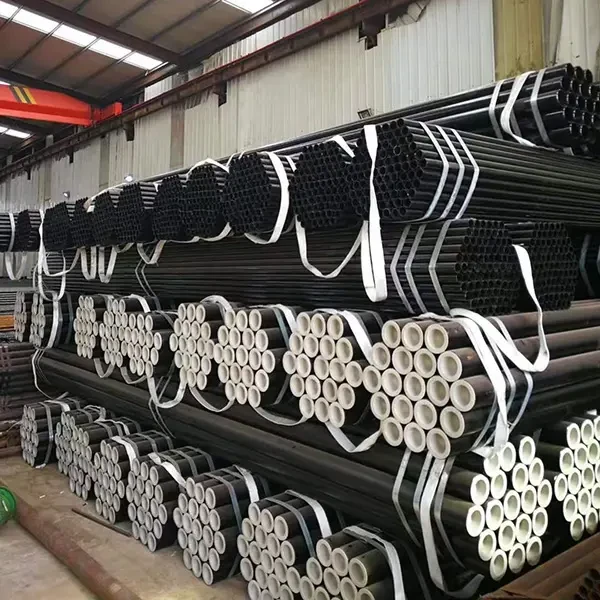
Steel tube dimensions are critical parameters defining the geometric characteristics of tubular steel products. These dimensions, encompassing outside diameter (OD), wall thickness, and length, dictate a tube’s mechanical performance, fluid conveyance capacity, and suitability for specific engineering applications. Within the broader steel industry supply chain, precise dimensional control is paramount, impacting downstream processes like welding, fitting, and structural assembly. The fundamental performance metrics directly linked to these dimensions include pressure rating, bending moment resistance, and corrosion resistance, particularly related to surface area exposure. The proliferation of various steel tube manufacturing standards (detailed in the footer) necessitates a comprehensive understanding of dimensional tolerances and testing methodologies. Deviation from specified dimensions can lead to catastrophic failure in critical applications such as pipeline infrastructure, automotive components, and aerospace structures, making accurate measurement and adherence to industry standards non-negotiable. This guide provides an in-depth technical overview of steel tube dimensions, encompassing material science, manufacturing processes, performance considerations, failure modes, and relevant industry standards.
Material Science & Manufacturing
The raw material for steel tubes is typically carbon steel, alloy steel, or stainless steel. Carbon steel, varying in carbon content, offers a balance of strength and weldability. Alloy steels, incorporating elements like chromium, molybdenum, and nickel, provide enhanced mechanical properties such as increased yield strength and improved corrosion resistance. Stainless steels, with a minimum chromium content of 10.5%, exhibit superior corrosion resistance. The initial material form is generally steel billets, blooms, or slabs. The manufacturing process significantly impacts final dimensional accuracy. Common methods include seamless tube production (e.g., mandrel mill, extrusion) and welded tube production (e.g., Electric Resistance Welding (ERW), High Frequency Induction Welding (HFI)).
Seamless tube manufacturing involves piercing a solid billet to create a hollow tube. The mandrel mill process utilizes a mandrel to control the inside diameter while rollers reduce the outside diameter and wall thickness. Critical parameters during this process include billet temperature, piercing pressure, mandrel speed, and roller gap. Welded tube manufacturing utilizes formed steel strips which are subsequently welded along a seam. ERW uses electrical resistance to heat the edges of the steel strip, while HFI utilizes electromagnetic induction. Precise control of welding current, welding speed, and strip edge preparation are vital to ensure weld integrity and dimensional accuracy. Following either process, tubes undergo sizing operations (e.g., reaming, expanding, reducing) to achieve the desired dimensions and tolerances. Heat treatment processes like annealing and normalizing are employed to relieve stresses induced during forming and welding, and to refine the metallurgical structure for improved mechanical properties. Final dimensional inspection utilizes non-destructive testing (NDT) methods like ultrasonic testing and eddy current testing to verify compliance with specifications.
Performance & Engineering
The performance of steel tubes is inextricably linked to their dimensional characteristics. Outside diameter (OD) and wall thickness directly influence the tube’s resistance to internal pressure. The Barlow’s formula, P = (2Sσ)/D, where P is internal pressure, S is wall thickness, σ is yield strength, and D is OD, highlights this relationship. Bending moment resistance is governed by the section modulus (Z = π(Do^4 - Di^4) / 32D, where Do is OD and Di is ID) and material yield strength. For structural applications, dimensional accuracy is crucial for maintaining geometric integrity and preventing buckling. Environmental resistance is also affected by dimensions; a larger surface area (due to larger OD) can accelerate corrosion rates. Compliance requirements vary depending on the application. For example, pressure vessels require adherence to ASME Boiler and Pressure Vessel Code Section VIII, Division 1, which specifies stringent dimensional tolerances and non-destructive examination procedures. Pipeline applications adhere to API 5L, defining dimensional and mechanical requirements for line pipe. Fatigue performance is impacted by surface finish, which is affected by manufacturing processes and dimensional control. Residual stresses induced during manufacturing can also contribute to fatigue cracking, necessitating appropriate heat treatment and stress relieving processes.
Technical Specifications
| Parameter | ASTM A53 Grade B (Seamless/Welded) | API 5L X42 (Line Pipe) | EN 10210-2 S235JR (Structural Tube) | 304/304L Stainless Steel (Seamless) |
|---|---|---|---|---|
| Outside Diameter (OD) Range (inches) | 0.250 – 4.000 | 6.625 – 48.000 | 13.7 – 669 | 0.125 – 8.000 |
| Wall Thickness Range (inches) | 0.065 – 0.500 | 0.154 – 1.000 | 2 – 25 | 0.035 – 0.250 |
| Yield Strength (MPa) | 250 | 345 | 235 | 205 |
| Tensile Strength (MPa) | 370 | 485 | 360 | 517 |
| OD Tolerance (mm) | ± 0.38 | ± 1.0% of OD | ± 1.6% of OD | ± 0.25 |
| Wall Thickness Tolerance (mm) | ± 0.051 | ± 10% of nominal wall | ± 10% of nominal wall | ± 0.025 |
Failure Mode & Maintenance
Common failure modes in steel tubes related to dimensional inaccuracies include corrosion-induced wall thinning, leading to burst failure under pressure; fatigue cracking initiated by stress concentrations at dimensional irregularities (e.g., weld defects); and buckling due to inadequate wall thickness or ovality. Corrosion, particularly in aggressive environments, accelerates wall thinning and reduces the tube’s load-carrying capacity. Cyclic loading can induce fatigue cracks, especially at locations where dimensions deviate from specifications, creating stress risers. Ovality (deviation from circularity) weakens the tube’s resistance to bending and buckling. Delamination can occur in welded tubes due to incomplete fusion or porosity in the weld seam. Oxidation at high temperatures can also lead to material degradation and dimensional changes.
Preventative maintenance includes regular non-destructive testing (NDT) such as ultrasonic testing (UT) to monitor wall thickness and detect corrosion. Visual inspection can identify surface defects and potential areas of concern. Protective coatings (e.g., epoxy, polyurethane) can mitigate corrosion. Hydrostatic testing verifies the tube’s pressure integrity. For welded tubes, periodic radiography or phased array ultrasonic testing (PAUT) assesses weld quality. Proper storage and handling are crucial to prevent damage that could compromise dimensional accuracy. Maintaining accurate records of tube dimensions, material specifications, and inspection results is essential for effective maintenance and lifecycle management.
Industry FAQ
Q: What is the significance of dimensional tolerances in high-pressure applications?
A: In high-pressure applications, even minor deviations from specified dimensions can significantly reduce the tube's pressure rating and increase the risk of catastrophic failure. Tighter tolerances are required to ensure uniform stress distribution and prevent stress concentrations that could initiate cracks. The ASME Boiler and Pressure Vessel Code dictates specific tolerance levels based on the operating pressure and temperature.
Q: How does the manufacturing process influence dimensional accuracy?
A: Seamless tube manufacturing, particularly the mandrel mill process, generally offers better dimensional control compared to welded tube manufacturing. However, advancements in welding technology and quality control procedures have significantly improved the dimensional accuracy of welded tubes. The key is precise control of process parameters and rigorous inspection throughout the manufacturing process.
Q: What are the typical inspection methods used to verify steel tube dimensions?
A: Common inspection methods include external and internal diameter measurements using calipers and micrometers, wall thickness measurement using ultrasonic thickness gauges, straightness and ovality checks using coordinate measuring machines (CMMs), and non-destructive testing (NDT) such as ultrasonic testing (UT) and eddy current testing (ET) to detect subsurface flaws.
Q: How do different steel grades impact dimensional stability under varying temperatures?
A: Different steel grades exhibit varying coefficients of thermal expansion. Stainless steels generally have a higher coefficient of thermal expansion compared to carbon steels, leading to greater dimensional changes with temperature fluctuations. Alloy steels are engineered to minimize thermal expansion for specific applications. Understanding these differences is crucial for applications involving extreme temperatures.
Q: What is the role of heat treatment in achieving desired dimensional stability?
A: Heat treatment processes like annealing, normalizing, and stress relieving are used to relieve residual stresses induced during forming and welding, and to refine the metallurgical structure. This improves dimensional stability and reduces the likelihood of distortion during subsequent processing or service. Proper heat treatment also enhances the tube's resistance to creep and fatigue.
Conclusion
Accurate steel tube dimensions are fundamental to the performance, reliability, and safety of countless engineering applications. This guide has detailed the intricate relationship between material science, manufacturing processes, performance considerations, and potential failure modes, all as they pertain to dimensional accuracy. The selection of appropriate manufacturing techniques, adherence to stringent quality control procedures, and regular inspection and maintenance are critical for ensuring that steel tubes meet the required specifications and deliver optimal performance throughout their service life.
Looking ahead, advancements in non-destructive testing technologies, coupled with increasingly sophisticated process control systems, will further enhance dimensional accuracy and reduce the risk of failures. The ongoing development of new alloy steels with improved mechanical properties and corrosion resistance will also contribute to the longevity and reliability of steel tube systems. A continued focus on standardization and compliance with industry best practices will remain paramount for maintaining the integrity of critical infrastructure and ensuring the safety of industrial operations.
