
Introduction
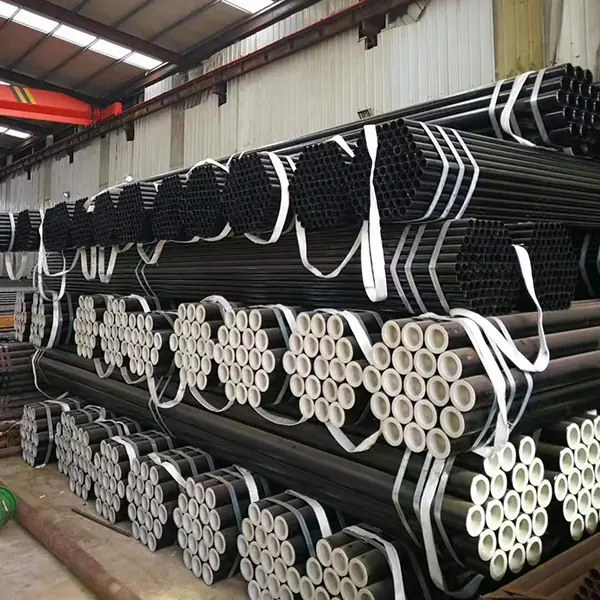
Steel well casing pipe, integral to oil and gas extraction, provides structural integrity to boreholes, preventing collapse and contamination. Its pricing is a complex function of material grade, dimensions, manufacturing process, and market dynamics. This guide details the technical aspects influencing steel well casing pipe price, focusing on material science, manufacturing considerations, performance characteristics, potential failure modes, and relevant industry standards. The primary function of casing is to isolate different geological formations, maintain borehole stability, and facilitate the safe and efficient extraction of hydrocarbons. Accurate cost assessment necessitates a comprehensive understanding of these intertwined factors, moving beyond simple per-foot quotations to encompass lifecycle costs and performance expectations. Casing represents a significant portion of overall well construction costs, making informed procurement decisions crucial for project profitability.
Material Science & Manufacturing
Steel well casing is predominantly manufactured from carbon steel, alloy steel, and stainless steel, each offering specific properties tailored to downhole conditions. Carbon steel (API 5L grades like X42, X56, X65, X70) provides a balance of strength and cost-effectiveness for relatively benign environments. Alloy steels, incorporating elements like chromium, molybdenum, and nickel, enhance corrosion resistance and mechanical properties for more aggressive environments. Stainless steels (304L, 316L, duplex stainless steels) are employed in highly corrosive applications, such as those containing hydrogen sulfide (H2S) or carbon dioxide (CO2). Manufacturing processes include seamless and welded fabrication. Seamless casing, produced through processes like rotary piercing or extrusion, exhibits superior strength and resistance to burst and collapse. Welded casing, manufactured by electric resistance welding (ERW) or submerged arc welding (SAW), offers cost advantages but requires stringent quality control of the weld seam. Key manufacturing parameters include controlled cooling rates to achieve desired microstructure, precise dimensional control to ensure proper fit within the borehole, and thorough non-destructive testing (NDT) – ultrasonic testing (UT), magnetic particle inspection (MPI), radiographic testing (RT) – to detect defects. Material composition is verified through chemical analysis, and mechanical properties (yield strength, tensile strength, elongation, Charpy impact toughness) are confirmed through laboratory testing. Heat treatment processes, such as quenching and tempering, further refine material properties.
Performance & Engineering
The performance of steel well casing is dictated by its ability to withstand internal pressure, external pressure (formation stress), tensile stress (weight of tubing and fluids), and torsional stress (drilling operations). Engineering calculations based on API specifications (API 5C3, API 5CT) determine the required casing wall thickness and grade. Buckling analysis is critical to prevent collapse under external pressure, particularly in deep wells. Tensile strength and yield strength determine the casing’s resistance to axial loads. Corrosion resistance is paramount, and material selection must account for the chemical composition of the formation fluids and gases. Coatings, such as epoxy phenolic or polymer coatings, are frequently applied to enhance corrosion protection. Thread connections (API threads, premium connections) are engineered to provide a leak-proof seal and transmit high loads. Finite element analysis (FEA) is employed to simulate stresses under various loading conditions and optimize casing design. Consideration is given to thermal stresses arising from temperature differentials between the wellbore fluids and the surrounding formation. Fatigue analysis assesses the casing’s resistance to cyclic loading during drilling and production. Compliance with regional regulations regarding well integrity and environmental protection is a mandatory performance aspect.
Technical Specifications
| Parameter | Unit | API 5CT Grade X42 | API 5CT Grade X56 |
|---|---|---|---|
| Yield Strength (Minimum) | psi | 42,000 | 56,000 |
| Tensile Strength (Minimum) | psi | 65,000 | 80,000 |
| Elongation (Minimum) | % | 22 | 20 |
| Charpy V-Notch Impact Energy (20°F) | ft-lbs | 40 | 40 |
| Outside Diameter | inches | 4.5 - 20 | 4.5 - 20 |
| Wall Thickness | inches | 0.156 - 1.375 | 0.156 - 1.375 |
Failure Mode & Maintenance
Common failure modes in steel well casing include corrosion (uniform corrosion, pitting corrosion, galvanic corrosion), cracking (stress corrosion cracking, hydrogen embrittlement cracking, fatigue cracking), and collapse (buckling). Corrosion is often exacerbated by the presence of H2S, CO2, chlorides, and oxygen. Cracking can occur due to sustained tensile stress and exposure to corrosive environments. Collapse results from excessive external pressure exceeding the casing’s buckling resistance. Thread failures can occur due to improper installation, corrosion, or overloading. Maintenance involves regular inspections (corrosion monitoring, ultrasonic testing, radiographic testing) to detect defects early. Cathodic protection systems can mitigate corrosion. Internal coating applications can reduce corrosion from within. Proper cement bonding is crucial to provide support and prevent fluid migration behind the casing. Remedial cementing can address issues with inadequate cementation. Pressure testing verifies the integrity of the casing string. In severe cases, casing may need to be replaced, a costly and complex operation. Monitoring formation pressure and fluid composition is essential for proactive failure prevention. Detailed failure analysis, including metallurgical examination and fracture surface analysis, is critical for identifying root causes and implementing corrective actions.
Industry FAQ
Q: What is the impact of H2S on casing selection and price?
A: Hydrogen sulfide (H2S) is a highly corrosive gas that significantly impacts casing selection and price. Exposure to H2S necessitates the use of more corrosion-resistant materials, such as alloy steels (containing chromium, molybdenum) or stainless steels. This increases material costs. Furthermore, H2S can lead to sulfide stress cracking (SSC), requiring specialized manufacturing processes and quality control measures. Coatings designed for H2S resistance add to the cost. Increased inspection frequency and monitoring are also required, impacting lifecycle costs.
Q: How does casing wall thickness affect price, and what are the trade-offs?
A: Casing wall thickness directly correlates with price; thicker walls require more material. However, increasing wall thickness improves burst and collapse resistance, allowing for higher internal and external pressures. There's a trade-off between cost and performance. Over-specifying wall thickness increases costs unnecessarily, while under-specifying risks failure. Accurate engineering calculations, based on well conditions, are crucial to determine the optimal wall thickness.
Q: What are premium connections, and why are they more expensive than standard API threads?
A: Premium connections are advanced thread designs that provide superior sealing performance, higher load-carrying capacity, and enhanced resistance to fatigue and corrosion compared to standard API threads. They feature tighter tolerances, more complex geometries, and often incorporate metal-to-metal seals. These features contribute to higher manufacturing costs and more rigorous quality control, resulting in a higher price. They are particularly crucial in challenging well conditions, such as high-pressure/high-temperature (HPHT) environments.
Q: How does the manufacturing process (seamless vs. welded) influence casing price?
A: Seamless casing generally commands a higher price than welded casing due to the more complex and energy-intensive manufacturing process. Seamless casing offers superior strength and is preferred for critical applications. Welded casing, manufactured by ERW or SAW, is more cost-effective but requires stringent weld seam quality control. The price difference reflects the inherent differences in manufacturing complexity and material properties.
Q: What role does supply and demand play in steel well casing pipe price fluctuations?
A: Steel well casing pipe price is heavily influenced by global supply and demand dynamics. Factors such as crude oil prices, drilling activity levels, geopolitical events, and steel production capacity all contribute to price fluctuations. Increased drilling activity leads to higher demand and, consequently, higher prices. Disruptions in steel supply (e.g., tariffs, trade restrictions) can also drive up prices. Market analysis and forecasting are essential for informed procurement decisions.
Conclusion
The price of steel well casing pipe is not simply a per-foot figure but a multifaceted calculation driven by material selection, manufacturing process, performance requirements, and external market forces. Choosing the appropriate casing grade and manufacturing method requires a thorough understanding of downhole conditions, including pressure, temperature, and corrosive elements. Neglecting these critical technical factors can lead to premature failure, costly repairs, and environmental consequences.
Optimizing casing procurement involves balancing cost-effectiveness with long-term reliability. Investing in higher-quality materials and advanced manufacturing techniques may initially increase costs but can significantly reduce lifecycle expenses by minimizing failure rates and extending well lifespan. Furthermore, adherence to industry standards and rigorous quality control are essential for ensuring the integrity and safety of well operations.
