
Threaded Bolt connections are fundamental to the integrity of modern pipe fitting systems, where even minor deviations in thread tolerance can lead to catastrophic failures under pressure. Across industries—from oil and gas transmission to municipal water supply and chemical processing—the reliability of every joint, flange, and coupling depends on the metallurgical consistency and precision engineering of the components that hold them together. For engineers and procurement specialists working with piping networks, understanding the interplay between material science, manufacturing standards, and long-term performance is no longer optional; it is a core competency that directly impacts safety, operational costs, and system lifespan.
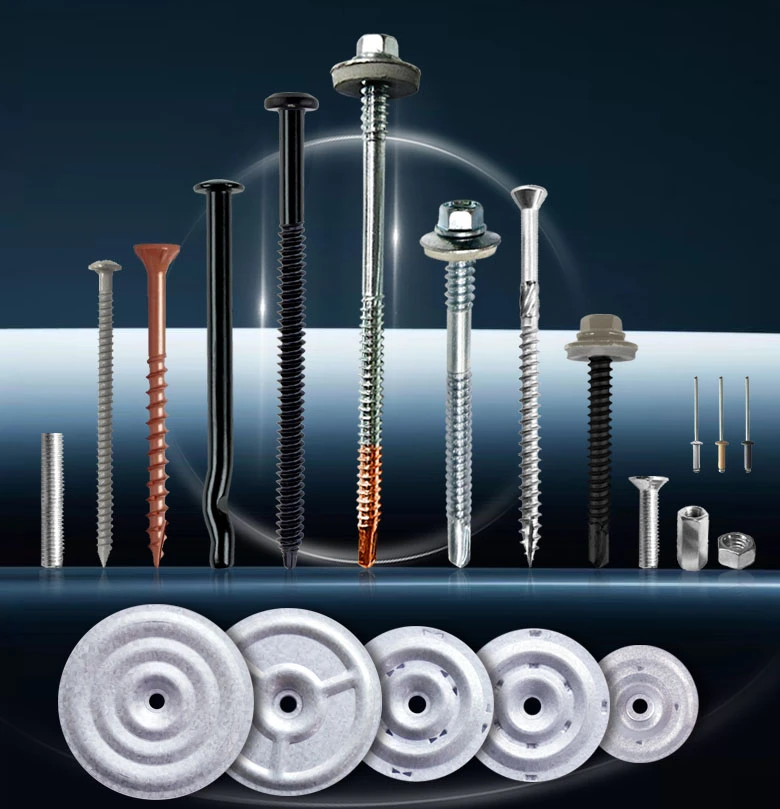
The global pipe fittings market has experienced a quiet but significant transformation over the past decade. Where once the industry focused primarily on dimensional compliance and basic pressure ratings, today's specifications demand a holistic approach to quality that includes chemical composition analysis, heat treatment traceability, and corrosion resistance validation. This shift is driven by aging infrastructure, stricter environmental regulations, and the increasing complexity of industrial fluid systems that handle aggressive media at elevated temperatures and pressures. In this environment, the humble threaded fastener and the precision-formed plate have become critical control points in the quality assurance chain.
Material Selection: The Foundation of Fitting Reliability
Choosing the right material for pipe fittings and their associated components is a multi-dimensional decision that balances mechanical strength, corrosion resistance, thermal expansion behavior, and cost. Carbon steel remains the workhorse for general-purpose applications, offering good tensile strength and affordability. However, for systems handling corrosive fluids or operating in marine environments, stainless steel grades such as 304 and 316L provide the necessary chromium oxide passivation layer that resists pitting and crevice corrosion. In high-temperature steam lines or cryogenic services, alloy steels with controlled nickel and molybdenum content are specified to maintain ductility and toughness across extreme temperature ranges.
Beyond the base metal, the surface treatment and coating technologies applied to fittings and fasteners have evolved considerably. Hot-dip galvanizing, zinc-nickel plating, and specialized polymer coatings extend service life in corrosive environments, but they must be applied with strict process control to avoid hydrogen embrittlement in high-strength fasteners. The industry has learned that a coating failure on a single bolt in a flange assembly can compromise an entire pipeline section, leading to costly unscheduled maintenance and potential environmental incidents.
Thread Standards and Interchangeability: A Global Balancing Act
One of the most challenging aspects of pipe fitting design is maintaining thread compatibility across different national and industry standards. The American National Standard Pipe Thread (NPT) dominates in North America, while British Standard Pipe (BSP) threads are prevalent in Europe, Asia, and many other regions. Although both are based on a 55-degree or 60-degree thread angle, the pitch, taper, and sealing methods differ in ways that can cause leakage if components are mismatched. For manufacturers and suppliers serving global markets, producing threaded components that conform to multiple standards requires precision tooling, rigorous gauging, and a deep understanding of the end-use application.
The role of the threaded connection in a pipe fitting assembly extends beyond simple mechanical fastening. In many systems, the thread form itself contributes to the sealing mechanism, either through metal-to-metal interference (taper threads) or through the compression of a separate seal element (parallel threads with O-rings or gaskets). This dual function—structural and sealing—places extraordinary demands on thread quality. A thread that is slightly undersized or has a burr on the crest will not only fail to achieve the required preload but may also create a leak path that bypasses the primary seal. This is why reputable manufacturers invest in optical thread measurement systems and statistical process control to maintain thread profiles within tight tolerances.
Advanced Forming Technologies for Complex Geometries
As piping systems become more compact and performance-dense, the demand for fittings with complex geometries has grown. Flanges, reducers, and specialty connectors must often incorporate curved surfaces, recessed pockets, and precisely contoured mating faces to optimize flow dynamics and reduce turbulence. Traditional machining methods can produce these shapes, but they are often slow and generate significant material waste. Consequently, advanced forming techniques—including cold forging, warm forming, and precision stamping—have gained traction in the industry. These processes allow manufacturers to produce near-net-shape components with superior grain flow, which enhances mechanical properties and fatigue resistance.
One component that exemplifies the marriage of form and function in modern pipe fitting systems is the specialized plate used in flanged connections and support assemblies. The Circular concave deep dome plate, for instance, is designed to distribute load evenly across a bolted flange face while accommodating thermal expansion and minor misalignment. Its concave geometry creates a controlled spring effect that maintains consistent clamping force even as temperature cycles cause the flange and bolts to expand and contract at different rates. This type of engineered component was once a custom-order specialty, but it is increasingly specified in standard designs for high-pressure steam systems, heat exchangers, and critical process piping where bolt relaxation and flange leakage are unacceptable.
Quality Assurance and Traceability in the Supply Chain
For engineers and project managers responsible for large-scale piping installations, the quality of fittings and fasteners is only as good as the documentation that accompanies them. Traceability—the ability to trace a component back to its raw material heat, manufacturing batch, and inspection records—has become a contractual requirement for many projects, particularly in the oil and gas, petrochemical, and nuclear power sectors. This demand places a significant burden on suppliers to maintain robust quality management systems that include material test reports, dimensional inspection certificates, and third-party verification of mechanical properties.
A growing trend in the industry is the adoption of digital traceability platforms that use QR codes or RFID tags to link physical components to their electronic records. This technology enables end-users to scan a fitting or fastener on-site and instantly access its full manufacturing history, including chemical analysis, heat treatment curves, and coating thickness measurements. For suppliers who have invested in these systems, the payoff is greater trust, faster project approvals, and a reduction in the costly rework that occurs when undocumented components are rejected during commissioning inspections.
Corrosion Management and Long-Term Performance
Corrosion is the single largest threat to the longevity of pipe fitting systems, accounting for billions of dollars in maintenance and replacement costs annually. The mechanisms vary—uniform corrosion, pitting, crevice corrosion, stress corrosion cracking, and galvanic corrosion—but the common denominator is that small, localized failures often cascade into systemic problems. In bolted flange connections, the crevice between the bolt head and the flange face is a notorious site for corrosion initiation, especially in environments with chlorides or high humidity.
Mitigation strategies include the use of corrosion-resistant alloys, the application of barrier coatings, and the design of drainage features that prevent moisture accumulation. Cathodic protection is also employed in buried or submerged piping systems, but it requires careful design to ensure that the fittings and fasteners are within the protected zone. Increasingly, lifecycle cost analysis is driving specification decisions: a more expensive stainless steel fitting may be cheaper over 30 years of service than a carbon steel fitting that requires replacement every decade. This long-term perspective is reshaping procurement practices and encouraging closer collaboration between material suppliers, fitting manufacturers, and end-users.
Installation Best Practices: The Human Factor
No matter how well-designed and manufactured a pipe fitting system is, its performance ultimately depends on the quality of installation. Proper torque application is critical for bolted connections: under-tightening leads to leakage and joint separation, while over-tightening can cause thread stripping, bolt fracture, or flange distortion. The use of calibrated torque wrenches and, for critical joints, hydraulic tensioning equipment has become standard practice in industrial settings. Training programs that emphasize the importance of thread lubrication, surface preparation, and cross-tightening sequences are equally important.
Another often-overlooked factor is the condition of the components at the time of installation. Threads that are damaged during shipping or storage, coatings that have been scratched, or foreign material trapped in a flange face can all compromise the integrity of the final assembly. A conscientious installation crew inspects every fitting and fastener before assembly, replacing any that show signs of damage or contamination. This level of attention to detail, combined with high-quality components, is what separates a piping system that operates reliably for decades from one that requires constant maintenance.
Looking Ahead: Innovation and Sustainability in Pipe Fittings
The pipe fittings industry is not standing still. Advances in additive manufacturing are beginning to enable the production of complex fitting geometries that were previously impossible to cast or machine, opening new possibilities for weight reduction and flow optimization. Meanwhile, the push for sustainability is driving interest in materials with lower embodied carbon, such as advanced high-strength steels that allow for thinner wall sections and reduced material usage. Recycled and recyclable materials are also gaining traction, though they must meet the same rigorous performance standards as virgin materials.
Digitalization continues to transform the supply chain, with predictive analytics being used to forecast maintenance needs and optimize inventory levels. For the components that hold piping systems together—the threaded fasteners, the precision-formed plates, the specially contoured gaskets—the future lies in even tighter integration of design, manufacturing, and quality assurance. As the industry moves toward performance-based specifications rather than prescriptive standards, the ability to demonstrate consistent quality through data will become a competitive differentiator for suppliers worldwide.
The reliability of a pipe fitting system is a chain of many links, and each component—from the largest flange to the smallest threaded fastener—must be designed and manufactured with equal rigor. In an industry where failure is not an option, the quiet excellence of precision-engineered components is the foundation upon which safe, efficient, and durable piping networks are built.
