
Introduction
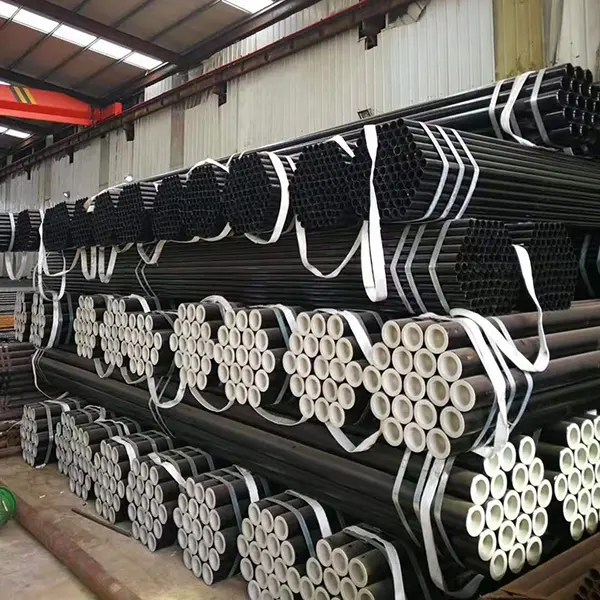
1/2 OD stainless steel tubing represents a critical component in numerous industrial applications, ranging from fluid transfer systems in chemical processing and pharmaceuticals to structural elements in food and beverage processing facilities. Its precise outer diameter (OD) of 1/2 inch, combined with the inherent corrosion resistance and mechanical properties of stainless steel, dictates its role in demanding environments. This tubing is generally manufactured to conform to ASTM A276 and ASTM A249 standards, specifying various grades like 304/304L and 316/316L, each offering distinct advantages in terms of chemical compatibility and temperature resistance. Its technical positioning within the supply chain involves raw material sourcing (stainless steel billets), tube forming processes (drawing, welding, extrusion), finishing operations (annealing, pickling, polishing), and ultimately, integration into larger systems. Core performance characteristics include burst pressure, yield strength, corrosion resistance, and dimensional accuracy, all of which are crucial for ensuring system integrity and longevity. The selection of appropriate grades and wall thicknesses is paramount to mitigate industry pain points such as corrosion-induced failure, process contamination, and regulatory non-compliance.
Material Science & Manufacturing
The predominant material for 1/2 OD stainless steel tubing is austenitic stainless steel, specifically grades 304/304L and 316/316L. 304/304L is alloyed primarily with chromium (18-20%) and nickel (8-10.5%), providing excellent corrosion resistance in a wide range of environments. The “L” designation signifies a low carbon content (<0.03%), minimizing carbide precipitation during welding and improving weldability. 316/316L further enhances corrosion resistance through the addition of molybdenum (2-3%), making it particularly suitable for applications involving chlorides and other aggressive chemicals. Raw material sourcing often involves the melting and casting of these alloys, followed by hot rolling into billets. Manufacturing processes typically include seamless tube drawing, welded tube fabrication, and occasionally, extrusion. Seamless tube drawing involves forcing a heated billet through a die and over a mandrel, reducing the diameter and increasing the length. Welded tube fabrication utilizes strip steel formed into a tube shape and then welded longitudinally, often followed by annealing to relieve stress. Key parameter control during manufacturing focuses on maintaining dimensional tolerances (OD, wall thickness, straightness), ensuring surface finish quality (smoothness, absence of defects), and achieving desired mechanical properties (yield strength, tensile strength, elongation). Annealing processes are critical for stress relief and ductility enhancement, while pickling removes scale and oxide layers, preparing the surface for further processing or use. Quality control relies heavily on non-destructive testing methods like eddy current testing and hydrostatic testing to detect flaws and ensure structural integrity.
Performance & Engineering
The performance of 1/2 OD stainless steel tubing is governed by several engineering principles. Force analysis, particularly relating to pressure containment, is critical for determining the appropriate wall thickness to withstand internal pressures without yielding or bursting. Burst pressure calculations are typically based on Barlow's formula, considering the material's yield strength and the tube's dimensions. Environmental resistance is paramount, with corrosion resistance being a key design consideration. In chloride-containing environments, pitting corrosion and crevice corrosion are potential failure modes, necessitating the selection of 316/316L grade. Galvanic corrosion can also occur if the tubing is in contact with dissimilar metals; therefore, material compatibility must be evaluated. Compliance requirements vary by industry and application. For pharmaceutical applications, adherence to ASME BPE standards (Bioprocessing Equipment) is essential, dictating surface finish requirements and material traceability. For food and beverage applications, compliance with 3-A Sanitary Standards ensures cleanability and prevents bacterial contamination. Functional implementation often involves joining techniques such as orbital welding, which provides high-quality, leak-tight welds crucial for maintaining process integrity. Furthermore, the tubing's thermal expansion coefficient must be considered in system design to accommodate temperature fluctuations and prevent stress-induced failures. Fatigue analysis is necessary in applications involving cyclical loading, such as vibration or pulsed flow.
Technical Specifications
| Parameter | 304/304L | 316/316L | Unit |
|---|---|---|---|
| Outer Diameter | 0.500 | 0.500 | inches |
| Wall Thickness | 0.035 - 0.065 | 0.035 - 0.065 | inches |
| Yield Strength | 30,000 | 28,000 | psi |
| Tensile Strength | 75,000 | 70,000 | psi |
| Elongation | 35 | 30 | % |
| Corrosion Resistance | Good | Excellent (especially to chlorides) | Qualitative |
Failure Mode & Maintenance
Common failure modes for 1/2 OD stainless steel tubing include pitting corrosion, crevice corrosion, stress corrosion cracking, fatigue cracking, and erosion. Pitting corrosion, as mentioned previously, occurs in chloride-rich environments, initiating at imperfections on the surface. Crevice corrosion develops in shielded areas, such as under gaskets or where dissimilar metals meet. Stress corrosion cracking results from the combined action of tensile stress and a corrosive environment. Fatigue cracking arises from cyclical loading, leading to crack initiation and propagation. Erosion occurs due to abrasive particles in the fluid stream. Maintenance strategies involve regular visual inspection for signs of corrosion or damage, periodic hydrostatic testing to verify pressure integrity, and proper cleaning to remove contaminants. Passivation treatments can restore the protective oxide layer on the surface, enhancing corrosion resistance. In cases of localized corrosion, electropolishing can remove damaged material and smooth the surface. For systems handling sensitive fluids, routine flushing and sterilization are essential to prevent contamination. Welding repairs should be performed by qualified welders using appropriate filler metals and post-weld heat treatment to restore mechanical properties. Preventative maintenance schedules should be implemented based on the specific application and operating conditions.
Industry FAQ
Q: What is the difference between 304/304L and 316/316L stainless steel tubing in terms of cost and application?
A: 304/304L is generally less expensive than 316/316L due to the lower alloy content (lack of molybdenum). 304/304L is suitable for general-purpose applications where chloride exposure is minimal, such as potable water systems and some food processing applications. 316/316L is preferred for more corrosive environments, like chemical processing, marine applications, and pharmaceutical manufacturing, despite the higher cost. The molybdenum content significantly improves resistance to pitting and crevice corrosion.
Q: How does wall thickness affect the burst pressure of the tubing?
A: Burst pressure is directly proportional to wall thickness. Increasing the wall thickness significantly increases the tubing’s ability to withstand internal pressure. This relationship is defined by Barlow's formula: P = (2St)/D, where P is burst pressure, S is yield strength, t is wall thickness, and D is outer diameter. However, increasing wall thickness also increases the weight and cost of the tubing.
Q: What are the common welding techniques used for joining stainless steel tubing, and what considerations are important?
A: Orbital welding and TIG (Tungsten Inert Gas) welding are the most common techniques. Orbital welding provides consistent, high-quality, and automated welds, ideal for sanitary applications. TIG welding offers precise control but requires skilled welders. Important considerations include proper surface preparation (cleaning and degreasing), use of appropriate filler metals matching the tubing’s alloy composition, maintaining inert gas shielding to prevent oxidation, and post-weld heat treatment to relieve stress and restore corrosion resistance.
Q: What surface finish specifications are typically required for pharmaceutical applications?
A: ASME BPE standards dictate stringent surface finish requirements for pharmaceutical applications. Generally, a Ra (average roughness) of 32 micro-inches or less is required for wetted parts. Electropolishing is often used to achieve this level of smoothness, minimizing bacterial adhesion and facilitating cleaning validation.
Q: How can I identify potential corrosion issues before they lead to failure?
A: Regular visual inspections are crucial. Look for signs of pitting, crevice corrosion (discoloration, localized attack), or cracking. Non-destructive testing methods, such as eddy current testing, can detect subsurface flaws. Monitoring the fluid chemistry and operating conditions can also provide early warnings of potential corrosion problems. Periodic hydrostatic testing verifies the tubing's pressure integrity.
Conclusion
1/2 OD stainless steel tubing serves as a versatile and essential component across diverse industries, offering a balance of corrosion resistance, mechanical strength, and process compatibility. The selection of appropriate grades – 304/304L or 316/316L – hinges upon the severity of the operating environment and the specific fluid being conveyed. Understanding the manufacturing processes, performance characteristics, and potential failure modes is critical for ensuring long-term reliability and minimizing operational risks.
Moving forward, advancements in material science will likely lead to the development of even more corrosion-resistant stainless steel alloys and improved manufacturing techniques. Furthermore, the increasing demand for hygienic and sterile processing systems will drive continued innovation in surface finishing technologies and quality control procedures. Proactive maintenance strategies, coupled with adherence to relevant industry standards, remain paramount for maximizing the lifespan and performance of 1/2 OD stainless steel tubing installations.
