
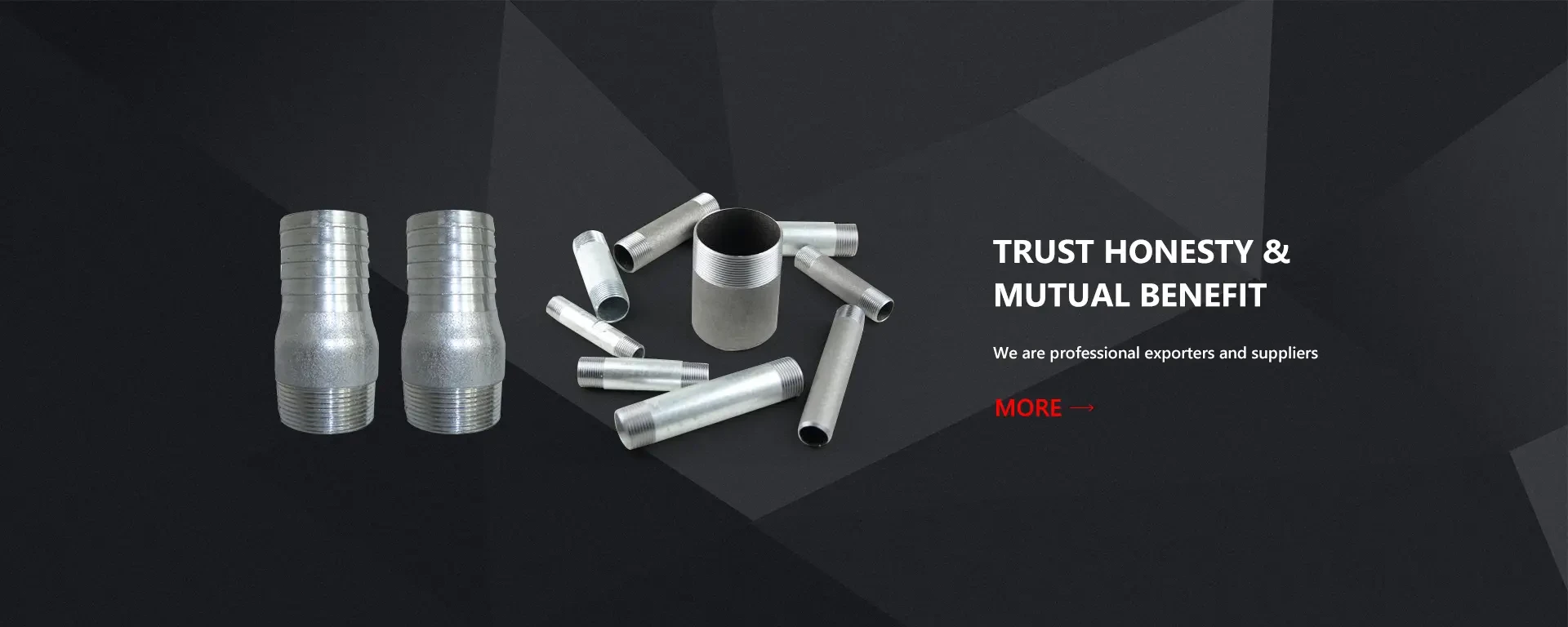
Introduction
1/2 inch steel tubing, encompassing both seamless and welded varieties, represents a foundational material in numerous industrial applications. Positioned within the broader steel product chain, it serves as a critical component in infrastructure projects, mechanical systems, and fluid transfer networks. Its prevalence stems from a balance of cost-effectiveness, structural integrity, and manufacturability. Core performance characteristics include its capacity to withstand internal and external pressure, resist corrosion (dependent on alloy composition and coating), and facilitate efficient fluid or gas conveyance. The increasing demand for high-strength, lightweight materials, coupled with stringent regulatory requirements concerning safety and material traceability, drives ongoing innovation in 1/2” steel tubing production and application. The industry grapples with challenges relating to maintaining dimensional accuracy, achieving consistent weld quality, and minimizing the impact of manufacturing on the material's mechanical properties.
Material Science & Manufacturing
The predominant raw material for 1/2" steel tubing is carbon steel, frequently utilizing grades such as ASTM A53 Grade B or A106 Grade B. These steels possess a primary composition of iron with varying carbon content (typically between 0.08% and 0.30%), manganese, silicon, and trace amounts of phosphorus and sulfur. Alloy steels, incorporating elements like chromium, molybdenum, and nickel, are employed for enhanced corrosion resistance and higher-temperature strength. The manufacturing process can follow two primary routes: seamless and welded. Seamless tubing is produced by piercing a solid billet of steel and subsequently drawing it through dies to achieve the desired diameter and wall thickness. This process yields a homogenous microstructure, offering superior strength and pressure-bearing capabilities. Welded tubing, conversely, is formed by rolling steel strips into a cylindrical shape and welding the seam longitudinally. Common welding techniques include Electric Resistance Welding (ERW) and High-Frequency Induction Welding (HFIW). Post-welding, the tubing undergoes heat treatment (annealing or normalizing) to relieve stress and refine the weld's metallurgical structure. Critical parameters during manufacturing include precise control of the rolling process to maintain dimensional tolerances, accurate welding current and speed to ensure complete fusion, and controlled cooling rates during heat treatment to prevent distortion and cracking. Quality control relies on Non-Destructive Testing (NDT) methods such as ultrasonic testing, radiographic testing, and hydrostatic testing to detect defects and verify structural integrity. Surface finishing, often involving galvanizing or epoxy coating, is crucial for enhancing corrosion protection.

Performance & Engineering
The performance of 1/2” steel tubing is heavily influenced by its mechanical properties, particularly yield strength, tensile strength, and elongation. These parameters dictate its ability to withstand applied loads without permanent deformation or fracture. Force analysis involves considering internal pressure, external loads (bending moments, axial forces), and potential stresses induced by thermal expansion or contraction. Environmental resistance is a crucial factor, especially in applications exposed to corrosive environments. Carbon steel is susceptible to rust, necessitating protective coatings or the use of alloy steels with enhanced corrosion resistance (e.g., stainless steel). Compliance requirements vary depending on the intended application. For example, tubing used in potable water systems must meet NSF/ANSI 61 standards, ensuring it does not leach harmful contaminants. Tubing used in structural applications must adhere to building codes and relevant engineering standards (e.g., AISC in the US, Eurocode in Europe). Functional implementation demands careful consideration of welding procedures to maintain structural integrity and prevent weld defects. Finite Element Analysis (FEA) is often employed to simulate stress distribution and optimize the tubing's design for specific loading conditions. Fatigue analysis is critical in applications involving cyclical loading, as repeated stress can lead to crack initiation and propagation. Galvanic corrosion, occurring when dissimilar metals are in contact in the presence of an electrolyte, must also be mitigated through appropriate material selection and isolation techniques.
Technical Specifications
| Parameter | ASTM A53 Grade B | ASTM A106 Grade B | AISI 1018 Carbon Steel |
|---|---|---|---|
| Outside Diameter (in) | 0.5 | 0.5 | 0.5 |
| Wall Thickness (in) | 0.065 - 0.154 | 0.065 - 0.154 | 0.065 - 0.120 |
| Yield Strength (psi) | 36,000 | 35,000 | 36,000 |
| Tensile Strength (psi) | 60,000 | 60,000 | 58,000 |
| Elongation (%) | 23 | 20 | 25 |
| Corrosion Resistance | Low (requires coating) | Low (requires coating) | Low (requires coating) |
Failure Mode & Maintenance
1/2” steel tubing is susceptible to several failure modes. Corrosion, particularly localized pitting corrosion, is a common issue, especially in humid or corrosive environments. This weakens the tube wall, leading to leaks or rupture. Fatigue cracking can occur under cyclical loading, initiating at stress concentrators (e.g., weld seams, dents) and propagating over time. Erosion corrosion, a combination of mechanical wear and corrosion, can occur in applications involving high-velocity fluids. Weld defects, such as porosity, incomplete fusion, or cracks, represent a significant failure point, compromising the tube's structural integrity. Stress corrosion cracking (SCC) can occur in specific environments where a tensile stress is combined with a corrosive agent. Maintenance strategies involve regular inspection for signs of corrosion, cracks, or deformation. Protective coatings should be inspected and repaired as needed. Hydrostatic testing can be performed periodically to verify the tube's pressure-bearing capacity. In the event of detected defects, repair welding may be considered, but must be performed by qualified personnel and in accordance with applicable welding codes. For severely corroded or damaged tubing, replacement is often the most cost-effective and reliable solution. Implementing a cathodic protection system in corrosive environments can significantly extend the tubing's lifespan. Routine cleaning to remove debris and contaminants can also help mitigate corrosion.
Industry FAQ
Q: What is the difference between seamless and welded 1/2” steel tubing in terms of pressure ratings?
A: Seamless tubing generally exhibits higher pressure ratings compared to welded tubing. This is because the seamless manufacturing process eliminates the weld seam, a potential point of weakness. The absence of a weld zone provides a more homogenous material structure, leading to superior strength and resistance to crack propagation under pressure. Welded tubing, while suitable for many applications, requires careful weld quality control and inspection to ensure its pressure-bearing capacity meets the required specifications.
Q: How does the carbon content affect the weldability of 1/2” steel tubing?
A: Higher carbon content generally decreases weldability. Increased carbon leads to harder weld zones, making them more susceptible to cracking during cooling. Lower carbon steels, like A53 Grade B, are easier to weld without requiring extensive pre- or post-weld heat treatment. For higher carbon steels, precise control of welding parameters (current, voltage, travel speed) and the use of appropriate welding consumables are crucial to avoid weld defects.
Q: What types of coatings are commonly used to protect 1/2” steel tubing from corrosion?
A: Galvanizing (zinc coating) is a widely used method for corrosion protection, providing a sacrificial layer that corrodes preferentially to the steel. Epoxy coatings offer excellent barrier properties and resistance to a broad range of corrosive agents. Powder coating provides a durable and aesthetically pleasing finish, although it may not offer the same level of corrosion protection as galvanizing. Internal coatings, such as epoxy or polyethylene, are often applied to tubing used in fluid transfer applications.
Q: What Non-Destructive Testing (NDT) methods are typically employed for quality control of 1/2” steel tubing?
A: Ultrasonic testing (UT) is commonly used to detect internal flaws such as porosity, inclusions, and cracks. Radiographic testing (RT), using X-rays or gamma rays, provides a visual image of the tubing's internal structure, revealing defects. Hydrostatic testing involves pressurizing the tubing to a specified level and inspecting for leaks or deformation. Magnetic particle inspection (MPI) can detect surface and near-surface cracks.
Q: What standards govern the dimensional tolerances of 1/2” steel tubing?
A: Dimensional tolerances are typically governed by ASTM A53, ASTM A795 (for welded tubing), and other relevant standards depending on the specific application. These standards specify acceptable variations in outside diameter, wall thickness, straightness, and concentricity. Customers may also impose their own tighter tolerances based on their specific requirements.
Conclusion
1/2” steel tubing remains a versatile and essential material across diverse industrial sectors. Its selection necessitates a thorough understanding of material science principles, manufacturing processes, and performance characteristics. The interplay between alloy composition, mechanical properties, and environmental factors significantly influences its suitability for specific applications. Maintaining stringent quality control throughout the manufacturing process, combined with appropriate inspection and maintenance procedures, are critical for ensuring long-term reliability and preventing premature failure.
Future advancements in steel tubing technology will likely focus on developing high-strength, lightweight alloys with enhanced corrosion resistance. Improved welding techniques and NDT methods will further enhance the reliability and safety of welded tubing. The integration of digital technologies, such as machine learning and data analytics, will enable more precise process control and predictive maintenance strategies, ultimately optimizing the performance and lifespan of 1/2” steel tubing systems.
