
Introduction
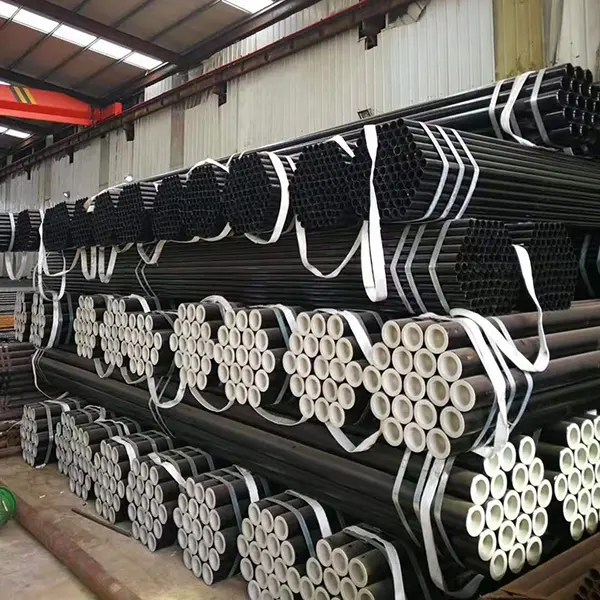
1 3/4 inch Chromoly (Chromium-Molybdenum) tubing is a high-performance alloy steel widely utilized in applications demanding a superior strength-to-weight ratio, exceptional toughness, and weldability. Positioned within the materials supply chain as a semi-finished product, it serves as a critical component in the fabrication of roll cages, exhaust systems, chassis components, high-pressure fluid conveyance, and various structural elements across motorsport, aerospace, oil & gas, and other demanding industries. The core performance characteristics of 4130 chromoly tubing revolve around its ability to withstand high stresses, resist fatigue, and maintain integrity under extreme temperatures, exceeding the capabilities of common carbon steels. The '1 3/4' designation refers to the outside diameter in inches, a crucial specification for compatibility with associated fittings and fabrication processes. This guide provides an in-depth technical analysis of 4130 chromoly tubing, covering material science, manufacturing processes, performance characteristics, failure modes, and relevant industry standards.
Material Science & Manufacturing
4130 chromoly steel, the primary constituent of the tubing, is an alloy composed of iron, chromium (typically 0.8-1.1%), molybdenum (0.15-0.25%), manganese, carbon, and smaller percentages of other elements. Chromium contributes to enhanced corrosion resistance and hardenability, while molybdenum increases strength and toughness, particularly at elevated temperatures. The carbon content, generally between 0.25-0.35%, is critical for achieving desired mechanical properties through heat treatment. Raw material sourcing involves stringent quality control of alloy composition to ensure adherence to ASTM A519 specifications. Manufacturing begins with billet production, followed by hot rolling into seamless tubes or cold-drawing of welded tubes. Seamless tubing, preferred for critical applications, is produced via processes like mandrel rolling or extrusion. Welded tubing undergoes subsequent heat treatment and non-destructive testing to ensure weld integrity. Key parameters during manufacturing include temperature control during rolling/drawing, reduction ratios to manage grain structure, and precise dimensional control to maintain consistent wall thickness and outer diameter. Post-manufacturing heat treatment, typically normalizing or stress relieving, is crucial for optimizing mechanical properties and minimizing residual stresses. The finishing process often involves pickling to remove surface scale and oil, followed by inspection for surface defects. Surface roughness (Ra) is a critical parameter, impacting weldability and coating adhesion.
Performance & Engineering
The performance of 4130 chromoly tubing is governed by its mechanical properties, including tensile strength, yield strength, elongation, and impact toughness. Tensile strength, typically ranging from 70-90 ksi (483-620 MPa), defines the maximum stress the material can withstand before failure. Yield strength, around 50-70 ksi (345-483 MPa), represents the point at which permanent deformation occurs. Elongation, usually 15-25%, indicates ductility and the ability to absorb energy before fracture. Charpy V-notch impact testing measures toughness at various temperatures, ensuring resistance to brittle failure. Engineering analyses involving 4130 chromoly tubing often necessitate finite element analysis (FEA) to accurately predict stress distribution under load. Factors like bending moment, torsional stress, and axial loads must be considered. Corrosion resistance, while improved by chromium, is still a concern in harsh environments. Protective coatings, such as powder coating, galvanizing, or specialized corrosion inhibitors, are often employed. Compliance requirements vary depending on the application. For aerospace applications, AMS (Aerospace Material Specification) standards are critical. Motorsport applications necessitate adherence to specific sanctioning body regulations regarding material specifications and fabrication techniques. Welding procedures must be carefully controlled to maintain mechanical properties and prevent weld defects like cracking or porosity. Post-weld heat treatment is frequently required to restore toughness and relieve residual stresses. Creep resistance, the ability to withstand sustained stress at elevated temperatures, is also an important consideration in certain applications, such as exhaust systems.
Technical Specifications
| Parameter | Typical Value (4130 Seamless Tubing, 1.75” OD, 0.083” Wall) | Testing Standard | Units |
|---|---|---|---|
| Outer Diameter | 1.750 | ASTM E8M | inches |
| Wall Thickness | 0.083 | ASTM E8M | inches |
| Tensile Strength, Ultimate | 80 | ASTM A370 | ksi |
| Yield Strength, 0.2% Offset | 60 | ASTM A370 | ksi |
| Elongation in 8 inches | 20 | ASTM E8M | % |
| Charpy V-Notch Impact Strength (0°F) | 60 | ASTM A370 | ft-lbs |
Failure Mode & Maintenance
Common failure modes for 4130 chromoly tubing include fatigue cracking, corrosion-induced cracking, weld defects, and distortion due to overheating. Fatigue cracking, initiated by cyclic loading, often occurs at stress concentrations like welds or sharp bends. Corrosion, particularly pitting corrosion, can weaken the material and initiate cracks. Weld defects, such as porosity, inclusions, or incomplete fusion, significantly reduce strength and can lead to catastrophic failure. Distortion during welding or heat treatment can introduce residual stresses and compromise dimensional accuracy. Failure analysis typically involves visual inspection, non-destructive testing (NDT) methods like dye penetrant inspection (DPI) and ultrasonic testing (UT), and fractographic analysis to determine the root cause of failure. Maintenance primarily focuses on preventative measures. Regular inspections for surface cracks, corrosion, and weld defects are crucial. Protective coatings should be maintained and reapplied as necessary. Welding procedures should be strictly adhered to and qualified welders employed. Stress relieving heat treatment should be performed after welding or forming operations. Proper storage conditions, avoiding exposure to corrosive environments, are also essential. For motorsport applications, periodic component replacement based on usage and inspection results is recommended. Routine cleaning to remove dirt and debris prevents abrasive wear and facilitates early detection of potential issues.
Industry FAQ
Q: What is the difference between seamless and welded 4130 tubing, and when should each be used?
A: Seamless tubing is manufactured without a weld seam, offering superior strength and resistance to fatigue cracking, especially under high pressure or cyclic loading. It's preferred for critical applications like roll cages and high-performance exhaust systems. Welded tubing is more cost-effective but requires rigorous quality control of the weld process. It is suitable for less demanding applications where cost is a primary concern, provided the weld integrity is assured through proper testing and heat treatment.
Q: How does heat treatment affect the properties of 4130 chromoly tubing?
A: Heat treatment, specifically normalizing and stress relieving, significantly impacts mechanical properties. Normalizing refines the grain structure, improving strength and toughness. Stress relieving reduces residual stresses introduced during manufacturing or welding, minimizing the risk of distortion and cracking. Improper heat treatment can lead to reduced strength, increased brittleness, or dimensional instability.
Q: What welding processes are most suitable for 4130 chromoly tubing?
A: Gas Tungsten Arc Welding (GTAW, or TIG welding) is generally preferred for its precision and control, minimizing heat input and producing high-quality welds. Gas Metal Arc Welding (GMAW, or MIG welding) can also be used, but requires careful parameter control to avoid porosity and spatter. Shielding gas composition (typically argon or argon/CO2 mixtures) is critical. Welding consumables should be specifically designed for 4130 chromoly steel.
Q: How can I prevent corrosion of 4130 chromoly tubing?
A: Corrosion can be mitigated through several methods. Applying a protective coating like powder coating, paint, or galvanizing creates a barrier against corrosive elements. Using corrosion inhibitors in closed-loop systems can also be effective. Regular cleaning to remove contaminants and avoiding prolonged exposure to harsh environments are essential preventative measures.
Q: What are the key considerations when specifying 4130 chromoly tubing for a project?
A: Key considerations include the application's load requirements (static and dynamic), operating temperature, corrosive environment, and relevant industry standards. Accurately specifying the outer diameter, wall thickness, and required mechanical properties is crucial. It is also essential to verify the tubing's compliance with applicable certifications and material traceability requirements.
Conclusion
4130 chromoly tubing represents a critical material in numerous high-performance applications, offering a compelling combination of strength, toughness, and weldability. Its manufacturing process, from raw material selection to final heat treatment, demands meticulous control to ensure consistent mechanical properties and long-term reliability. Understanding the potential failure modes and implementing appropriate preventative maintenance strategies are paramount for maximizing the service life and ensuring the structural integrity of components fabricated from this alloy.
The continued advancement of non-destructive testing techniques, coupled with ongoing research into novel coating technologies, will further enhance the performance and durability of 4130 chromoly tubing in increasingly demanding environments. Proper material selection, adherence to industry standards, and meticulous fabrication practices remain the cornerstones of successful application.
