

Introduction
1 3/4 inch stainless steel tubing represents a critical component in numerous industrial applications, ranging from fluid transfer systems and structural supports to specialized equipment in food processing, pharmaceuticals, and chemical processing. Positioned within the broader stainless steel product chain, its value lies in providing a corrosion-resistant, durable, and hygienic conduit for various media. The core performance characteristics of this tubing – including its pressure rating, tensile strength, and resistance to specific chemical environments – dictate its suitability for diverse engineering projects. This guide provides an in-depth examination of its material science, manufacturing processes, performance parameters, potential failure modes, and relevant industry standards, catering to the needs of procurement managers, engineers, and maintenance personnel involved in specifying, implementing, and maintaining systems utilizing this material.
Material Science & Manufacturing
1 3/4” stainless steel tubing is predominantly manufactured from 304/304L and 316/316L austenitic stainless steel grades. 304/304L, containing approximately 18-20% chromium and 8-10% nickel, offers excellent corrosion resistance in a wide range of atmospheric and mildly corrosive environments. The ‘L’ grade denotes a lower carbon content, enhancing weldability and minimizing carbide precipitation during welding, which can lead to intergranular corrosion. 316/316L incorporates molybdenum (2-3%), further boosting resistance to chlorides and other aggressive chemicals, making it ideal for marine environments and chemical processing. The raw material is typically sourced as stainless steel billet or bar stock.
The primary manufacturing process is seamless extrusion. This involves heating the steel billet to high temperatures (approximately 1200-1300°C) and forcing it through a die, creating a hollow tube. Key parameters controlled during extrusion include temperature, reduction ratio (the difference between the billet and tube diameter), and die lubrication. Precise control is critical to ensure dimensional accuracy, surface finish, and grain structure. Welded stainless steel tubing is also common, manufactured via processes like TIG (Tungsten Inert Gas) or laser welding. Welded tubing requires subsequent annealing and passivation treatments to restore corrosion resistance at the weld seam. Post-manufacturing processes include straightening, cutting to length, deburring, and polishing. Quality control involves hydrostatic testing to verify pressure integrity, dimensional checks using calibrated instruments, and surface inspection for defects. Pickling and passivation are essential finishing steps, removing surface contaminants and forming a protective chromium-rich oxide layer.
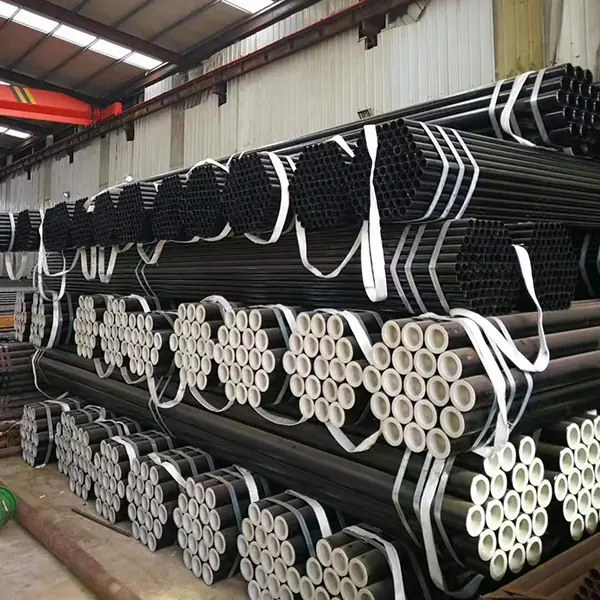
Performance & Engineering
The performance of 1 3/4” stainless steel tubing is dictated by several engineering considerations. First, pressure rating is paramount. This is calculated based on the tube’s outer diameter, wall thickness, and the material's tensile strength and yield strength, using formulas defined in ASME B31.3 (Process Piping) or similar standards. Wall thickness significantly impacts the tube’s ability to withstand internal pressure and external loads. Secondly, corrosion resistance must be evaluated based on the specific chemical environment. While 304/304L provides broad-spectrum corrosion protection, 316/316L is preferred for chloride-rich environments to prevent pitting corrosion. Thirdly, consideration must be given to temperature effects. Elevated temperatures can reduce tensile strength and accelerate corrosion rates. Fourthly, mechanical properties such as yield strength, tensile strength, and elongation determine the tubing’s ability to withstand bending, torsion, and impact loads. Finite element analysis (FEA) is often employed to model stress distributions and optimize tube design for specific applications. Finally, hygienic considerations are vital in food and pharmaceutical applications; smooth internal surfaces minimize bacterial adhesion and facilitate cleaning-in-place (CIP) procedures.
Technical Specifications
| Parameter | 304/304L Stainless Steel | 316/316L Stainless Steel | Unit |
|---|---|---|---|
| Outer Diameter | 1.660 inches (Nominal) | 1.660 inches (Nominal) | inches |
| Typical Wall Thickness | 0.065 - 0.120 | 0.065 - 0.120 | inches |
| Yield Strength (Minimum) | 30,000 | 25,000 | psi |
| Tensile Strength (Minimum) | 75,000 | 70,000 | psi |
| Elongation (Minimum) | 35 | 30 | % |
| Corrosion Resistance | Good (General Purpose) | Excellent (Chloride Environments) | Qualitative |
Failure Mode & Maintenance
Several failure modes are common in 1 3/4” stainless steel tubing. Corrosion, specifically pitting and crevice corrosion, is a primary concern, particularly in chloride-containing environments. Stress corrosion cracking (SCC) can occur under tensile stress in the presence of specific corrosive agents. Fatigue cracking can develop under cyclic loading, especially at weld seams or areas of stress concentration. Erosion corrosion can occur in high-velocity fluid streams. Intergranular corrosion, resulting from carbide precipitation, can weaken the tube along grain boundaries, though this is mitigated by using ‘L’ grades and proper heat treatment. Mechanical damage, such as dents or punctures, can compromise the tube’s integrity.
Preventative maintenance includes regular visual inspections for signs of corrosion, erosion, or mechanical damage. Non-destructive testing (NDT) methods, such as ultrasonic testing or eddy current testing, can detect subsurface flaws. Periodic hydrostatic testing verifies pressure integrity. Cleaning and passivation treatments should be performed regularly to remove surface contaminants and restore the protective oxide layer. Proper grounding is crucial to prevent galvanic corrosion. In corrosive environments, cathodic protection may be necessary. For welded tubing, regular inspection of weld seams is vital. If a leak or crack is detected, the affected section should be replaced immediately. Avoid over-tightening fittings, as this can induce stress cracking.
Industry FAQ
Q: What is the difference between 304L and 316L stainless steel tubing in terms of cost and corrosion resistance?
A: 316L is generally more expensive than 304L due to the addition of molybdenum. However, the increased molybdenum content provides significantly improved corrosion resistance, especially against chlorides and other aggressive chemicals. For applications in harsh environments, the higher upfront cost of 316L is often justified by its extended lifespan and reduced maintenance requirements.
Q: How does wall thickness impact the pressure rating of the tubing?
A: The pressure rating is directly proportional to the wall thickness. Increasing the wall thickness significantly increases the tubing’s ability to withstand internal pressure. However, a thicker wall also increases the material cost and weight. The optimal wall thickness is determined through engineering calculations based on the operating pressure, temperature, and safety factor.
Q: What are the best practices for welding 1 3/4” stainless steel tubing to ensure corrosion resistance?
A: Use the ‘L’ grade stainless steel (304L or 316L) to minimize carbide precipitation. Employ TIG welding with a proper shielding gas (argon). Avoid overheating the material. After welding, perform solution annealing followed by rapid cooling and passivation treatment to restore the protective chromium-rich oxide layer. Thoroughly clean the weld area before passivation.
Q: What is the significance of hydrostatic testing, and what constitutes a passing test?
A: Hydrostatic testing verifies the pressure integrity of the tubing by subjecting it to a pressure significantly higher than its operating pressure (typically 1.5 times the maximum working pressure). A passing test indicates no leaks or permanent deformation. The testing duration is typically 10-15 minutes, and visual inspection is performed to confirm the absence of any defects.
Q: How should I specify the tubing to ensure compliance with sanitary standards for food processing applications?
A: Specify tubing manufactured from 304/304L or 316/316L stainless steel with a smooth, polished internal surface (Ra < 0.8 μm). Ensure the tubing is certified to meet relevant sanitary standards, such as 3-A Sanitary Standards or FDA requirements. Document the material certification and passivation process.
Conclusion
1 3/4” stainless steel tubing offers a robust and versatile solution for a wide range of industrial applications demanding corrosion resistance, durability, and hygienic performance. The selection between 304/304L and 316/316L grades, along with careful consideration of wall thickness, welding procedures, and preventative maintenance practices, is crucial to ensuring long-term reliability and minimizing the risk of failure. Understanding the material's inherent properties and potential failure modes allows for informed engineering design and proactive maintenance strategies.
The continued development of advanced manufacturing techniques, such as laser welding and precision extrusion, will further enhance the quality and performance of stainless steel tubing. Future research should focus on developing more cost-effective corrosion-resistant alloys and improving NDT methods for early defect detection. Adhering to stringent industry standards and implementing robust quality control procedures remains paramount to maintaining the integrity and safety of systems utilizing this essential component.
