

Introduction
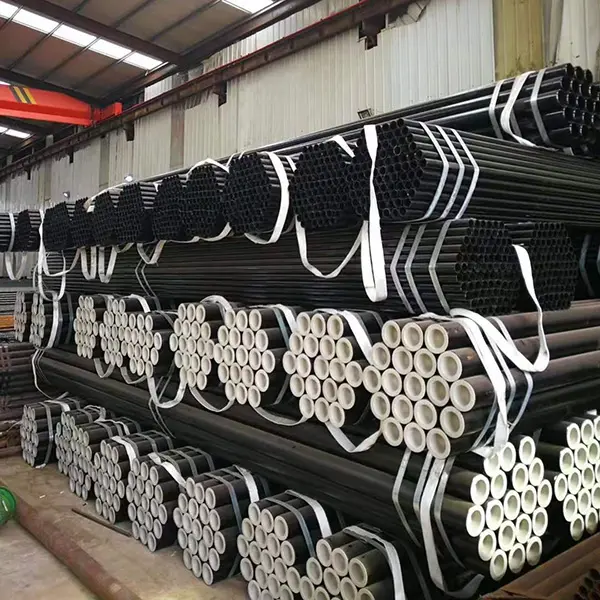
1/4 inch metal tubing refers to hollow metallic sections possessing a nominal outer diameter of 1/4 inch (6.35mm). Predominantly manufactured from carbon steel, stainless steel (304, 316L), aluminum alloys (6061, 5052), and copper alloys, these tubes serve as critical components across diverse industries including fluid conveyance, structural support, instrumentation, and heat transfer applications. Their position in the industrial chain is as a semi-finished product, requiring further fabrication – bending, welding, flaring, and threading – to meet specific end-use requirements. Core performance characteristics revolve around pressure containment capability, corrosion resistance, tensile strength, and dimensional accuracy. The selection of material and manufacturing process directly impacts these attributes, making understanding these aspects crucial for engineers and procurement professionals.
Material Science & Manufacturing
The properties of 1/4 inch metal tubing are intrinsically linked to the base material. Carbon steel (e.g., ASTM A53 Grade B) offers high strength and weldability, but is susceptible to corrosion. Stainless steels, particularly 304 and 316L (ASTM A312), provide enhanced corrosion resistance due to their chromium content, with 316L offering superior resistance in chloride environments. Aluminum alloys (e.g., 6061-T6, 5052-H32 – ASTM B221) deliver a high strength-to-weight ratio and good corrosion resistance, while copper alloys (e.g., C10100, ASTM B280) excel in thermal and electrical conductivity.
Manufacturing processes vary. Seamless tubing is produced by piercing a solid billet of metal, offering superior strength and pressure handling capabilities. Electric Resistance Welding (ERW) forms tubing from rolled steel sheets, offering cost-effectiveness for large-scale production. Drawing, a process where metal is pulled through a die, controls diameter and wall thickness with high precision. Key parameters during manufacturing include controlled cooling rates to manage microstructure (grain size, phase transformation), maintaining tight tolerances during drawing to ensure dimensional accuracy, and implementing non-destructive testing (NDT) methods – eddy current, ultrasonic – to detect defects like cracks or inclusions. For stainless steel, passivation is often employed post-manufacturing to enhance the chromium-rich protective surface layer, maximizing corrosion resistance. The heat-affected zone (HAZ) resulting from welding requires careful consideration; controlling heat input and employing appropriate post-weld heat treatment minimizes embrittlement and maintains mechanical properties.
Performance & Engineering
Performance analysis of 1/4 inch metal tubing necessitates consideration of several factors. Firstly, burst pressure, determined by the material’s yield strength, wall thickness, and diameter, dictates its suitability for high-pressure applications. Calculations based on Barlow’s formula (P = 2St/D) provide an initial estimate, but finite element analysis (FEA) is often used for complex geometries or loading conditions. Secondly, corrosion resistance is paramount, particularly in harsh environments. Galvanic corrosion, arising from dissimilar metal contact, must be mitigated through proper material selection and insulation. Thirdly, fatigue life, assessed through S-N curves, is critical for applications involving cyclic loading. Surface finish plays a crucial role; smoother surfaces exhibit higher fatigue resistance. Compliance with industry standards (e.g., ASME B31.3 for process piping) dictates allowable stress levels and inspection requirements. Furthermore, environmental resistance involves assessing susceptibility to oxidation at elevated temperatures, especially important for applications like exhaust systems. Buckling analysis is also crucial for structural applications, particularly when subjected to compressive loads.
Technical Specifications
| Material Grade | Outer Diameter (in) | Wall Thickness (in) | Yield Strength (MPa) |
|---|---|---|---|
| ASTM A53 Grade B (Carbon Steel) | 0.250 | 0.065 | 250 |
| ASTM A316L (Stainless Steel) | 0.250 | 0.065 | 210 |
| ASTM B221 6061-T6 (Aluminum) | 0.250 | 0.065 | 276 |
| ASTM B280 C10100 (Copper) | 0.250 | 0.065 | 220 |
| ASTM A53 Grade B (Carbon Steel) | 0.250 | 0.120 | 250 |
| ASTM A316L (Stainless Steel) | 0.250 | 0.120 | 210 |
Failure Mode & Maintenance
Common failure modes for 1/4 inch metal tubing include corrosion (localized pitting, uniform corrosion), fatigue cracking (initiated by stress concentrators like bends or welds), denting or buckling (due to external loads), and erosion (caused by abrasive particles in fluid streams). Failure analysis often reveals that corrosion fatigue – the synergistic effect of cyclic loading and corrosion – is a significant contributor. For carbon steel, rust formation leads to material loss and reduced strength. For stainless steel, chloride-induced pitting corrosion is a critical concern. Welding defects (porosity, incomplete fusion) can initiate cracks under stress. Preventative maintenance involves regular visual inspections for signs of corrosion or damage, applying protective coatings (e.g., epoxy, galvanizing) to carbon steel, and implementing cathodic protection in corrosive environments. Periodic non-destructive testing (ultrasonic testing, radiography) can detect internal flaws. Proper support systems are crucial to prevent excessive bending stress. For systems handling corrosive fluids, regular flushing and chemical cleaning are essential. Documented maintenance records are vital for tracking component life and identifying potential issues before catastrophic failure occurs.
Industry FAQ
Q: What are the primary differences in mechanical properties between 304 and 316L stainless steel tubing, and when would you choose one over the other?
A: 316L stainless steel offers superior corrosion resistance, particularly to chlorides and other halides, due to the addition of molybdenum. While 304 stainless steel possesses excellent general corrosion resistance and is more cost-effective, 316L is preferred in marine environments, chemical processing plants, or applications involving exposure to salt spray. Mechanically, 316L typically exhibits slightly lower yield and tensile strength compared to 304, but the difference is often negligible for typical tubing applications.
Q: How does the manufacturing process – seamless versus ERW – influence the pressure rating of 1/4 inch tubing?
A: Seamless tubing generally offers a higher pressure rating compared to ERW tubing due to the absence of a weld seam, which can be a potential weak point. The weld seam in ERW tubing introduces a heat-affected zone (HAZ) that may exhibit reduced mechanical properties. However, advancements in ERW welding techniques, coupled with rigorous quality control, have significantly narrowed this performance gap. For critical high-pressure applications, seamless tubing remains the preferred choice.
Q: What are the common surface treatments applied to 1/4 inch metal tubing to enhance corrosion resistance?
A: Common surface treatments include passivation (for stainless steel), galvanizing (for carbon steel), painting/coating with epoxy or polyurethane, and powder coating. Passivation forms a protective chromium-rich oxide layer on stainless steel. Galvanizing provides a sacrificial zinc coating to protect carbon steel from corrosion. Paint and powder coatings act as a barrier between the metal and the corrosive environment. The selection of the appropriate surface treatment depends on the specific environmental conditions and the desired level of protection.
Q: What is the impact of bending radius on the fatigue life of 1/4 inch metal tubing?
A: A smaller bending radius induces higher stress concentrations at the bend, significantly reducing fatigue life. The industry generally recommends a minimum bending radius of 2.5 times the outer diameter for cold bending to minimize stress concentration. Hot bending allows for tighter radii, but requires careful control of temperature and bending speed to avoid material damage. Proper bend allowances and straightening procedures are also crucial for maximizing fatigue resistance.
Q: What Non-Destructive Testing (NDT) methods are commonly used to ensure the quality of 1/4 inch metal tubing?
A: Commonly employed NDT methods include eddy current testing (to detect surface cracks and material variations), ultrasonic testing (to detect internal flaws like porosity and inclusions), radiographic testing (X-ray imaging to reveal internal defects), and hydrostatic testing (pressure testing to verify leak tightness and burst pressure). The selection of the appropriate NDT method depends on the specific material, potential defect types, and regulatory requirements.
Conclusion
1/4 inch metal tubing remains a versatile and critical component in numerous industries, offering a balance of strength, formability, and cost-effectiveness. Proper material selection, understanding of manufacturing processes, and adherence to relevant industry standards are paramount for ensuring optimal performance and reliability. The ongoing development of advanced alloys and manufacturing techniques continues to expand the application possibilities of this essential industrial product.
Successful implementation requires careful consideration of the operating environment, potential failure modes, and preventative maintenance strategies. A comprehensive understanding of the interplay between material properties, fabrication techniques, and performance requirements is critical for engineers and procurement professionals alike. Future trends will likely focus on the development of lighter-weight, high-strength alloys and more efficient manufacturing processes.
