
Introduction
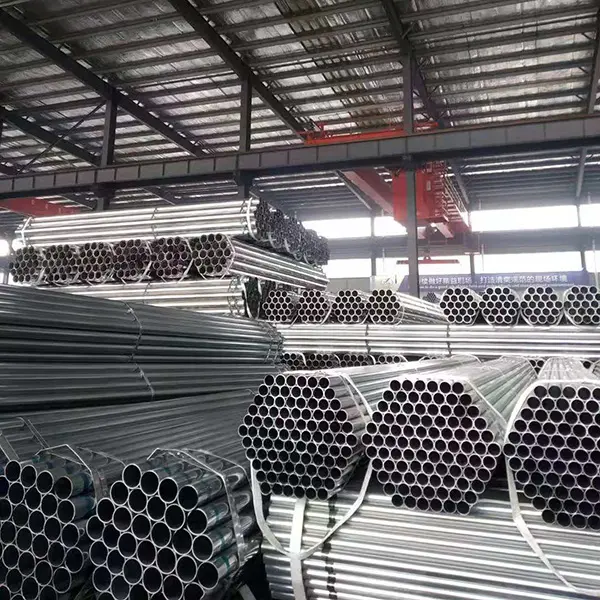
2.5 inch steel pipe refers to a seamless or welded steel tube with an external diameter of 2.5 inches (approximately 63.5mm). It’s a foundational component in numerous industries, including oil and gas, construction, water conveyance, and structural engineering. Positioned within the industry chain, it represents a semi-finished product, typically manufactured from steel billets or coils, and subsequently fabricated into complex systems. Core performance characteristics center around its pressure-bearing capacity, corrosion resistance (dependent on coating and material grade), and mechanical strength. Its selection impacts system integrity, longevity, and safety, making a detailed understanding of its properties critical for engineers and procurement professionals. The increasing demand for higher strength-to-weight ratios and resistance to extreme environments drives continuous advancements in steel pipe manufacturing and material science.
Material Science & Manufacturing
The primary raw material for 2.5 inch steel pipe is carbon steel, although alloy steels (containing elements like chromium, molybdenum, and nickel) are frequently used to enhance specific properties. Carbon steel grades commonly employed include A53, A106 (Grade B, C), and API 5L (X42, X52, X60, X70). The carbon content dictates hardness and weldability; higher carbon content increases strength but reduces ductility and corrosion resistance. Alloy steels are selected for enhanced corrosion resistance (stainless steels – 304, 316), high-temperature strength (chromoly steels), or improved toughness in low-temperature applications. Manufacturing processes fall into two main categories: seamless and welded. Seamless pipes are produced by piercing a solid billet of steel and subsequently drawing it through dies to achieve the desired diameter and wall thickness. Critical parameters include billet temperature, piercing force, and drawing speed. Welded pipes, conversely, are formed by rolling steel plates into a cylindrical shape and welding the seam. Common welding methods are Electric Resistance Welding (ERW) and Submerged Arc Welding (SAW). Key parameter control in welded pipe manufacturing focuses on welding current, voltage, travel speed, and shielding gas composition to ensure a defect-free, high-integrity weld. Post-welding heat treatment (PWHT) is often applied to relieve stresses and improve the metallurgical properties of the weld zone. Non-destructive testing (NDT), including ultrasonic testing, radiographic testing, and hydrostatic testing, verifies the structural integrity of both seamless and welded pipes.
Performance & Engineering
The performance of 2.5 inch steel pipe is dictated by several engineering factors. Pressure rating, determined by Barlow's formula (P = 2St/D, where P is pressure, S is tensile strength, t is wall thickness, and D is outer diameter), is paramount. Wall thickness selection is a trade-off between cost and pressure-bearing capacity. External loads, including bending moments, axial loads, and shear forces, must be considered, especially in structural applications. Finite Element Analysis (FEA) is frequently used to model stress distribution under various loading scenarios. Environmental resistance is a crucial consideration. Corrosion, particularly in marine or chemical processing environments, can significantly degrade pipe integrity. Protective coatings, such as epoxy, polyurethane, or galvanization, are applied to mitigate corrosion. Cathodic protection systems are employed in buried pipelines. Furthermore, thermal expansion and contraction must be accounted for in pipeline design to prevent stresses that could lead to failure. Compliance with industry standards (discussed in the conclusion) dictates minimum requirements for material properties, manufacturing processes, and testing procedures. Fatigue analysis is also critical in applications involving cyclical loading, such as offshore platforms or dynamic process systems. Understanding the impact of temperature on steel's yield strength and ductility is essential for high-temperature or cryogenic applications.
Technical Specifications
| Parameter | Grade A53 Grade B | API 5L X42 | ASTM A106 Grade C | 304/304L Stainless Steel |
|---|---|---|---|---|
| Outside Diameter (in) | 2.5 | 2.5 | 2.5 | 2.5 |
| Wall Thickness (in) | Schedule 40 (0.154) - Schedule 80 (0.218) | Variable, depending on pressure class | Schedule 40 (0.154) - Schedule 160 (0.280) | Variable, depending on pressure class |
| Yield Strength (psi) | 36,000 | 42,000 | 35,000 | 30,000 |
| Tensile Strength (psi) | 58,000 | 65,000 | 60,000 | 75,000 |
| Elongation (%) | 22 | 20 | 20 | 30 |
| Chemical Composition (Max % C) | 0.30 | 0.25 | 0.30 | 0.08 |
Failure Mode & Maintenance
2.5 inch steel pipe can fail through several mechanisms. Corrosion, as previously mentioned, is a primary driver of failure, leading to wall thinning and eventual rupture. Fatigue cracking can occur under cyclical loading, initiating at stress concentrators (e.g., welds, dents, or corrosion pits) and propagating until critical failure. Erosion corrosion, prevalent in pipelines transporting abrasive fluids, wears away the pipe wall. Hydrogen embrittlement, a concern in high-strength steels exposed to hydrogen-containing environments, reduces ductility and promotes cracking. Stress corrosion cracking (SCC) occurs when a tensile stress and a corrosive environment combine. Manufacturing defects, such as inclusions or weld imperfections, can also initiate failure. Regular inspection and maintenance are crucial. Visual inspection for corrosion, dents, and cracks is a fundamental step. Non-destructive testing (NDT), including ultrasonic testing, radiographic testing, and eddy current testing, can detect subsurface defects. Internal inspection using pipeline inspection gauges (PIGs) identifies corrosion, blockages, and other anomalies. Protective coatings should be regularly inspected and repaired. Cathodic protection systems require monitoring and adjustment to maintain optimal performance. For corroded pipes, repair options include patching, sleeving, or replacement. Preventive maintenance programs, including corrosion inhibitors and regular cleaning, extend the service life of the pipeline.
Industry FAQ
Q: What is the difference between seamless and welded pipe, and when should each be used?
A: Seamless pipe is manufactured from a single billet of steel, offering superior strength and resistance to pressure. Welded pipe is more cost-effective but typically has slightly lower strength due to the weld seam. Seamless pipe is preferred for high-pressure applications, critical services (e.g., nuclear), and situations where fatigue resistance is paramount. Welded pipe is suitable for lower-pressure applications, general conveyance, and structural uses where cost is a significant factor.
Q: How does the grade of steel affect the suitability of pipe for different applications?
A: Higher grade steels (e.g., X60, X70) offer higher yield and tensile strengths, enabling the use of thinner walls for the same pressure rating, reducing weight and cost. However, higher grade steels can be more susceptible to hydrogen embrittlement and require more careful welding procedures. Lower grade steels are more ductile and weldable but require thicker walls for equivalent pressure containment.
Q: What types of coatings are commonly used to prevent corrosion, and what are their limitations?
A: Epoxy coatings provide excellent chemical resistance but are susceptible to damage from abrasion and UV exposure. Polyurethane coatings offer better abrasion resistance and flexibility. Galvanization provides sacrificial protection, but the zinc coating eventually corrodes. Internal coatings, like polyethylene, are used for pipelines transporting corrosive fluids. The effectiveness of any coating depends on proper surface preparation and application.
Q: What NDT methods are most effective for detecting defects in steel pipe?
A: Ultrasonic testing (UT) is highly effective for detecting internal flaws, such as cracks, inclusions, and wall thinning. Radiographic testing (RT) provides a visual image of the pipe's interior but requires radiation shielding. Eddy current testing (ET) is used to detect surface cracks and measure wall thickness. Hydrostatic testing assesses the pipe's pressure-bearing capacity and identifies leaks.
Q: What is the impact of temperature on the performance of steel pipe?
A: Increasing temperature generally reduces the yield strength and tensile strength of steel, decreasing its pressure-bearing capacity. Conversely, low temperatures can increase brittleness and reduce ductility, making the pipe more susceptible to fracture. Material selection must account for the operating temperature range.
Conclusion
The selection and application of 2.5 inch steel pipe necessitate a comprehensive understanding of material science, manufacturing processes, and engineering principles. Achieving optimal performance and longevity requires careful consideration of operating conditions, including pressure, temperature, and corrosive environments. The appropriate choice of steel grade, wall thickness, and protective coatings directly impacts system reliability and safety.
Moving forward, advancements in high-strength, low-alloy (HSLA) steels and improved coating technologies will continue to enhance the performance and durability of steel pipe. Adherence to relevant international standards and rigorous quality control procedures remain essential for ensuring the integrity of pipelines and other critical infrastructure. Further research into novel corrosion mitigation strategies, such as self-healing coatings, will play a crucial role in extending the service life of steel pipe in challenging environments.
