
Introduction
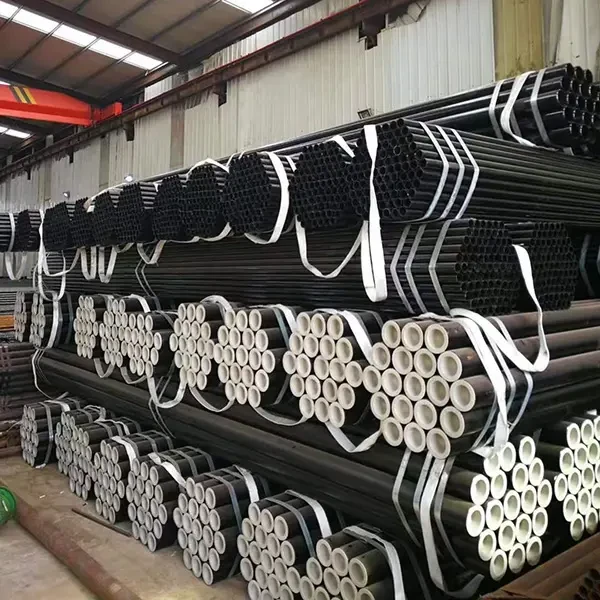
3.5-inch steel pipe, typically manufactured to ASTM A53 Grade B or API 5L specifications, represents a foundational component in numerous industrial applications. It falls within the medium-diameter pipe category, commonly employed in fluid and gas transport, structural supports, and mechanical piping systems. Its technical position within the industry chain resides between the steel mill, where the raw steel is produced, and the end-user applications spanning oil and gas, water conveyance, construction, and chemical processing. Core performance characteristics are defined by its pressure-bearing capacity, corrosion resistance (dependent on coating and material composition), and weldability. A key industry pain point revolves around maintaining consistent dimensional accuracy and material properties to ensure long-term system integrity, particularly concerning welding procedures and non-destructive testing requirements to prevent catastrophic failures. The selection of appropriate pipe schedules (wall thickness) is crucial for balancing cost-effectiveness with operational safety, particularly in high-pressure or corrosive environments.
Material Science & Manufacturing
The primary material for 3.5-inch steel pipe is carbon steel, with ASTM A53 Grade B commonly utilizing steel with a chemical composition consisting of approximately 0.30% carbon, 0.75% manganese, 0.024% phosphorus, 0.024% sulfur, and balance iron. API 5L specifications cover a wider range of carbon and low-alloy steels. Raw materials undergo a hot rolling process, initially forming blooms or billets which are then pierced and rolled into seamless pipes, or formed and welded into ERW (Electric Resistance Welded) or DSAW (Direct Submerged Arc Welded) pipes. Seamless pipe production involves stringent quality control during piercing to prevent defects like laps and folds. Welded pipe manufacturing necessitates precise control of welding parameters – current, voltage, welding speed – to achieve complete fusion and minimize defects like porosity and incomplete penetration. Post-welding heat treatment (PWHT) is frequently applied to relieve residual stresses and improve weld metal ductility. Critical parameters monitored during manufacturing include chemical composition verification via spectroscopy, mechanical testing (tensile strength, yield strength, elongation, impact toughness), hydrostatic testing to confirm pressure integrity, and dimensional inspection using ultrasonic thickness gauging and diameter measurement tools. Surface preparation, often involving shot blasting, is crucial for promoting adhesion of protective coatings. The steel’s microstructure, primarily ferrite with some pearlite depending on carbon content, directly impacts its mechanical properties and weldability. The manufacturing process significantly influences grain size and orientation, affecting the pipe’s susceptibility to stress corrosion cracking.
Performance & Engineering
Performance of 3.5-inch steel pipe is primarily governed by its ability to withstand internal and external pressures, tensile stresses, and environmental factors. Force analysis involves calculating hoop stress (σh = PD/2t, where P = pressure, D = diameter, t = wall thickness) and longitudinal stress resulting from pressure and bending moments. Finite element analysis (FEA) is often employed for complex loading scenarios, such as those encountered in pipeline networks. Environmental resistance is critical; corrosion is a major concern, and mitigation strategies include applying protective coatings (epoxy, polyethylene, polyurethane), utilizing corrosion inhibitors in transported fluids, and selecting appropriate steel grades with enhanced corrosion resistance (e.g., adding chromium or nickel). Compliance requirements depend on the application. Oil and gas pipelines adhere to API 5L and DOT regulations, mandating stringent design, fabrication, and inspection standards. Water conveyance systems must meet AWWA standards. Structural applications follow AISC specifications. Functional implementation necessitates consideration of fluid flow characteristics, pressure drop calculations (using the Darcy-Weisbach equation), and thermal expansion/contraction effects. The selection of appropriate pipe schedules (e.g., Schedule 40, Schedule 80) is based on pressure and temperature requirements, with thicker schedules providing higher pressure ratings. Proper support design is essential to prevent excessive bending stresses and maintain pipeline integrity. Fatigue analysis is crucial for applications involving cyclic loading, such as offshore platforms or reciprocating compressor lines.
Technical Specifications
| Parameter | ASTM A53 Grade B | API 5L X42 | API 5L X70 | Unit |
|---|---|---|---|---|
| Outside Diameter | 3.5 inches (88.9 mm) | 3.5 inches (88.9 mm) | 3.5 inches (88.9 mm) | inches / mm |
| Minimum Yield Strength | 36,000 psi (248 MPa) | 42,000 psi (289 MPa) | 70,000 psi (483 MPa) | psi / MPa |
| Minimum Tensile Strength | 60,000 psi (414 MPa) | 65,000 psi (448 MPa) | 80,000 psi (552 MPa) | psi / MPa |
| Elongation (2 inch gauge length) | 23% | 21% | 19% | % |
| Charpy V-Notch Impact Energy (at -20°F) | 20 ft-lbs (27 J) | 20 ft-lbs (27 J) | 40 ft-lbs (54 J) | ft-lbs / J |
| Wall Thickness (Schedule 40) | 0.218 inches (5.54 mm) | 0.218 inches (5.54 mm) | 0.218 inches (5.54 mm) | inches / mm |
Failure Mode & Maintenance
Common failure modes for 3.5-inch steel pipe include corrosion (uniform, pitting, galvanic, crevice), erosion, fatigue cracking (due to cyclic loading), stress corrosion cracking (SCC), and weld defects (porosity, incomplete fusion, lamellar tearing). Corrosion is often initiated at surface imperfections or weld seams. Fatigue cracking typically occurs at stress concentrations, such as welds or geometric discontinuities. SCC is influenced by the presence of corrosive environments and tensile stresses. Weld defects can lead to premature failure under pressure. Maintenance strategies involve regular inspection using visual testing (VT), ultrasonic testing (UT), radiographic testing (RT), and magnetic particle inspection (MPI) to detect cracks, corrosion, and weld defects. Protective coatings should be periodically inspected for damage and repaired as needed. Cathodic protection systems (sacrificial anodes or impressed current) can mitigate corrosion. Internal pipeline inspections using intelligent pigs (pipeline inspection gauges) equipped with UT or magnetic flux leakage (MFL) sensors are crucial for assessing pipe wall condition over extended lengths. Proper cleaning and pigging operations remove debris and prevent blockage. Preventative maintenance programs, including corrosion monitoring and coating maintenance, are essential for extending pipe lifespan and ensuring operational safety. If cracking is detected, repair options include weld repair (following strict welding procedures) or pipe replacement.
Industry FAQ
Q: What is the significance of the pipe schedule (e.g., Schedule 40, Schedule 80) in the context of 3.5-inch steel pipe?
A: The pipe schedule defines the minimum wall thickness of the pipe. Higher schedule numbers indicate thicker walls and, consequently, higher pressure-bearing capacity. Schedule 40 is common for lower-pressure applications, while Schedule 80 is preferred for higher pressures or more demanding service conditions. Selecting the appropriate schedule is a critical engineering decision based on pressure, temperature, and fluid compatibility requirements.
Q: How does the welding process affect the integrity of 3.5-inch steel pipe, particularly for ERW or DSAW pipes?
A: The welding process is paramount. Incomplete fusion, porosity, and lamellar tearing are potential weld defects that can significantly reduce the pipe’s strength and ductility. Proper preheating, controlled cooling rates, and careful selection of welding consumables are essential. Non-destructive testing (NDT), such as RT and UT, is crucial for verifying weld quality. Post-weld heat treatment (PWHT) is frequently used to relieve residual stresses and improve weld metal properties.
Q: What are the primary differences between ASTM A53 Grade B and API 5L X70 steel pipes?
A: API 5L X70 possesses a significantly higher yield and tensile strength compared to ASTM A53 Grade B. This allows it to withstand higher pressures and stresses. API 5L specifications also encompass more rigorous quality control requirements and impact toughness testing, particularly at lower temperatures. X70 is often used in pipelines transporting high-pressure fluids over long distances.
Q: What protective coating options are available for mitigating corrosion in 3.5-inch steel pipe, and which is most effective in a specific environment?
A: Common coating options include epoxy coatings, polyethylene coatings, polyurethane coatings, and zinc-rich primers. Epoxy coatings provide good chemical resistance. Polyethylene coatings offer excellent adhesion and abrasion resistance. Polyurethane coatings are durable and flexible. Zinc-rich primers provide sacrificial corrosion protection. The most effective coating depends on the specific environment. For example, in saltwater environments, a multi-layer system including epoxy primer, polyethylene coating, and a polyurethane topcoat is often recommended.
Q: How often should non-destructive testing (NDT) be performed on 3.5-inch steel pipe in a critical application, such as a high-pressure gas pipeline?
A: The frequency of NDT depends on the risk assessment and regulatory requirements. For critical applications, initial NDT (RT and UT) is performed after fabrication and installation. Periodic inspections using UT or MFL (magnetic flux leakage) with intelligent pigs are typically conducted every 5-10 years, or more frequently if corrosion rates are high or operating conditions are severe. Visual inspections should be performed more regularly (e.g., annually) to identify any surface defects or coating damage.
Conclusion
3.5-inch steel pipe, governed by standards like ASTM A53 and API 5L, remains a critical component in diverse industrial infrastructures. Its performance is inextricably linked to material selection, manufacturing rigor, and robust maintenance protocols. Understanding the interplay between mechanical properties, corrosion resistance, and potential failure modes is paramount for ensuring long-term operational reliability and safety.
Looking forward, advancements in steel alloy development, coupled with sophisticated NDT technologies like phased array UT and guided wave testing, will enable more precise defect characterization and proactive maintenance strategies. Furthermore, the increasing adoption of digital twins and predictive modeling will facilitate optimized pipeline management and extend the service life of these essential infrastructure assets.
