
Introduction
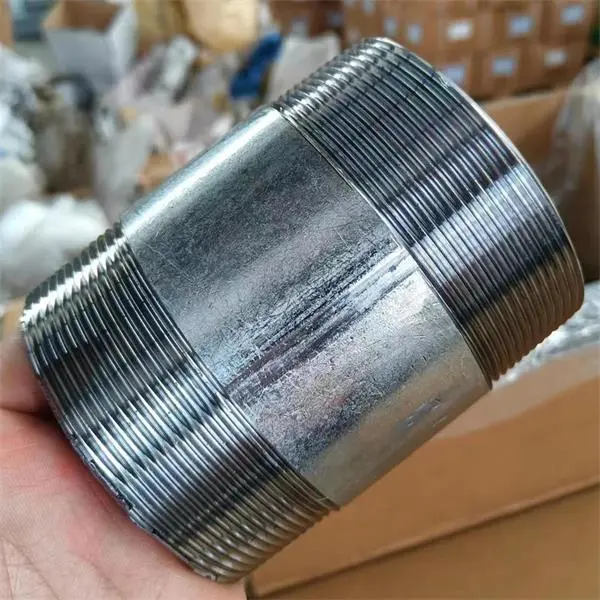
Galvanized steel pipe, specifically Schedule 40 3-inch diameter pipe, represents a critical component in fluid transport systems across numerous industries including water distribution, fire suppression, and industrial processing. Its prevalent use stems from a cost-effective balance of mechanical strength, corrosion resistance, and ease of installation. The galvanization process, involving the application of a zinc coating, provides sacrificial protection to the underlying steel, preventing corrosion. This guide provides an in-depth technical overview of 3-inch galvanized pipe, covering material composition, manufacturing processes, performance characteristics, potential failure modes, and relevant industry standards. Understanding these aspects is vital for procurement managers, engineers, and maintenance personnel ensuring long-term system reliability and safety. The core performance characteristics center around pressure containment, corrosion resistance dictated by zinc coating thickness, and dimensional accuracy to ensure proper fitting and threaded connection integrity. This analysis will examine these characteristics rigorously.
Material Science & Manufacturing
The base material for 3-inch galvanized pipe is typically carbon steel, conforming to ASTM A53 Grade B or A120. These steels possess a defined chemical composition, primarily iron with controlled amounts of carbon, manganese, phosphorus, and sulfur. The mechanical properties, notably yield strength (around 36,000 psi for A53 Grade B) and tensile strength (around 58,000 psi), dictate the pipe's ability to withstand internal and external pressures. Manufacturing begins with seamless or welded steel tube production. Seamless pipe is created through mandrel piercing of a solid billet, resulting in a homogenous structure with superior pressure-withstanding capabilities. Welded pipe is manufactured by rolling steel strips and subsequently welding the seam, often using electric resistance welding (ERW) or submerged arc welding (SAW). Post-tube formation, the galvanization process is crucial. Hot-dip galvanizing is the predominant method, immersing the steel pipe in a molten zinc bath (typically 98% pure zinc) at approximately 840°F (449°C). This creates a metallurgical bond, forming zinc-iron alloy layers (zeta, delta, gamma) and an outer layer of pure zinc. Key process parameters include bath temperature, immersion time, steel surface preparation (pickling to remove mill scale), and cooling rate. Surface preparation is critical; incomplete cleaning leads to poor zinc adhesion and localized corrosion. The thickness of the zinc coating is governed by standards, commonly ranging from 0.020 to 0.065 inches depending on pipe dimensions and application requirements. Coating uniformity is also paramount, checked through non-destructive testing methods like magnetic thickness gauging.
Performance & Engineering
The performance of 3-inch galvanized pipe is fundamentally governed by its ability to safely contain fluids under pressure. Engineering calculations involve determining the allowable stress based on material yield strength, a safety factor, and considering the effects of temperature and corrosion. The Barlow's formula is commonly used to calculate the burst pressure: P = (2 S t) / D, where P is the pressure, S is the tensile strength, t is the wall thickness, and D is the outside diameter. For Schedule 40 pipe, the nominal wall thickness is 0.218 inches. Environmental resistance is primarily provided by the zinc coating. The zinc acts as a sacrificial anode, corroding preferentially to the steel. However, the corrosion rate of zinc is influenced by environmental factors such as pH, humidity, and chloride concentration. In acidic environments, the corrosion rate accelerates. Electrochemical corrosion principles dictate that dissimilar metals in contact within an electrolyte (e.g., steel pipe connected to a copper fitting) will create a galvanic cell, accelerating corrosion of the less noble metal (steel). Therefore, dielectric unions or appropriate coatings are necessary when connecting dissimilar metals. Compliance requirements often dictate specific testing procedures for pressure testing (hydrostatic testing as per ASTM A1060) and coating adherence. The pipe’s ability to maintain its structural integrity over its design life is crucial, requiring periodic inspections for corrosion and mechanical damage. Fatigue analysis is also important in applications involving cyclic loading or vibration.
Technical Specifications
| Parameter | Value (Typical) | Unit | Test Standard |
|---|---|---|---|
| Nominal Pipe Size | 3 | inches | ANSI/ASME B36.10M |
| Schedule | 40 | - | ANSI/ASME B36.10M |
| Outside Diameter | 3.5 | inches | ANSI/ASME B36.10M |
| Wall Thickness | 0.218 | inches | ANSI/ASME B36.10M |
| Minimum Yield Strength (Base Steel) | 36,000 | psi | ASTM A53/A120 |
| Minimum Tensile Strength (Base Steel) | 58,000 | psi | ASTM A53/A120 |
| Minimum Zinc Coating Thickness | 0.020 | inches | ASTM A153 |
Failure Mode & Maintenance
Several failure modes can affect 3-inch galvanized pipe in service. Uniform corrosion, while mitigated by the zinc coating, still occurs over time, eventually depleting the sacrificial layer and leading to base steel corrosion. Localized corrosion, such as pitting corrosion, is more aggressive and can occur due to imperfections in the zinc coating or the presence of chloride ions. Threaded connections are particularly susceptible to galvanic corrosion if dissimilar metals are used. Mechanical damage, including denting and bending, can compromise the pipe's structural integrity, especially under pressure. Fatigue cracking can occur in applications involving cyclic loading or vibration. Hydrogen embrittlement, though less common, can occur under high pressures, causing cracking. Regular maintenance is critical for preventing failures. This includes visual inspections for corrosion, dents, and leaks. Coating repairs should be performed promptly to restore corrosion protection. Periodic testing of the pipe's wall thickness using ultrasonic thickness gauging can identify areas of significant corrosion. Applying a corrosion inhibitor to the internal surface of the pipe can help to reduce corrosion rates. For threaded connections, applying an anti-seize compound compatible with galvanized steel can minimize galvanic corrosion. Proper support structures are essential to prevent bending and excessive stress on the pipe. Pressure testing should be conducted periodically to verify the integrity of the system. When replacing sections of pipe, ensure compatibility of materials and proper joining techniques.
Industry FAQ
Q: What is the typical lifespan of a 3-inch galvanized pipe system in a potable water application?
A: Lifespan varies significantly based on water quality, pH, and maintenance. However, a well-maintained system can typically last between 40-70 years. Highly acidic or chlorinated water accelerates corrosion, reducing lifespan. Regular inspections and, if necessary, internal coating applications can extend service life.
Q: How does welding affect the galvanized coating?
A: Welding destroys the zinc coating in the heat-affected zone, rendering it susceptible to corrosion. If welding is unavoidable, the weld area must be re-galvanized immediately after welding using methods like zinc-rich paint or hot-dip galvanizing for localized repair.
Q: What are the implications of using 3-inch galvanized pipe with dissimilar metals, such as copper?
A: Connecting galvanized steel to copper creates a galvanic cell, accelerating corrosion of the steel due to copper's higher nobility. Dielectric unions, isolating the two metals with a non-conductive material, are essential to prevent this corrosion. Alternatively, using compatible fittings made of brass or stainless steel can eliminate the issue.
Q: What is the difference between Schedule 40 and Schedule 80 galvanized pipe, and when would you choose one over the other?
A: Schedule 80 pipe has a thicker wall than Schedule 40 pipe, providing higher pressure-withstanding capability and increased corrosion resistance due to a larger zinc reservoir. Schedule 80 is typically used in applications requiring higher pressures, more robust mechanical strength, or in corrosive environments where a longer service life is desired. Schedule 40 is often sufficient for lower-pressure applications.
Q: How is the quality of the galvanization coating verified during procurement?
A: Quality is verified through several methods. Visual inspection checks for coating uniformity and defects. Magnetic thickness gauging measures the zinc coating thickness. Salt spray testing (ASTM B117) assesses the corrosion resistance of the coating. Adhesion tests, like the bend test (ASTM A153), verify the bond between the zinc coating and the steel substrate. Material Test Reports (MTRs) from the galvanizer should be provided, detailing the coating process and test results.
Conclusion
3-inch galvanized steel pipe remains a prevalent and cost-effective solution for fluid transport in various applications, but its long-term performance is inextricably linked to a comprehensive understanding of material science, manufacturing processes, and potential failure modes. The zinc coating provides essential corrosion protection, but this protection is not absolute and is influenced by environmental conditions and proper maintenance. Selecting the appropriate grade of steel, ensuring high-quality galvanization, and implementing appropriate corrosion prevention strategies are all critical for maximizing the service life and reliability of galvanized pipe systems.
Future trends may see increasing adoption of alternative corrosion protection methods, such as epoxy coatings or dual-service coatings, and a greater emphasis on non-destructive testing techniques for monitoring pipe integrity. However, galvanized steel pipe will likely remain a significant component of infrastructure for many years to come, provided that its limitations are understood and addressed through diligent engineering practice and proactive maintenance programs.
