
Introduction
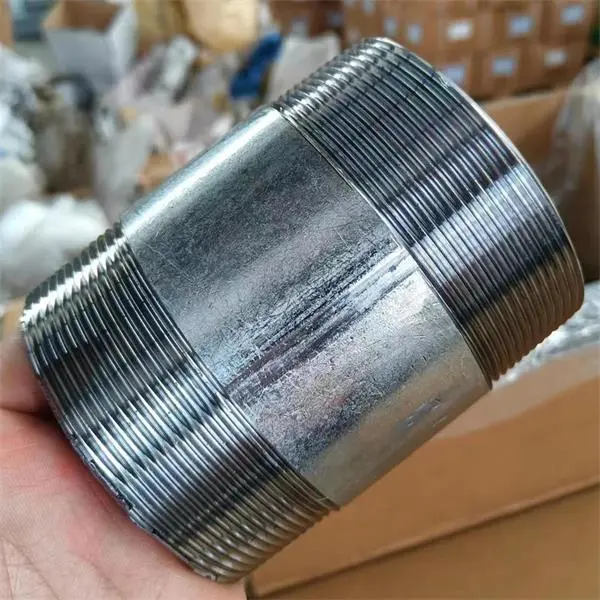
3-inch mild steel pipe is a foundational component in numerous industrial applications, serving as a conduit for fluids and gases across sectors including water distribution, oil & gas, construction, and manufacturing. Positioned within the broader piping system industry, it represents a cost-effective solution balancing acceptable mechanical properties with ease of fabrication. Mild steel, characterized by its relatively low carbon content, offers sufficient strength for many applications while remaining weldable and machinable. This guide provides a comprehensive technical overview of 3-inch mild steel pipe, covering material composition, manufacturing processes, performance characteristics, potential failure modes, and relevant industry standards. A key pain point within the industry revolves around corrosion management and ensuring long-term structural integrity, particularly in aggressive environments. This document will address these concerns with practical insights into material selection and preventative maintenance strategies.
Material Science & Manufacturing
3-inch mild steel pipe is typically manufactured from carbon steel grades conforming to ASTM A53 or similar specifications. The primary raw material is iron ore, refined through the basic oxygen furnace (BOF) or electric arc furnace (EAF) process. The resulting steel contains approximately 0.05% to 0.25% carbon, alongside manganese, silicon, phosphorus, and sulfur as alloying elements. The carbon content dictates the steel’s weldability and ductility; higher carbon content increases strength but reduces weldability. Manufacturing predominantly employs either the seamless or welded process. Seamless pipe is produced via mandrel rolling or extrusion, resulting in a homogenous structure with superior burst strength. Welded pipe, on the other hand, is formed by rolling steel plate and subsequently welding the seam using Electric Resistance Welding (ERW) or submerged arc welding (SAW). ERW is common for smaller diameter pipes, offering higher production rates. SAW is favored for thicker-walled, larger-diameter pipes demanding higher strength. Critical process parameters include controlled cooling rates post-welding to minimize residual stresses and ensure proper heat-affected zone (HAZ) characteristics. Surface finish is often improved through pickling and oiling to prevent corrosion during storage and transportation. The chemical composition must be tightly controlled to ensure compliance with specified mechanical properties and corrosion resistance requirements. Post-manufacturing, hydrostatic testing is standard procedure to verify leak tightness and structural integrity.
Performance & Engineering
The performance of 3-inch mild steel pipe is fundamentally governed by its mechanical properties: yield strength, tensile strength, and elongation. Typical yield strengths range from 250 MPa to 350 MPa, while tensile strengths reach 400 MPa to 550 MPa. Elongation, a measure of ductility, typically falls between 15% and 25%. These values are significantly influenced by the manufacturing process and heat treatment. When subjected to internal pressure, the pipe wall experiences hoop stress – a circumferential tensile stress. Engineering calculations utilizing Barlow's formula (σ = PD/2t, where σ is hoop stress, P is internal pressure, D is diameter, and t is wall thickness) are essential to ensure the pipe can safely withstand operating pressures. External loads, such as weight of the fluid or supported structures, induce longitudinal stress. Corrosion resistance is a major performance consideration. Mild steel is susceptible to rusting in the presence of moisture and oxygen. Protective coatings (e.g., epoxy, polyethylene) and cathodic protection techniques are frequently employed to mitigate corrosion. Compliance requirements vary depending on the application. For potable water systems, pipes must meet NSF/ANSI 61 standards for lead content and extractables. Oil & gas pipelines are subject to API 5L standards concerning material specification, manufacturing, and testing. Environmental resistance requirements dictate selection of appropriate coatings based on the operating environment’s salinity, temperature, and potential exposure to corrosive chemicals.
Technical Specifications
| Parameter | Unit | ASTM A53 Grade B | API 5L Grade B |
|---|---|---|---|
| Nominal Pipe Size | inch | 3 | 3 |
| Outside Diameter | mm | 88.9 | 88.9 |
| Wall Thickness (Schedule 40) | mm | 4.5 | 4.5 |
| Minimum Yield Strength | MPa | 250 | 240 |
| Minimum Tensile Strength | MPa | 400 | 485 |
| Elongation (200mm gauge length) | % | 20 | 21 |
| Hydrostatic Test Pressure | MPa | 6.2 | 6.9 |
Failure Mode & Maintenance
3-inch mild steel pipe is susceptible to several failure modes. Corrosion, as previously noted, is a primary concern, leading to pitting, uniform thinning, and eventual perforation. Galvanic corrosion can occur when the pipe is in contact with dissimilar metals. Erosion, caused by abrasive particles in the fluid stream, can wear away the pipe wall, particularly at bends and restrictions. Fatigue cracking can develop under cyclic loading, especially at weld seams. Hydrogen embrittlement, a phenomenon where hydrogen diffuses into the steel, can reduce ductility and promote cracking in high-pressure environments. Maintenance strategies include regular visual inspections for signs of corrosion or damage. Non-destructive testing (NDT) methods such as ultrasonic testing (UT) and radiographic testing (RT) can detect internal flaws. Protective coatings should be periodically inspected and repaired. Cathodic protection systems require regular monitoring of current output and potential measurements. Internal cleaning and pigging operations remove deposits that can contribute to corrosion and erosion. For pipelines transporting hazardous materials, leak detection systems are crucial. A preventative maintenance schedule, tailored to the specific operating conditions, is essential to maximizing service life and ensuring safe operation. Failure analysis, involving metallurgical examination of failed components, is crucial for identifying root causes and implementing corrective actions.
Industry FAQ
Q: What is the impact of sulfur content on the weldability of 3-inch mild steel pipe?
A: Higher sulfur content in mild steel can negatively affect weldability by forming iron sulfide inclusions during solidification. These inclusions reduce ductility and toughness in the weld HAZ, increasing the risk of cracking. Lower sulfur content steels are generally preferred for welding applications, and careful welding procedures are required for higher sulfur content materials.
Q: How does the manufacturing process (seamless vs. welded) influence the pipe's burst pressure?
A: Seamless pipe generally exhibits higher burst pressure compared to welded pipe due to the absence of a weld seam, which can represent a potential weakness. Seamless pipe possesses a homogenous structure without any heat-affected zones. However, advancements in welding technology, particularly SAW, have significantly improved the quality of welded seams, reducing the difference in burst pressure.
Q: What are the key considerations when selecting a protective coating for a 3-inch mild steel pipe operating in a marine environment?
A: In a marine environment, corrosion is accelerated by high salinity and moisture. The protective coating must provide excellent barrier properties against chloride penetration. Epoxy coatings, polyurethane coatings, and fusion-bonded epoxy (FBE) coatings are commonly used. The coating should also exhibit good adhesion to the steel substrate and resistance to UV degradation. Cathodic protection should be considered as a supplementary corrosion mitigation technique.
Q: What is the significance of hydrostatic testing, and what acceptance criteria are typically used?
A: Hydrostatic testing verifies the structural integrity and leak tightness of the pipe. The pipe is filled with water and pressurized to a specified level, typically 1.5 times the maximum operating pressure, for a defined period. Acceptance criteria typically require no visible leakage and no permanent deformation of the pipe.
Q: What role does normalization play in the heat treatment of mild steel pipe and how does it affect performance?
A: Normalization is a heat treatment process that refines the grain structure of the steel, improving its machinability, toughness, and weldability. It involves heating the steel to a specific temperature and then cooling it in still air. This process reduces internal stresses and provides a more uniform microstructure, leading to enhanced mechanical properties.
Conclusion
3-inch mild steel pipe remains a ubiquitous and cost-effective solution for a wide array of fluid and gas conveyance applications. Its performance is dictated by a complex interplay of material composition, manufacturing process, and operating environment. Understanding the inherent limitations of mild steel, particularly its susceptibility to corrosion, is paramount. Implementing appropriate corrosion mitigation strategies, including protective coatings and cathodic protection, is crucial for ensuring long-term structural integrity and preventing catastrophic failures.
Looking forward, continued advancements in welding technologies and coating materials will further enhance the performance and durability of 3-inch mild steel pipe. Furthermore, the increasing adoption of non-destructive testing methods and predictive maintenance techniques will enable proactive identification of potential failures, reducing downtime and minimizing safety risks. Proper material selection, coupled with robust engineering design and diligent maintenance practices, will ensure the continued relevance of this fundamental piping component in diverse industrial sectors.
