

Introduction
304/316 stainless steel pipe is an austenitic stainless steel exhibiting superior corrosion resistance, weldability, and formability. Its position within the industrial chain is central to fluid transfer systems across numerous sectors, including chemical processing, food & beverage, pharmaceutical manufacturing, and power generation. Unlike carbon steel, which requires extensive protective coatings, 304/316 stainless steel intrinsically resists rust and corrosion, reducing long-term maintenance costs. The core performance characteristics – tensile strength, yield strength, and resistance to various corrosive media – determine its suitability for demanding applications. A primary industry pain point is selecting the correct grade of 300-series stainless steel (304 vs. 316) based on the specific corrosive environment and operating temperature to avoid premature failure. Understanding the nuances of each alloy’s composition is therefore critical.
Material Science & Manufacturing
The foundational material for 304/316 stainless pipe is a ferrous alloy containing chromium (Cr) as the primary alloying element, typically 18-20% by weight for 304 and 16-18% for 316. Nickel (Ni) is also a key component, usually 8-10.5%, enhancing ductility and toughness. 316 distinguishes itself with the addition of molybdenum (Mo), generally 2-3%, significantly boosting resistance to chloride corrosion, particularly pitting and crevice corrosion. Other elements like manganese (Mn), silicon (Si), and carbon (C) are present in controlled amounts. The manufacturing process generally follows these steps: raw material melting and casting into billets; hot rolling to produce seamless pipe or strip for welded pipe; cold drawing or welding (for ERW or SAW pipe); annealing to relieve stress and improve ductility; pickling and passivation to remove surface contaminants and establish a corrosion-resistant layer; and final inspection & testing. Critical parameters during hot rolling include temperature control to avoid grain growth and reduction percentage per pass to ensure material homogeneity. Welding parameters – current, voltage, travel speed – must be precisely controlled to prevent weld defects like porosity or incomplete fusion. Passivation, typically using nitric acid, forms a chromium-rich oxide layer crucial for long-term corrosion resistance. Deviation from optimal parameters at any stage can lead to material defects impacting performance.
Performance & Engineering
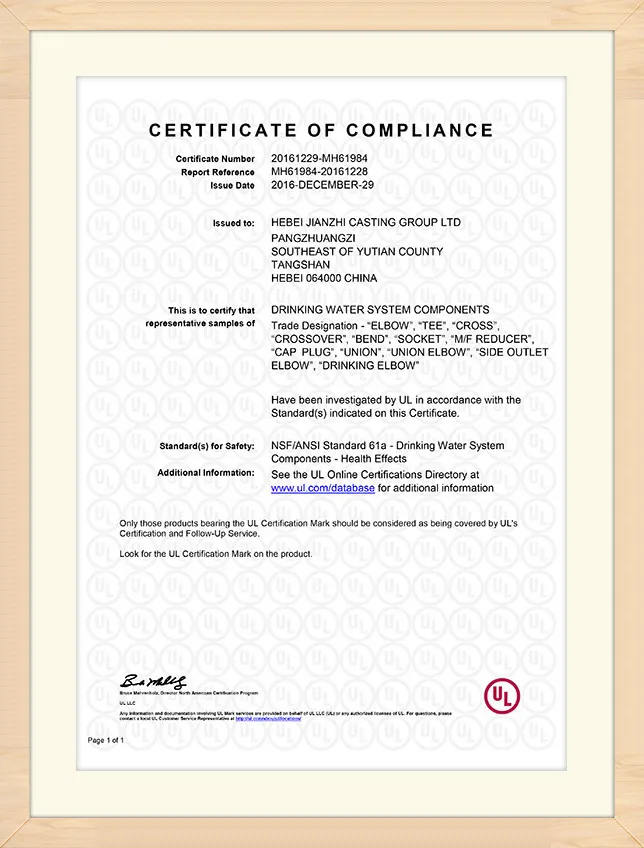
Performance analysis of 304/316 stainless pipe centers on its mechanical strength, corrosion resistance, and hydraulic characteristics. Force analysis involves calculating hoop stress due to internal pressure, longitudinal stress due to axial load, and bending stress under external loads. The Von Mises stress criterion is commonly employed to assess the potential for yielding or fracture. Corrosion resistance is highly dependent on the specific environment. 304 exhibits excellent resistance to atmospheric corrosion and many mild chemicals, but is susceptible to pitting in chloride-rich environments. 316, due to its molybdenum content, offers significantly improved resistance to chlorides, sulfuric acid, and other aggressive media. Environmental resistance also includes consideration of oxidation at elevated temperatures. Compliance requirements vary by industry and application. For potable water systems, NSF/ANSI 61 certification is essential to ensure the material doesn't leach harmful substances into the water. ASME B31.3 covers power piping, while ASME B31.1 covers gas transmission and distribution. Hydraulic calculations determine pressure drop based on pipe diameter, flow rate, and fluid viscosity, requiring adherence to Darcy-Weisbach equation or Hazen-Williams formula.
Technical Specifications
| Parameter | 304 Stainless Steel | 316 Stainless Steel | Unit |
|---|---|---|---|
| Minimum Tensile Strength | 517 | 517 | MPa |
| Minimum Yield Strength | 205 | 205 | MPa |
| Elongation (20mm gauge) | 40 | 40 | % |
| Hardness (Brinell) | 197 | 197 | HB |
| Chromium Content | 18-20 | 16-18 | % |
| Nickel Content | 8-10.5 | 10-14 | % |
| Molybdenum Content | < 0.08 | 2-3 | % |
Failure Mode & Maintenance
Common failure modes in 304/316 stainless steel pipe include pitting corrosion (especially in chloride environments), crevice corrosion (at joints and under gaskets), stress corrosion cracking (SCC), fatigue cracking (due to cyclic loading), and erosion corrosion (caused by abrasive particles in the fluid). Pitting initiates at surface imperfections and can rapidly penetrate the pipe wall. SCC occurs due to the combined action of tensile stress and a corrosive environment. Fatigue cracking arises from repeated stress cycles exceeding the material's endurance limit. Preventative maintenance includes regular visual inspection for signs of corrosion or cracking, hydrostatic testing to verify pipe integrity, and proper cleaning to remove corrosive deposits. For chloride-exposed environments, 316 stainless steel is strongly recommended. If SCC is a concern, reducing tensile stress (e.g., through stress relieving heat treatment) and controlling the corrosive environment are crucial. In the event of a leak, repair options include welding (performed by qualified welders using appropriate welding procedures) or replacing the damaged section of pipe. Correct passivation after welding is essential to restore corrosion resistance.
Industry FAQ
Q: What is the primary difference between 304 and 316 stainless steel regarding corrosion resistance, and when is 316 absolutely necessary?
A: The key difference is the addition of molybdenum in 316 stainless steel, which significantly enhances its resistance to chloride corrosion, particularly pitting and crevice corrosion. 316 is absolutely necessary in environments with high chloride concentrations, such as marine applications, chemical processing involving chlorides, or areas exposed to de-icing salts. 304 is sufficient for less aggressive environments.
Q: How does welding affect the corrosion resistance of 304/316 stainless steel pipe, and what steps should be taken to mitigate potential issues?
A: Welding can create sensitization in stainless steel, reducing its corrosion resistance in the heat-affected zone (HAZ). This occurs when chromium carbides precipitate during cooling, depleting chromium from the grain boundaries. To mitigate this, use low-carbon grades (e.g., 304L, 316L), employ proper welding procedures with minimal heat input, and perform post-weld heat treatment (PWHT) to restore chromium distribution. Post-weld passivation is also essential.
Q: What are the critical considerations for specifying the wall thickness of 304/316 stainless steel pipe for a given application?
A: Wall thickness must be determined based on internal pressure, external loads, corrosion allowance, and applicable code requirements. Calculate the required thickness using relevant pressure vessel or piping design codes (e.g., ASME B31.3). Corrosion allowance accounts for material loss over the pipe's lifespan. Factors like fluid velocity and potential for erosion corrosion also influence thickness selection.
Q: What is the role of passivation, and how can you verify its effectiveness?
A: Passivation forms a protective chromium-rich oxide layer on the surface of the stainless steel, enhancing its corrosion resistance. It's achieved by treating the pipe with nitric acid or other suitable passivating solutions. Effectiveness can be verified using a copper sulfate test (ASTM A380) – a blue color indicates inadequate passivation.
Q: What are the implications of galvanic corrosion when connecting 304/316 stainless steel pipe to dissimilar metals?
A: Galvanic corrosion occurs when dissimilar metals are in electrical contact in the presence of an electrolyte. Stainless steel is more noble than many common metals (e.g., carbon steel). Connecting 304/316 to a less noble metal can lead to accelerated corrosion of the less noble metal. Mitigation strategies include using dielectric unions, applying coatings to isolate the metals, or selecting compatible materials.
Conclusion
304 and 316 stainless steel pipes represent a cornerstone of modern fluid handling systems, offering a blend of mechanical strength and corrosion resistance that surpasses many alternative materials. The selection between the two grades is heavily dictated by the specific operational environment, with 316 providing critical enhanced protection in chloride-rich applications. Proper manufacturing processes, particularly those relating to welding and passivation, are paramount to ensuring the long-term integrity and performance of these systems.
Future advancements will likely focus on further enhancing corrosion resistance through alloy optimization and surface modification techniques. The increasing demand for sustainable infrastructure will also drive research into more efficient and environmentally friendly manufacturing processes. A thorough understanding of the material science, engineering principles, and potential failure modes discussed here is essential for procurement managers, engineers, and maintenance personnel to ensure the reliable and cost-effective operation of stainless steel piping systems.
