
Introduction
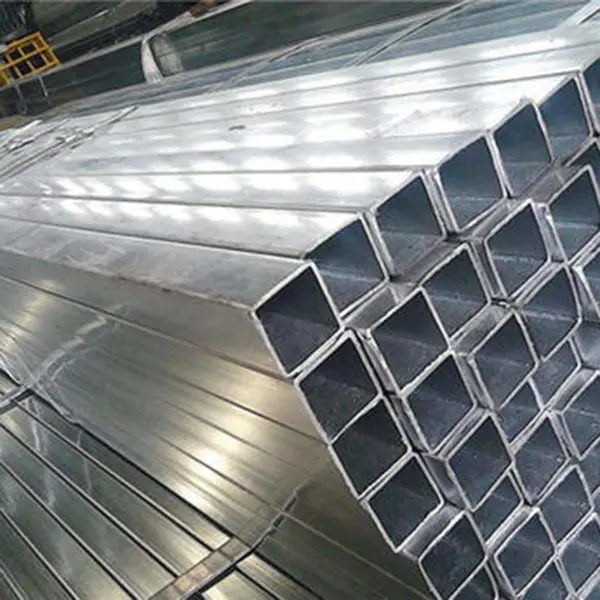
32mm steel pipe, a ubiquitous component in numerous industrial applications, represents a fundamental building block in infrastructure, manufacturing, and fluid transport systems. Positioned within the broader category of carbon steel hollow sections, its 32mm outer diameter (OD) classifies it as a medium-sized pipe, offering a balance between structural integrity and cost-effectiveness. This guide provides a comprehensive technical overview of 32mm steel pipe, encompassing material composition, manufacturing processes, performance characteristics, potential failure modes, and relevant industry standards. Core performance metrics include its yield strength, tensile strength, pressure bearing capacity, and corrosion resistance, all critical parameters for ensuring long-term reliability and operational safety. The increasing demand for precise dimensions and consistent material properties in modern engineering necessitates a detailed understanding of this essential industrial product. Pain points in the industry related to 32mm steel pipe frequently center around inconsistent weld quality, material certification traceability, and ensuring compliance with evolving regulatory requirements regarding material composition and dimensional tolerances.
Material Science & Manufacturing
The predominant material for 32mm steel pipe is carbon steel, typically conforming to specifications such as ASTM A53 Grade B or EN 10208-2 S235JR. The chemical composition primarily consists of iron (Fe), with varying percentages of carbon (C) – typically between 0.05% and 0.25% – manganese (Mn), silicon (Si), phosphorus (P), and sulfur (S). The carbon content dictates the steel's hardness and weldability; higher carbon content increases hardness but reduces weldability. Manganese enhances strength and toughness, while silicon acts as a deoxidizer during the steelmaking process. Phosphorus and sulfur, present in small quantities, can negatively impact ductility and weldability, necessitating stringent control during manufacturing.
Manufacturing processes primarily involve seamless or welded construction. Seamless pipes are produced through processes like mandrel rolling or extrusion, resulting in a homogenous structure without weld seams, offering superior strength and pressure resistance. Welded pipes, conversely, are manufactured by rolling steel plates into cylindrical shapes and joining the edges through electric resistance welding (ERW), submerged arc welding (SAW), or high-frequency induction welding (HFIW). ERW is commonly used for smaller diameter pipes like 32mm, offering cost-effectiveness. Key parameters controlled during manufacturing include rolling temperature, welding current/voltage (for welded pipes), cooling rate, and dimensional tolerances. Post-welding processes, such as heat treatment (normalizing or annealing), are crucial for relieving residual stresses and improving mechanical properties. Non-destructive testing (NDT) methods, including ultrasonic testing (UT) and radiographic testing (RT), are employed to ensure weld integrity and detect any internal defects. Surface finishing processes, like pickling or galvanizing, enhance corrosion resistance.
Performance & Engineering
The performance of 32mm steel pipe is governed by its mechanical properties and its ability to withstand various operational stresses. Force analysis typically considers axial load (tension and compression), bending moment, torsional stress, and internal pressure. Yield strength, typically around 235 MPa for S235JR steel, represents the stress at which the material begins to deform permanently. Tensile strength, generally exceeding 360 MPa, denotes the maximum stress the material can withstand before fracture. The pipe’s wall thickness significantly impacts its pressure-bearing capacity, calculated using the Barlow’s formula or similar equations accounting for material properties and safety factors. Environmental resistance is a critical factor; exposure to corrosive environments can lead to oxidation (rusting) and subsequent material degradation. Protective coatings, such as epoxy coatings or galvanization, are often applied to mitigate corrosion. Compliance requirements vary depending on the application and geographical location. For pressure vessels and pipelines, adherence to ASME Boiler and Pressure Vessel Code (Section IX for welding qualification) or EN 13480 (Metallic industrial piping) is mandatory. For structural applications, Eurocode 3 (Design of steel structures) provides guidelines for design and calculation. The pipe's ability to maintain its structural integrity under cyclic loading (fatigue) must also be considered, particularly in applications involving vibration or repeated stress cycles.
Technical Specifications
| Parameter | ASTM A53 Grade B | EN 10208-2 S235JR | Typical Range |
|---|---|---|---|
| Outer Diameter (mm) | 32 ± 0.4 | 32 ± 0.3 | 31.8 – 32.2 |
| Wall Thickness (mm) | 2.0 – 6.35 | 2.0 – 6.35 | 2.0 – 6.0 |
| Yield Strength (MPa) | 250 | 235 | 235 – 275 |
| Tensile Strength (MPa) | 370 | 360 | 360 – 450 |
| Elongation (%) | 20 | 20 | 18 – 22 |
| Hydrostatic Test Pressure (MPa) | 6.9 | Variable, based on thickness | 6.0 – 10.0 (dependent on wall thickness) |
Failure Mode & Maintenance
Common failure modes in 32mm steel pipe include corrosion, fatigue cracking, weld defects, and denting/deformation. Corrosion, primarily oxidation, occurs due to exposure to moisture and corrosive agents, leading to material loss and eventual perforation. Fatigue cracking arises from cyclic loading, initiating at stress concentration points (e.g., welds, dents) and propagating over time. Weld defects, such as porosity, slag inclusions, and incomplete fusion, significantly reduce the pipe’s strength and can lead to catastrophic failure. Denting or deformation can occur due to external impact or excessive load, compromising the pipe's structural integrity. Failure analysis often involves visual inspection, non-destructive testing (UT, RT, MT, PT), and metallographic examination to identify the root cause of the failure.
Preventative maintenance is crucial for extending the service life of 32mm steel pipe. Regular visual inspections should be conducted to identify signs of corrosion, denting, or weld defects. Protective coatings should be periodically inspected and reapplied as needed. Cathodic protection systems can be implemented in highly corrosive environments. Internal cleaning and pigging operations remove debris and scale buildup, preventing blockages and reducing corrosion rates. For pipelines carrying critical fluids, regular hydrostatic testing verifies the pipe's pressure-bearing capacity. Proper support and anchoring prevent excessive stress and deformation. Weld repairs should be performed by qualified welders following established procedures and codes. Any detected defects should be promptly addressed to prevent further propagation and potential failure.
Industry FAQ
Q: What is the difference between ASTM A53 Grade B and EN 10208-2 S235JR steel pipe, and which is preferable for a general industrial application?
A: Both ASTM A53 Grade B and EN 10208-2 S235JR are commonly used carbon steels for pipe manufacturing. ASTM A53 typically has slightly higher yield and tensile strength, while EN 10208-2 offers stricter control over chemical composition and manufacturing processes. For general industrial applications, EN 10208-2 is often preferred due to its more consistent material properties and traceability, leading to greater reliability. However, ASTM A53 is generally more readily available and may be more cost-effective.
Q: How does wall thickness affect the pressure rating of 32mm steel pipe?
A: The pressure rating of a pipe is directly proportional to its wall thickness. Increasing the wall thickness significantly increases the pipe’s ability to withstand internal pressure. This relationship is mathematically defined by formulas like the Barlow's formula, which considers the material's yield strength, inner diameter, and wall thickness. A thicker wall distributes the pressure stress over a larger area, reducing the stress concentration and delaying the onset of yielding or rupture.
Q: What are the common corrosion prevention methods for 32mm steel pipe used in outdoor applications?
A: Common corrosion prevention methods include applying protective coatings (e.g., epoxy coatings, polyurethane coatings, galvanization), using cathodic protection systems (sacrificial anodes or impressed current), and selecting corrosion-resistant steel alloys. Regular inspection and maintenance of the coating are crucial. For submerged applications, barrier coatings and impressed current cathodic protection are frequently employed.
Q: What non-destructive testing (NDT) methods are commonly used to inspect 32mm steel pipe for defects?
A: Common NDT methods include ultrasonic testing (UT) for detecting internal flaws, radiographic testing (RT) for revealing weld defects, magnetic particle testing (MT) for surface and near-surface cracks, and liquid penetrant testing (PT) for detecting surface discontinuities. Visual inspection is also a crucial part of the NDT process.
Q: What is the typical service life of 32mm steel pipe, and what factors can significantly reduce it?
A: The typical service life of 32mm steel pipe can range from 20 to 50 years or more, depending on the application and environmental conditions. Factors that can significantly reduce its service life include exposure to corrosive environments, excessive internal pressure, cyclic loading, impact damage, and inadequate maintenance. Proper design, material selection, protective coatings, and regular inspection are essential for maximizing service life.
Conclusion
32mm steel pipe remains a critical component across diverse industrial sectors, owing to its favorable strength-to-cost ratio and versatility. A thorough understanding of its material properties, manufacturing processes, and potential failure modes is essential for ensuring the reliability and safety of systems incorporating this material. The choice between different steel grades (ASTM A53 vs. EN 10208-2) should be based on specific application requirements, prioritizing consistent material properties and traceability for critical applications.
Future developments are focused on enhancing corrosion resistance through advanced coating technologies, optimizing welding techniques for improved joint integrity, and implementing smart monitoring systems for real-time condition assessment. The continued adherence to relevant international standards and the implementation of robust quality control measures will remain paramount in maintaining the long-term performance and structural integrity of 32mm steel pipe infrastructure.
