

Introduction
4 inch diameter steel pipe is a standardized dimension of carbon steel piping widely utilized across numerous industrial sectors including oil and gas, water treatment, construction, and chemical processing. Its primary function is the conveyance of fluids and gases, however, its structural integrity also lends itself to applications requiring pressure containment and mechanical support. Positioned within the industry chain as a semi-finished product, it represents a critical component for fabrication into complex piping systems and infrastructure. Core performance characteristics revolve around its pressure rating, tensile strength, corrosion resistance (dependent on coating and steel grade), and dimensional accuracy. Understanding these properties is vital for ensuring safe and efficient operation within stringent industrial parameters. The selection of appropriate steel grade and manufacturing processes is crucial to meeting application-specific demands, ranging from low-pressure water lines to high-pressure hydrocarbon transport. This guide details the materials science, manufacturing, performance, failure modes, and maintenance practices relevant to 4 inch diameter steel pipe.
Material Science & Manufacturing
The predominant material for 4 inch diameter steel pipe is carbon steel, typically conforming to ASTM A53 Grade B or API 5L specifications. The raw material consists primarily of iron, with carbon content ranging from 0.05% to 0.25% influencing weldability and strength. Other alloying elements like manganese (0.09 – 1.0%), silicon (0.02 – 0.3%), phosphorus (0.04% max), and sulfur (0.03% max) are present to impart specific properties. Higher carbon content generally increases tensile strength but reduces ductility and weldability. Manufacturing commonly employs either seamless or welded construction. Seamless pipe is produced through processes like mandrel rolling or extrusion, offering superior pressure-bearing capabilities due to the absence of a weld seam. Welded pipe, more cost-effective, involves forming steel plates into cylindrical shapes followed by welding along the seam—typically using Electric Resistance Welding (ERW) or Submerged Arc Welding (SAW). Critical parameters during manufacturing include precise control of wall thickness, diameter, ovality, and weld quality (for welded pipes). Non-destructive testing (NDT) methods, such as ultrasonic testing (UT), radiographic testing (RT), and magnetic particle inspection (MPI), are employed to ensure weld integrity and detect defects. Surface finish is also critical, often achieved through pickling and oiling to prevent corrosion during storage and transport. Heat treatment, including normalizing and quenching & tempering, is utilized to refine the steel’s microstructure and achieve desired mechanical properties. The chemical composition must be strictly controlled to guarantee conformity with the specified steel grade and industry standards.
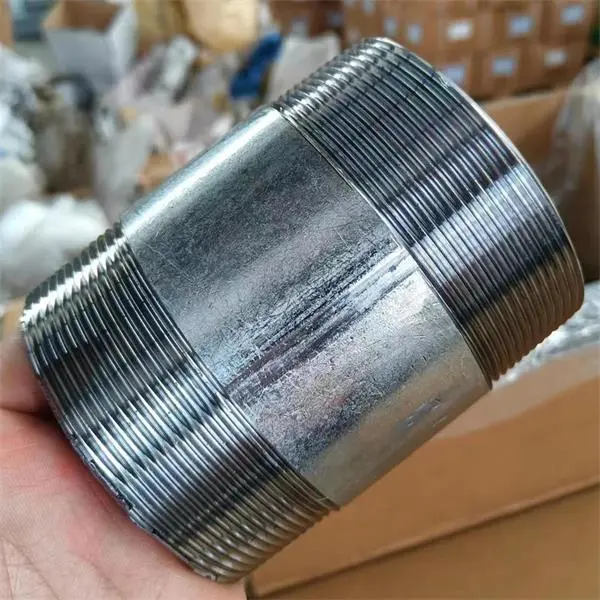
Performance & Engineering
Performance of 4 inch diameter steel pipe is governed by several engineering principles. Hydrostatic pressure testing is a standard procedure to verify the pipe’s ability to withstand internal pressure without failure. The hoop stress, calculated using the Barlow’s formula (σ = PD/2t, where P is pressure, D is diameter, and t is wall thickness), dictates the pipe’s structural integrity. Fatigue analysis is critical in applications involving cyclic loading, such as offshore pipelines or pump discharge lines. Corrosion is a significant concern, particularly in aggressive environments. External coatings (epoxy, polyethylene, fusion-bonded epoxy) and internal linings are applied to mitigate corrosion. Cathodic protection systems are often employed in buried pipelines. Thermal expansion and contraction must be accounted for during system design to prevent stress concentrations and potential leaks. The pipe’s load-bearing capacity is also a factor in structural applications, requiring consideration of bending moments and shear forces. Compliance with industry codes and standards, such as ASME B31.3 (Process Piping) and API 5L (Line Pipe), is essential to ensure safe and reliable operation. Finite Element Analysis (FEA) is increasingly used for complex stress analysis and design optimization. The material's yield strength and ultimate tensile strength are key parameters in these calculations, directly influencing the pipe's ability to withstand applied loads without permanent deformation or fracture.
Technical Specifications
| Parameter | ASTM A53 Grade B | API 5L X42 | API 5L X65 |
|---|---|---|---|
| Outside Diameter (in) | 4.500 ±0.012 | 4.500 ±0.012 | 4.500 ±0.012 |
| Wall Thickness (in) | Schedule 40 (0.237) – Schedule 80 (0.375) | Typically 0.280 – 0.438 | Typically 0.297 – 0.492 |
| Yield Strength (psi) | 36,000 | 42,000 | 65,000 |
| Tensile Strength (psi) | 58,000 | 65,000 | 80,000 |
| Elongation (%) | 23 min | 20 min | 18 min |
| Hydrostatic Test Pressure (psi) | Varies based on schedule & size | Varies based on grade & size | Varies based on grade & size |
Failure Mode & Maintenance
4 inch diameter steel pipe is susceptible to several failure modes. Corrosion, as previously mentioned, is a primary cause, leading to localized wall thinning and eventual perforation. Stress corrosion cracking (SCC) can occur in environments containing specific corrosive agents, particularly under tensile stress. Fatigue cracking initiates from stress concentrators (weld defects, dents, corrosion pits) and propagates under cyclic loading. Erosion-corrosion occurs when abrasive particles in the fluid flow remove protective layers, accelerating corrosion. Hydrogen embrittlement can weaken the steel, especially at high pressures and temperatures. Weld defects, such as porosity, slag inclusions, and incomplete fusion, can create points of failure. Maintenance practices include regular visual inspections for signs of corrosion, dents, or cracks. Non-destructive testing (NDT) methods (UT, RT, MPI) are used to assess wall thickness and detect internal flaws. Protective coatings should be regularly inspected and repaired. Cathodic protection systems require monitoring and maintenance. Internal cleaning and pigging can remove deposits and prevent corrosion. Proper support and anchoring are essential to prevent excessive stress. For detected defects, repair welding (following qualified procedures) or pipe replacement may be necessary. Records of inspections, repairs, and maintenance activities should be maintained for traceability and to support risk-based inspection programs.
Industry FAQ
Q: What is the significance of the ‘Schedule’ designation (e.g., Schedule 40, Schedule 80) for 4 inch steel pipe?
A: The ‘Schedule’ number refers to the approximate internal diameter of the pipe for a given nominal size. Higher schedule numbers indicate thicker walls, providing greater pressure-bearing capacity. Schedule 40 is a common choice for moderate-pressure applications, while Schedule 80 is used for higher-pressure systems. The schedule dictates the allowable stress and influences the pipe’s cost and weight.
Q: How does the steel grade (e.g., A53 Grade B, API 5L X65) impact the choice of pipe for a specific application?
A: Steel grade determines the mechanical properties of the pipe, primarily yield strength, tensile strength, and ductility. Higher grade steels (like X65) offer greater strength and are suitable for high-pressure applications but may be more susceptible to brittle fracture. A53 Grade B is a general-purpose carbon steel suitable for lower-pressure applications.
Q: What are the key differences between seamless and welded steel pipe, and when would you choose one over the other?
A: Seamless pipe is manufactured without a weld seam, offering superior strength and resistance to failure under pressure. Welded pipe is more cost-effective. Seamless pipe is preferred for critical applications like high-pressure pipelines or those subjected to extreme temperatures. Welded pipe is suitable for many general-purpose applications where cost is a significant factor.
Q: What coating systems are commonly used to protect 4 inch steel pipe from external corrosion, and what are their respective advantages?
A: Common coatings include fusion-bonded epoxy (FBE), polyethylene (PE), and multi-layer polyethylene (MLPE). FBE offers excellent adhesion and corrosion resistance but can be brittle. PE provides good impact resistance and flexibility. MLPE combines the benefits of both, offering superior overall performance. The choice depends on the severity of the corrosive environment and the installation method.
Q: What are the primary considerations when performing hydrostatic testing of 4 inch steel pipe?
A: Hydrostatic testing involves pressurizing the pipe with water to a specified pressure for a specific duration. Key considerations include ensuring proper test fluid temperature, controlled filling and venting procedures, leak detection, and careful monitoring of pressure readings. Test pressure should exceed the design pressure to provide a safety margin. The test should be conducted by qualified personnel following established procedures.
Conclusion
4 inch diameter steel pipe remains a cornerstone material in numerous industries, providing a reliable and cost-effective solution for fluid and gas conveyance. Its performance is critically dependent on material selection, manufacturing quality, and adherence to stringent industry standards. Understanding the nuances of material science, engineering principles, and potential failure modes is essential for ensuring the long-term integrity and safe operation of piping systems.
The selection of appropriate steel grade, coating, and manufacturing process must be tailored to the specific application requirements, considering factors such as pressure, temperature, corrosive environment, and cyclic loading. Ongoing maintenance and inspection programs are vital for detecting and mitigating potential issues before they lead to catastrophic failures. Advancements in non-destructive testing and corrosion monitoring technologies will continue to play a crucial role in enhancing the reliability and lifespan of 4 inch diameter steel pipe infrastructure.