
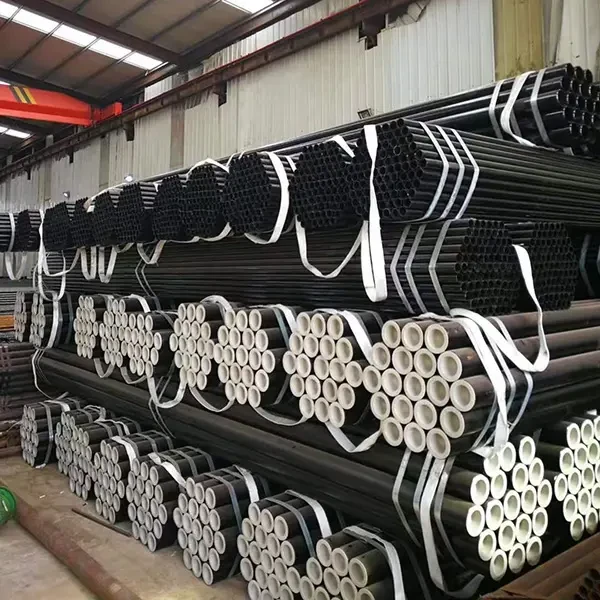
Introduction
4-inch steel pipe is a foundational component across numerous industries including oil and gas, water conveyance, construction, and manufacturing. This guide provides a comprehensive technical analysis of these pipes, covering material science, manufacturing processes, performance characteristics, potential failure modes, and relevant industry standards. The designation ‘4-inch’ refers to the nominal pipe size, representing the approximate internal diameter. These pipes are typically manufactured according to stringent specifications ensuring consistent dimensions, mechanical properties, and corrosion resistance. They function as conduits for the transport of fluids and gases, structural elements in frameworks, and casings for sensitive equipment. A key industry pain point involves selecting the correct steel grade and wall thickness to balance cost, weight, and long-term durability, particularly in corrosive environments or high-pressure applications. This necessitates a detailed understanding of the material properties and manufacturing controls affecting the pipe’s performance.
Material Science & Manufacturing
The predominant material for 4-inch steel pipe is carbon steel, specifically ASTM A53 Grade B or API 5L X42, although alloy steels are employed for specialized applications demanding enhanced strength or corrosion resistance. Carbon steel’s composition—primarily iron with controlled amounts of carbon—provides a balance of strength, weldability, and cost-effectiveness. The carbon content typically ranges from 0.05% to 0.25% by weight. Other elements like manganese, silicon, and phosphorus are added to refine grain structure and improve mechanical properties. Manufacturing typically involves seamless or welded processes. Seamless pipes are produced by piercing a solid billet of steel and subsequently drawing it to the desired dimensions, resulting in a homogeneous structure with superior pressure-bearing capacity. Welded pipes, conversely, are fabricated by rolling steel plates into cylindrical shapes and then welding the seam. Common welding processes include Electric Resistance Welding (ERW) and Submerged Arc Welding (SAW). Critical process parameters include welding current, voltage, and travel speed, all of which influence weld quality and the heat-affected zone (HAZ). Post-weld heat treatment (PWHT) is often employed to relieve residual stresses and improve ductility. Precise control of chemical composition during steelmaking and rigorous quality control during forming and welding are essential to maintain desired mechanical properties and prevent defects like porosity and inclusions.

Performance & Engineering
The performance of 4-inch steel pipe is dictated by its ability to withstand internal pressure, external loads, and environmental degradation. Internal pressure resistance is governed by Barlow's formula: P = (2Sσt)/D, where P is the internal pressure, S is the allowable stress, σ is the yield strength, t is the wall thickness, and D is the outer diameter. External loads, such as soil loading or weight of transported fluid, necessitate consideration of buckling analysis. Finite Element Analysis (FEA) is commonly used to model stress distribution under complex loading scenarios. Environmental resistance is a crucial consideration, particularly in corrosive environments. Corrosion can manifest as uniform corrosion, pitting corrosion, or stress corrosion cracking. Protective measures include the application of coatings (e.g., epoxy, polyurethane) and cathodic protection. Compliance requirements are dictated by industry-specific standards like ASME B31.3 for process piping and API 5L for pipeline transportation. The pipe’s ability to maintain structural integrity over its service life is paramount, necessitating regular inspection and maintenance programs. A significant engineering challenge lies in mitigating the risks associated with fatigue cracking, which can occur under cyclic loading conditions, particularly at weld seams. Non-destructive testing (NDT) methods, such as ultrasonic testing (UT) and radiographic testing (RT), are employed to detect and characterize defects before they lead to catastrophic failure.
Technical Specifications
| Parameter | ASTM A53 Grade B | API 5L X42 | ASTM A106 Grade B |
|---|---|---|---|
| Nominal Pipe Size (inches) | 4 | 4 | 4 |
| Outside Diameter (inches) | 4.500 | 4.500 | 4.500 |
| Wall Thickness (inches) | 0.154 – 0.500 | 0.154 – 0.500 | 0.154 – 0.500 |
| Minimum Yield Strength (psi) | 36,000 | 42,000 | 36,000 |
| Minimum Tensile Strength (psi) | 58,000 | 65,000 | 58,000 |
| Elongation (%) | 20 | 20 | 20 |
| Maximum Carbon Equivalent (%) | 0.31 | 0.31 | 0.31 |
Failure Mode & Maintenance
4-inch steel pipe is susceptible to various failure modes depending on operating conditions and material quality. Corrosion, as previously mentioned, is a major contributor to failure, leading to wall thinning and eventual rupture. Fatigue cracking can occur under cyclic loading, initiating at stress concentrators like weld seams or imperfections. Stress corrosion cracking (SCC) is a particularly insidious failure mode, occurring in the presence of specific corrosive agents and tensile stress. Erosion, caused by the impact of abrasive particles, can erode the inner surface of the pipe, reducing wall thickness. Defects introduced during manufacturing, such as porosity or inclusions, can act as nucleation sites for cracks. Maintenance strategies include regular visual inspection for signs of corrosion or damage, non-destructive testing (NDT) to detect subsurface defects, and application of protective coatings. Cathodic protection, using sacrificial anodes or impressed current systems, can effectively mitigate corrosion. Periodic hydrostatic testing can verify the structural integrity of the pipe. For pipelines carrying corrosive fluids, pigging—the use of a device propelled through the pipe to clean the interior—is essential to remove debris and prevent blockages. Effective maintenance programs require detailed record-keeping, including inspection reports, repair history, and material certifications.
Industry FAQ
Q: What is the impact of sulfur content on the weldability of 4-inch steel pipe?
A: Increased sulfur content reduces weldability. Sulfur forms iron sulfide, which lowers the melting point and ductility of the weld metal, increasing the risk of hot cracking. Specifications like API 5L typically impose limits on sulfur content to ensure adequate weldability. Lower sulfur grades are preferred for critical applications.
Q: How does the pipe schedule (e.g., Schedule 40, Schedule 80) affect its pressure-bearing capacity?
A: The pipe schedule dictates the wall thickness. Higher schedule numbers correspond to thicker walls. Increasing wall thickness directly increases the pipe's pressure-bearing capacity, as demonstrated by Barlow's formula. However, thicker walls also increase weight and cost.
Q: What are the considerations when selecting a coating for external corrosion protection in a marine environment?
A: Marine environments are highly corrosive due to chloride exposure. Coatings must provide a robust barrier against seawater intrusion. Epoxy coatings are commonly used as a base layer, often followed by a polyurethane topcoat for enhanced UV resistance and abrasion protection. Cathodic protection is frequently used in conjunction with coatings for added durability.
Q: What is the role of normalizing heat treatment in improving the mechanical properties of steel pipe?
A: Normalizing refines the grain structure of the steel, resulting in improved toughness, ductility, and machinability. It reduces segregation and homogenizes the chemical composition, leading to more consistent mechanical properties throughout the pipe body. It's particularly beneficial for larger diameter pipes.
Q: What NDT methods are most effective for detecting laminations in seamless steel pipe?
A: Ultrasonic Testing (UT) is the most effective NDT method for detecting laminations – internal discontinuities running parallel to the surface – in seamless steel pipe. Phased array UT offers improved sensitivity and imaging capabilities. Radiographic Testing (RT) can also be used, but it is less sensitive to tight laminations.
Conclusion
4-inch steel pipe remains a vital component in numerous industrial applications, demanding a comprehensive understanding of its material science, manufacturing processes, and performance characteristics. Selecting the appropriate steel grade, wall thickness, and protective measures is crucial to ensuring long-term reliability and safety. The complexities of corrosion, fatigue, and stress corrosion cracking require proactive maintenance strategies and rigorous inspection programs.
Future advancements in materials science will likely focus on developing higher-strength, corrosion-resistant alloys and improved coating technologies. Furthermore, the integration of sensor technology for real-time monitoring of pipe condition will enable predictive maintenance and minimize the risk of catastrophic failures. Continued adherence to industry standards and best practices remains paramount for maintaining the integrity of these critical infrastructure assets.
