
Introduction
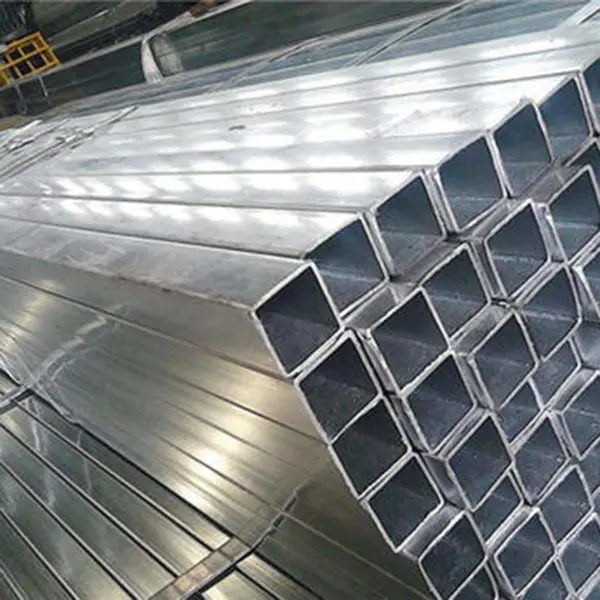
4 Stainless Pipe, designated by UNS S30400, represents a widely utilized austenitic stainless steel within the piping industry. Its composition, primarily comprising 18% chromium and 8% nickel, confers excellent corrosion resistance and weldability. Within the industry chain, it occupies a critical position as a fluid conveyance component in diverse applications spanning chemical processing, food & beverage, pharmaceutical manufacturing, and water treatment. This guide provides a comprehensive overview of its material science, manufacturing processes, performance characteristics, potential failure modes, and relevant industry standards. Core performance attributes include tensile strength, yield strength, resistance to pitting and crevice corrosion, and the ability to maintain structural integrity across a broad temperature range. A primary industry pain point revolves around accurately assessing and mitigating the risk of localized corrosion in aggressive environments, and ensuring traceability of material composition for compliance purposes.
Material Science & Manufacturing
The primary raw materials for 4 Stainless Pipe are iron ore, chromium ore, nickel ore, manganese, silicon, and carbon. The steel is produced through an electric arc furnace (EAF) or basic oxygen furnace (BOF) process, followed by argon-oxygen decarburization (AOD) refining to precisely control carbon content and minimize inclusions. Key chemical properties include a carbon content of ≤0.08%, chromium of 18.0-20.0%, nickel of 8.0-10.5%, manganese of ≤2.0%, silicon of ≤1.0%, phosphorus of ≤0.045%, and sulfur of ≤0.030%. The austenitic microstructure, stabilized by the nickel content, imparts high ductility and toughness. Manufacturing involves seamless pipe production via processes like extrusion piercing or rotary piercing, followed by hot rolling and cold drawing to achieve precise dimensions and surface finish. Welding, typically utilizing the Gas Tungsten Arc Welding (GTAW) or Gas Metal Arc Welding (GMAW) process, requires careful control of heat input and shielding gas composition to prevent sensitization (chromium carbide precipitation at grain boundaries) which reduces corrosion resistance. Key parameter controls include maintaining interpass temperature below 150°C (302°F) and employing low-carbon welding consumables. Surface passivation, often achieved through nitric acid treatment, further enhances corrosion resistance by forming a chromium-rich oxide layer.
Performance & Engineering
The performance of 4 Stainless Pipe is governed by several engineering principles. Force analysis, particularly under pressure, dictates wall thickness requirements based on ASME B31.3 (Process Piping) or other relevant piping codes. The material exhibits a tensile strength ranging from 517-724 MPa (75-105 ksi) and a yield strength of 207-276 MPa (30-40 ksi). Environmental resistance is paramount; while highly resistant to atmospheric corrosion, 4 Stainless Pipe is susceptible to pitting and crevice corrosion in chloride-rich environments, particularly at elevated temperatures. Design considerations must include avoiding stagnant conditions and maintaining adequate oxygen levels to promote the reformation of the passive layer. Compliance requirements mandate adherence to standards such as NSF/ANSI 61 for potable water systems and 3-A Sanitary Standards for food processing equipment. Functional implementation often requires hydrostatic testing to verify leak-tightness and structural integrity. Stress corrosion cracking (SCC) is a potential failure mode in chloride environments under tensile stress, necessitating careful selection of welding procedures and post-weld heat treatment to minimize residual stresses.
Technical Specifications
| Parameter | Specification | Testing Standard | Typical Value |
|---|---|---|---|
| Tensile Strength | ASTM A312 | ASTM A370 | 517-724 MPa (75-105 ksi) |
| Yield Strength | ASTM A312 | ASTM A370 | 207-276 MPa (30-40 ksi) |
| Elongation | ASTM A312 | ASTM E23 | 35% min |
| Hardness (Brinell) | ASTM A312 | ASTM E10 | 180-210 HB |
| Pitting Resistance Equivalent Number (PREN) | Calculated | ASTM G46 | 16-18 |
| Corrosion Rate (in 1M HCl) | ASTM A262 | ASTM G31 | <0.1 mm/year |
Failure Mode & Maintenance
Common failure modes for 4 Stainless Pipe include pitting corrosion, crevice corrosion, stress corrosion cracking (SCC), and erosion-corrosion. Pitting is initiated by localized breakdown of the passive layer, often due to chloride attack. Crevice corrosion occurs in shielded areas, such as under gaskets or weld seams. SCC results from the combined action of tensile stress and a corrosive environment, leading to brittle fracture. Erosion-corrosion is accelerated by fluid flow, removing the protective passive layer. Fatigue cracking can occur under cyclic loading. Maintenance solutions include regular inspection for surface defects, implementation of cathodic protection in aggressive environments, and periodic cleaning to remove deposits that promote corrosion. Preventive measures involve proper material selection, careful welding procedures to minimize residual stresses, and avoidance of stagnant conditions. Non-destructive testing (NDT) methods, such as liquid penetrant testing (PT), magnetic particle testing (MT), and ultrasonic testing (UT), are crucial for detecting cracks and corrosion. Passivation treatments can be reapplied to restore the protective oxide layer. Should leakage occur, repairs should be performed using compatible welding consumables and procedures, followed by thorough inspection and testing.
Industry FAQ
Q: What is the impact of sulfur content on the weldability of 4 Stainless Pipe?
A: Elevated sulfur content can reduce weldability, leading to hot cracking. The sulfur combines with iron to form iron sulfide, which has a low melting point and can create weaknesses in the weld. Low-sulfur grades are preferred for welding applications, and appropriate welding consumables should be selected to minimize sulfur-induced defects.
Q: How does heat treatment affect the corrosion resistance of 4 Stainless Pipe?
A: Improper heat treatment, specifically sensitization during welding or post-weld annealing, can significantly reduce corrosion resistance. Sensitization leads to the precipitation of chromium carbides at grain boundaries, depleting chromium from the surrounding matrix and making it susceptible to intergranular corrosion. Solution annealing followed by rapid quenching can restore corrosion resistance.
Q: What is the significance of the PREN value for selecting 4 Stainless Pipe in a chloride environment?
A: The Pitting Resistance Equivalent Number (PREN) is a calculated value that estimates the resistance of stainless steels to pitting corrosion. A higher PREN value indicates greater resistance. For applications in chloride-rich environments, selecting a 4 Stainless Pipe with a high PREN value is crucial to minimize the risk of pitting corrosion.
Q: Can 4 Stainless Pipe be used for high-temperature applications? What are the limitations?
A: 4 Stainless Pipe can be used for moderate high-temperature applications, typically up to around 870°C (1600°F). However, at elevated temperatures, it can experience creep, oxidation, and reduced strength. For higher temperature applications, specialized stainless steel alloys with improved creep resistance and oxidation resistance are recommended.
Q: What are the key considerations for maintaining the cleanliness of 4 Stainless Pipe in a sanitary process system?
A: Maintaining cleanliness is vital in sanitary process systems. Considerations include selecting a smooth surface finish to minimize bacterial adhesion, employing Clean-In-Place (CIP) procedures using appropriate cleaning agents, and avoiding crevices or dead legs where contaminants can accumulate. Regular inspections and validation of cleaning processes are essential.
Conclusion
4 Stainless Pipe remains a cornerstone material in numerous industrial applications due to its balanced combination of corrosion resistance, weldability, and mechanical properties. Understanding its material science, manufacturing intricacies, and performance characteristics is crucial for ensuring long-term reliability and safety. Careful attention to design considerations, including stress analysis and environmental control, is paramount to mitigate potential failure modes such as pitting corrosion and stress corrosion cracking.
Future advancements may focus on surface modification techniques to further enhance corrosion resistance, such as the application of protective coatings or the development of novel alloy compositions. Continued refinement of non-destructive testing methods will also play a vital role in ensuring the integrity of 4 Stainless Pipe systems. Adherence to established industry standards and best practices is essential for maintaining the quality and performance of this critical component.
