
Introduction
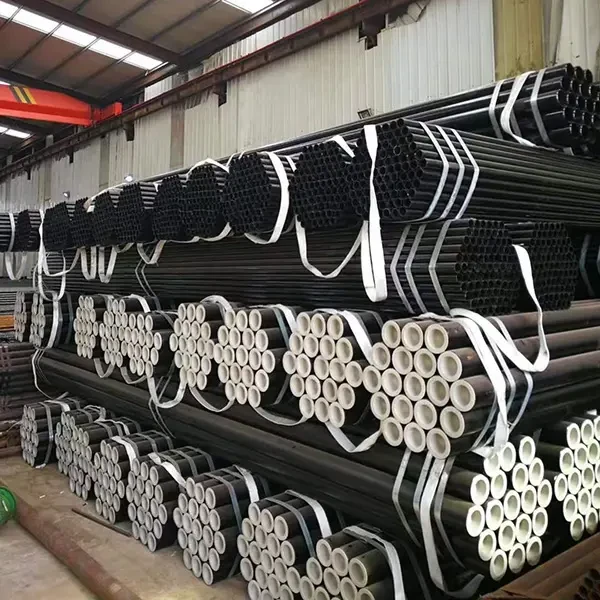
4-inch steel pipe is a foundational component in numerous industrial applications, encompassing fluid transport, structural support, and specialized engineering projects. Positioned within the broader steel industry supply chain, it represents a semi-finished product derived from steel billets or blooms, undergoing processes such as seamless extrusion or welding to achieve its cylindrical form. Its core performance characteristics center around its pressure-bearing capacity, corrosion resistance (dependent on alloy composition and coatings), and structural integrity under load. The widespread adoption of 4-inch steel pipe stems from its balance of cost-effectiveness, availability, and suitability for a diverse array of operating conditions, particularly in sectors like oil & gas, water management, construction, and chemical processing. However, challenges exist related to consistent weld quality, susceptibility to localized corrosion, and adherence to increasingly stringent environmental regulations regarding material composition and manufacturing processes. This guide provides an in-depth technical overview of 4-inch steel pipe, covering material science, manufacturing techniques, performance characteristics, failure modes, and relevant industry standards.
Material Science & Manufacturing
The predominant material for 4-inch steel pipe is carbon steel, specifically grades like A53 Grade B, A106 Grade B, and API 5L X42, X52, X60. These alloys primarily consist of iron with controlled percentages of carbon (typically 0.05% – 0.25%), manganese (0.3% – 1.0%), silicon (0.05% – 0.3%), and phosphorus/sulfur (limited to <0.045% and <0.035% respectively). Higher alloy steels, such as stainless steel (304, 316) and alloy steels (containing chromium, molybdenum, nickel) are employed for applications requiring superior corrosion resistance or high-temperature performance. The raw material undergoes several critical manufacturing processes. Seamless pipe production typically involves piercing a solid billet using a rotary piercing process, followed by rolling and drawing to achieve the desired dimensions and wall thickness. Key parameters include billet temperature, piercing speed, and reduction ratio. Welded pipe production, conversely, starts with steel strip which is formed into a cylindrical shape and then welded along the seam using processes like Electric Resistance Welding (ERW), Submerged Arc Welding (SAW), or High-Frequency Induction Welding (HFIW). Welding parameter control – current, voltage, welding speed, and gas shielding – is crucial to ensure weld integrity and minimize defects like porosity and incomplete fusion. Post-welding, pipes are often subjected to heat treatment (normalizing, quenching & tempering) to refine the microstructure, improve mechanical properties, and relieve residual stresses. Nondestructive testing (NDT), including ultrasonic testing (UT), radiographic testing (RT), and hydrostatic testing, is essential to verify the pipe’s quality and ensure it meets specified standards.
Performance & Engineering
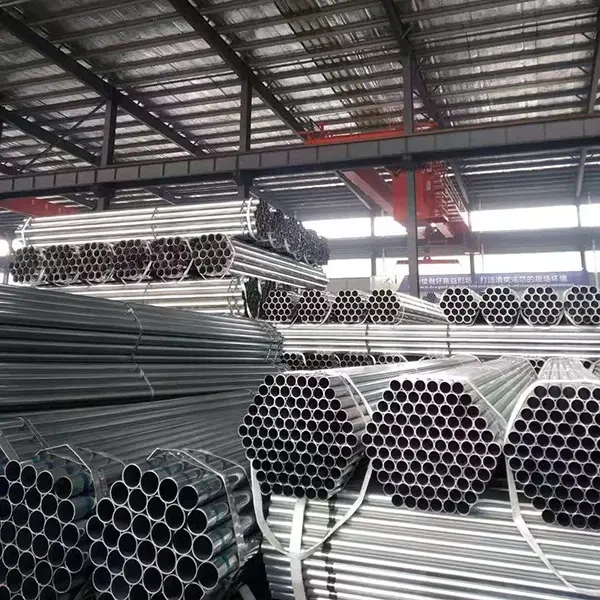
The performance of 4-inch steel pipe is fundamentally governed by its ability to withstand internal and external pressures, axial loads, bending moments, and torsional stresses. Force analysis relies on established formulas from mechanics of materials, considering the pipe’s diameter, wall thickness, material yield strength, and safety factors. For pressure containment, Barlow’s formula (S = PD/2t, where S = stress, P = pressure, D = diameter, and t = wall thickness) is commonly used for initial calculations. Finite element analysis (FEA) is frequently employed for complex loading scenarios, such as those involving pipe supports, thermal expansion, and seismic activity. Environmental resistance is a critical consideration. Corrosion, particularly from exposure to water, chemicals, and atmospheric conditions, can lead to material degradation and failure. Protective measures include applying internal and external coatings (epoxy, polyethylene, polyurethane), utilizing corrosion inhibitors, and selecting corrosion-resistant alloys. Compliance requirements vary depending on the application and geographical location. For oil and gas pipelines, standards like ASME B31.8 and API 5L dictate design, construction, and operation requirements. For potable water systems, standards like AWWA C220 govern material selection and testing. The design must account for hydrostatic test pressures, operating temperatures, and potential for cyclic loading (fatigue).
Technical Specifications
| Parameter | A53 Grade B | API 5L X42 | ASTM A106 Grade B | 304 Stainless Steel |
|---|---|---|---|---|
| Nominal Pipe Size (inches) | 4 | 4 | 4 | 4 |
| Outside Diameter (inches) | 4.500 | 4.500 | 4.500 | 4.500 |
| Wall Thickness (inches) | 0.154 – 0.280 | 0.179 – 0.453 | 0.165 – 0.280 | 0.083 – 0.218 |
| Minimum Yield Strength (psi) | 36,000 | 42,000 | 36,000 | 30,000 |
| Minimum Tensile Strength (psi) | 58,000 | 52,000 | 58,000 | 60,000 |
| Elongation (%) | 23 | 21 | 23 | 30 |
Failure Mode & Maintenance
4-inch steel pipe is susceptible to several failure modes. Corrosion, as previously mentioned, is a primary concern, manifesting as general corrosion, pitting corrosion, or crevice corrosion. Fatigue cracking can occur under cyclic loading, initiated at stress concentrators like welds or dents. Stress corrosion cracking (SCC) is a particularly insidious failure mechanism, resulting from the combined action of tensile stress and a corrosive environment. Erosion-corrosion can occur in high-velocity fluid systems, where the protective corrosion product layer is removed by abrasion. Weld defects, such as porosity, incomplete fusion, and cracks, can compromise the pipe’s structural integrity. Maintenance strategies focus on preventative measures and early detection of potential problems. Regular visual inspections for signs of corrosion, dents, or cracks are essential. Non-destructive testing (NDT) methods, like ultrasonic testing and radiographic testing, can be used to assess the pipe’s condition without disrupting operation. Cathodic protection is a common technique for mitigating corrosion in buried pipelines. Internal cleaning and pigging operations remove deposits and debris that can contribute to corrosion or erosion. For damaged pipes, repair options include welding patches, sleeve repairs, or complete replacement. Maintaining accurate records of inspection results, maintenance activities, and operating conditions is crucial for effective lifecycle management.
Industry FAQ
Q: What is the primary difference between seamless and welded 4-inch steel pipe in terms of structural integrity?
A: Seamless pipe generally exhibits superior structural integrity, particularly under high pressure and stress, due to the absence of a weld seam which represents a potential point of failure. Welded pipe, however, has improved significantly with advancements in welding technology. Modern welding processes and rigorous NDT procedures can produce welded pipe with comparable strength and reliability to seamless pipe, particularly for lower-pressure applications. The choice depends on the specific application requirements and cost considerations.
Q: How does the carbon equivalent (CE) of the steel impact weldability in 4-inch pipe manufacturing?
A: Carbon Equivalent (CE) is a crucial factor in weldability. Higher CE values indicate a greater tendency for the steel to form martensite in the heat-affected zone (HAZ) during welding, which can lead to cracking. Lower CE steels are generally preferred for welding, requiring less preheating and post-weld heat treatment. CE is calculated using a formula that considers the percentage of carbon, manganese, chromium, and molybdenum in the steel.
Q: What are the common methods for detecting corrosion in buried 4-inch steel pipelines?
A: Common methods include close interval surveys (CIS) utilizing direct current voltage gradient (DCVG) and alternating current voltage gradient (ACVG) to identify areas of corrosion activity. In-line inspection (ILI) tools, also known as “smart pigs”, are deployed inside the pipeline to assess wall thickness, detect corrosion, and identify other defects. External corrosion monitoring (ECM) systems use sensors to continuously monitor corrosion rates at specific locations.
Q: How does hydrostatic testing validate the integrity of a newly manufactured 4-inch steel pipe?
A: Hydrostatic testing involves filling the pipe with a test fluid (typically water) and pressurizing it to a specified level, significantly higher than the expected operating pressure. This test verifies the pipe’s ability to withstand pressure without leaking or experiencing permanent deformation. It identifies weaknesses in the pipe material, welds, or end connections. The test duration and acceptance criteria are defined by relevant industry standards.
Q: What role do coatings play in extending the service life of 4-inch steel pipe exposed to corrosive environments?
A: Coatings act as a barrier between the steel surface and the corrosive environment, significantly reducing the rate of corrosion. Common coatings include epoxy coatings, polyurethane coatings, polyethylene coatings, and fusion-bonded epoxy (FBE) coatings. The selection of the appropriate coating depends on the specific corrosive environment and operating temperature. Proper surface preparation is critical to ensure the coating’s adhesion and long-term performance.
Conclusion
4-inch steel pipe remains a critical infrastructure component across diverse industries due to its robust mechanical properties, cost-effectiveness, and adaptability. The selection of appropriate material grades, manufacturing processes, and protective measures are paramount to ensure long-term reliability and minimize the risk of failure. Understanding the fundamental principles of material science, stress analysis, and corrosion mechanisms is essential for engineers and procurement professionals involved in specifying and utilizing this ubiquitous product.
Future trends will likely focus on the development of advanced high-strength, low-alloy (HSLA) steels with enhanced corrosion resistance and weldability, as well as the implementation of more sophisticated inspection and monitoring technologies to optimize pipeline integrity management. Adherence to evolving international standards and best practices is critical to address emerging challenges related to environmental sustainability and operational safety.
