
Introduction
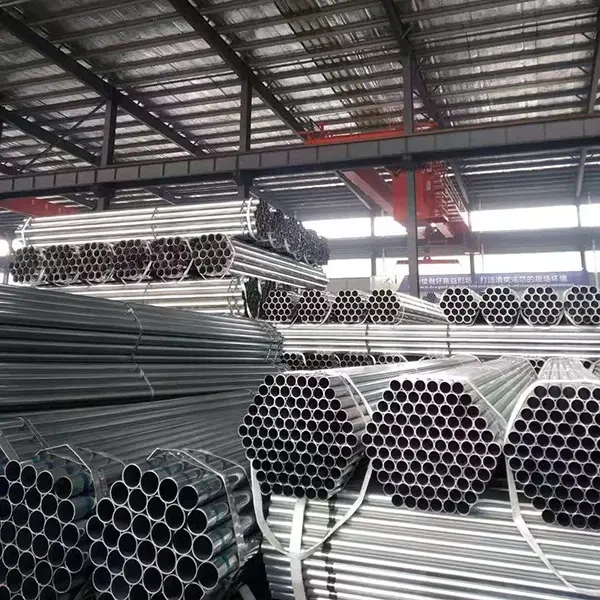
4 steel tubing, typically manufactured to ASTM A53 Grade B specification, represents a critical component in numerous industrial applications, ranging from structural support and fluid conveyance to precision engineering projects. Positioned within the steel supply chain as a semi-finished product, its performance dictates the integrity of downstream systems. It is characterized by its circular cross-section, manufactured through processes like Electric Resistance Welding (ERW) or seamless extrusion, and offers a balance of strength, weldability, and cost-effectiveness. Core performance characteristics include yield strength, tensile strength, corrosion resistance (dependent on coating), dimensional accuracy, and pressure-bearing capacity. The selection of appropriate 4 steel tubing hinges on precise understanding of these attributes and their implications within specific operational environments. Industry pain points often revolve around inconsistent material quality, inaccurate dimensions leading to fitment issues, and inadequate corrosion protection, particularly in harsh chemical or marine environments.
Material Science & Manufacturing
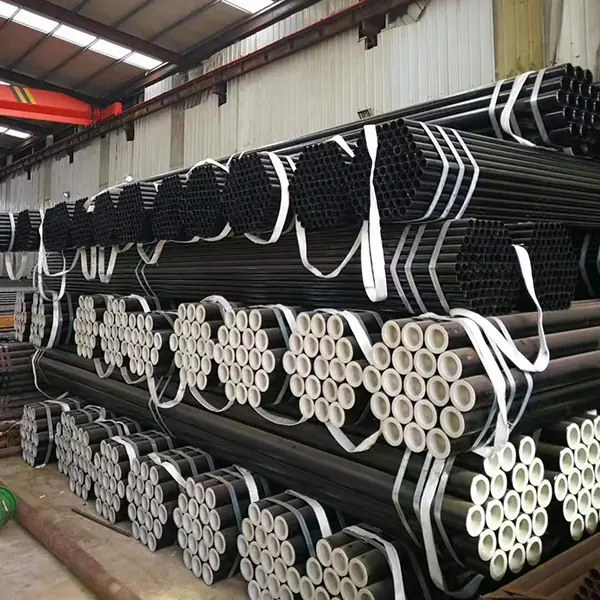
The primary raw material for 4 steel tubing is carbon steel, typically containing iron with varying percentages of carbon (typically 0.25-0.35%), manganese, silicon, and phosphorus. These alloying elements impact the steel’s mechanical properties. Carbon increases hardness and strength but reduces ductility. Manganese enhances strength and weldability. Silicon improves strength and deoxidizes the steel during manufacturing. Manufacturing commonly employs two primary processes: ERW and seamless extrusion. ERW tubing is produced by forming steel strip into a cylindrical shape and welding the seam using high-frequency electric resistance. This process is cost-effective for larger diameter tubing. Seamless tubing, conversely, is created by piercing a solid billet of steel and then drawing it to the desired dimensions. This method offers superior strength and uniformity, particularly critical for high-pressure applications. Key parameter control during manufacturing includes precise temperature control during welding to ensure complete fusion and minimize defects, dimensional tolerances maintained through consistent rolling and drawing processes, and thorough non-destructive testing (NDT) like ultrasonic testing and eddy current testing to identify flaws. Heat treatment processes, such as normalizing and annealing, are often implemented to refine the grain structure and enhance mechanical properties. Chemical composition is meticulously monitored via spectroscopic analysis to ensure compliance with ASTM A53 standards.
Performance & Engineering
Performance of 4 steel tubing is dictated by its mechanical properties and environmental resistance. Force analysis focuses on determining the tube's ability to withstand internal pressure, external loads (bending, compression, tension), and torsional stresses. The Barlow's formula is commonly used to calculate the maximum allowable pressure in a cylindrical vessel: P = (2St) / D, where P is pressure, S is tensile strength, t is wall thickness, and D is outer diameter. Environmental resistance is crucial, particularly concerning corrosion. Carbon steel is susceptible to rust when exposed to moisture and oxygen. Protective coatings, such as galvanization (zinc coating), epoxy coatings, or internal linings, are employed to mitigate corrosion. Compliance requirements include adherence to ASME B31.3 for process piping, API 5L for pipeline applications, and relevant building codes depending on the structural application. Engineering considerations involve weld design, ensuring proper weld procedures and welder qualifications. Fatigue analysis is vital for applications involving cyclic loading, identifying potential crack initiation points and establishing safe operating limits. The impact of temperature on material properties must be considered, as strength typically decreases with increasing temperature.
Technical Specifications
| Parameter | ASTM A53 Grade B (Typical) | API 5L X42 (Comparable) | Unit |
|---|---|---|---|
| Outer Diameter | 1/2" - 8" | 6" - 48" | inches |
| Wall Thickness | Schedule 40, 80, 160 | 0.154" - 0.500" | inches |
| Yield Strength | 36,000 | 34,500 | psi |
| Tensile Strength | 58,000 | 65,000 | psi |
| Elongation | 23% | 20% | % |
| Corrosion Rate (in Salt Spray) | 0.1-0.5 | 0.05-0.2 | mm/year (uncoated) |
Failure Mode & Maintenance
Failure modes for 4 steel tubing include corrosion-induced pitting and perforation, fatigue cracking due to cyclic loading, stress corrosion cracking in aggressive environments, and weld defects leading to catastrophic failure. Corrosion is often initiated at surface imperfections or weld seams. Fatigue cracks typically originate at stress concentrators, such as notches or dents. Stress corrosion cracking occurs when tensile stress and a corrosive environment combine. Weld defects, including porosity, inclusions, and incomplete fusion, weaken the joint and can lead to failure. Maintenance involves regular visual inspections for signs of corrosion, cracks, or deformation. Non-destructive testing methods, such as ultrasonic testing and radiographic inspection, should be performed periodically to detect subsurface defects. Protective coatings should be inspected and repaired as needed. Internal cleaning to remove debris and prevent corrosion buildup is also crucial. For systems handling corrosive fluids, regular monitoring of fluid chemistry and implementation of corrosion inhibitors are recommended. Proper support structures and vibration dampening can mitigate fatigue failures. Periodic hydrostatic testing verifies the integrity of the tubing by subjecting it to internal pressure and checking for leaks.
Industry FAQ
Q: What is the difference between ERW and seamless tubing in terms of pressure rating?
A: Seamless tubing generally offers a higher pressure rating than ERW tubing due to the absence of a weld seam, which represents a potential weakness. The seamless construction provides greater uniformity and resistance to crack propagation under pressure. However, modern ERW techniques, coupled with rigorous quality control, can produce tubing with pressure ratings comparable to seamless for many applications.
Q: How does wall thickness affect the corrosion resistance of 4 steel tubing?
A: While wall thickness doesn’t inherently change the rate of corrosion, a thicker wall provides a greater margin of safety before perforation occurs. A thicker wall takes longer to corrode through, extending the service life of the tubing. However, it's the coating system applied to the steel that provides the primary defense against corrosion.
Q: What are the key considerations when selecting a protective coating for 4 steel tubing?
A: Key considerations include the corrosivity of the environment, the operating temperature, the type of fluid being conveyed, and the required service life. Galvanization is suitable for moderate environments, while epoxy coatings offer superior resistance to chemicals and abrasion. Internal linings are essential for highly corrosive fluids. Cost and ease of application are also important factors.
Q: What non-destructive testing methods are commonly used to inspect 4 steel tubing?
A: Common NDT methods include ultrasonic testing (UT) to detect internal flaws, eddy current testing (ET) to identify surface cracks, radiographic inspection (RT) using X-rays or gamma rays to reveal internal defects, and magnetic particle inspection (MT) to detect surface and near-surface cracks in ferromagnetic materials. Liquid penetrant inspection (PT) is also used for surface flaw detection.
Q: What is the impact of heat treatment on the mechanical properties of 4 steel tubing?
A: Heat treatment processes like normalizing and annealing refine the grain structure of the steel, improving ductility, toughness, and machinability. Normalizing reduces internal stresses and improves uniformity, while annealing softens the steel and increases its ductility. Heat treatment is crucial for achieving desired mechanical properties and optimizing performance.
Conclusion
4 steel tubing remains a fundamental material in a wide array of industrial applications due to its versatile properties and cost-effectiveness. Understanding the interplay between material science, manufacturing processes, and performance characteristics is paramount for ensuring structural integrity and operational reliability. Careful consideration of potential failure modes, coupled with proactive maintenance strategies, extends the service life and minimizes risks associated with component failure.
The ongoing development of advanced coating technologies and improved manufacturing techniques continues to enhance the performance and durability of 4 steel tubing. Future trends include the adoption of higher-strength steel grades, the implementation of more sophisticated NDT methods, and the increasing use of digital twins for predictive maintenance. Continued adherence to industry standards and best practices will be essential for maintaining the quality and reliability of this critical material.
