
Introduction
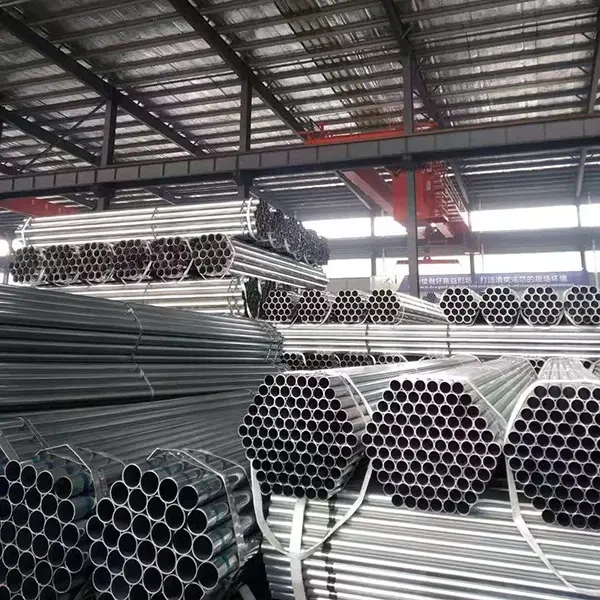
40mm metal pipe represents a fundamental component across numerous industrial applications, ranging from fluid conveyance and structural support to specialized processes within the chemical, oil & gas, and construction sectors. Its designation, 40mm, refers to the nominal pipe diameter, a critical specification dictating flow rates, pressure handling capabilities, and compatibility with associated fittings and systems. This technical guide provides a comprehensive overview of 40mm metal pipes, encompassing material science, manufacturing processes, performance characteristics, potential failure modes, and relevant industry standards. The primary pain point within the industry centers on ensuring long-term corrosion resistance, maintaining dimensional accuracy under varying stress loads, and adherence to increasingly stringent regulatory requirements concerning material traceability and weld integrity. Effective selection and maintenance of 40mm metal pipe are paramount for operational safety, efficiency, and cost-effectiveness.
Material Science & Manufacturing
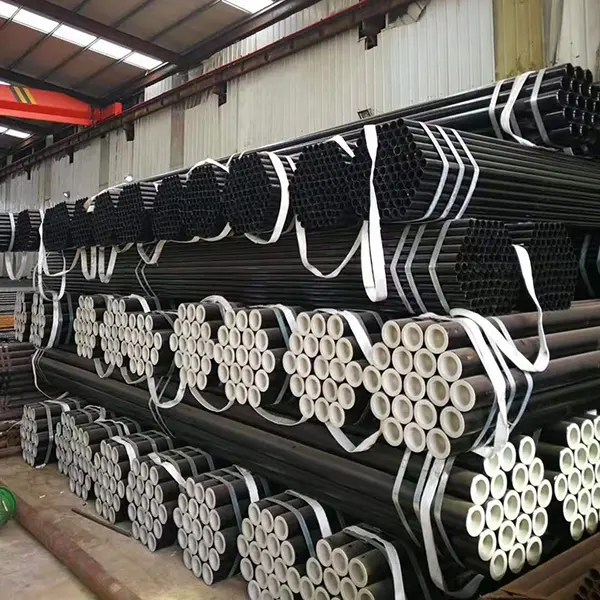
The predominant materials utilized in the fabrication of 40mm metal pipe include carbon steel (ASTM A53 Grade B, API 5L X42), stainless steel (304/304L, 316/316L – ASTM A312), and alloy steel (such as chromium-molybdenum alloys conforming to ASTM A335). Carbon steel offers a cost-effective solution for non-corrosive applications, possessing a relatively high yield strength (typically 240 MPa) and good weldability. However, it is susceptible to corrosion, necessitating protective coatings or cathodic protection. Stainless steel alloys exhibit superior corrosion resistance due to the formation of a passive chromium oxide layer, making them suitable for harsh chemical environments. Alloy steels are employed where high strength and elevated temperature resistance are crucial. Manufacturing typically involves a seamless or welded process. Seamless pipe production utilizes processes like mandrel mill or extrusion, resulting in a homogenous structure free from weld seams. Welded pipe, manufactured via Electric Resistance Welding (ERW) or submerged arc welding (SAW – API 5L), requires rigorous non-destructive testing (NDT), including ultrasonic testing (UT) and radiographic testing (RT) to ensure weld integrity. Key parameters during manufacturing include controlled cooling rates to minimize residual stress, precise dimensional control to maintain consistent wall thickness, and careful surface preparation to ensure optimal coating adhesion. Material chemical composition is tightly controlled through spectroscopic analysis to meet specification requirements. The heat treatment process (annealing, normalizing) influences the pipe's microstructure, affecting its ductility, toughness, and corrosion resistance.
Performance & Engineering
The performance of 40mm metal pipe is governed by several critical engineering considerations. Firstly, pressure containment capacity, determined by Barlow’s formula (σ = PD/2t, where σ is stress, P is pressure, D is diameter, and t is wall thickness), dictates the maximum operating pressure. Stress analysis, employing Finite Element Analysis (FEA) methodologies, is often performed to evaluate stress distribution under internal pressure, external loads, and thermal stress. Secondly, the pipe’s resistance to external loads, including bending moments, axial forces, and shear stresses, is vital for structural integrity. This is governed by the material's yield strength and section modulus. Thirdly, environmental resistance, particularly corrosion resistance, is crucial for long-term reliability. Corrosion mechanisms include general corrosion, pitting corrosion, crevice corrosion, and stress corrosion cracking. Coatings, such as epoxy, polyurethane, or galvanization, provide a barrier against corrosive agents. Cathodic protection, utilizing sacrificial anodes or impressed current systems, further mitigates corrosion. Finally, compliance requirements necessitate adherence to specific codes and standards, such as ASME B31.3 (Process Piping) and API 5L (Line Pipe), which prescribe design factors, material specifications, and inspection procedures. Fatigue analysis, assessing the pipe’s resistance to cyclic loading, is essential in applications subject to vibration or fluctuating pressure.
Technical Specifications
| Material Grade | Nominal Diameter (mm) | Wall Thickness (mm) | Minimum Yield Strength (MPa) |
|---|---|---|---|
| ASTM A53 Grade B | 40 | 2.6 - 6.4 | 240 |
| API 5L X42 | 40 | 3.2 - 8.0 | 345 |
| 304/304L Stainless Steel | 40 | 2.0 - 5.0 | 205 |
| 316/316L Stainless Steel | 40 | 2.0 - 6.0 | 210 |
| ASTM A335 P11 | 40 | 2.8 - 7.0 | 276 |
| ASTM A335 P22 | 40 | 3.0 - 8.0 | 345 |
Failure Mode & Maintenance
Common failure modes in 40mm metal pipe include corrosion-induced failures (pitting, general corrosion, stress corrosion cracking), mechanical failures (fatigue cracking, ductile fracture, brittle fracture), and weld defects (porosity, lack of fusion, incomplete penetration). Fatigue cracking initiates from stress concentrators (weld toes, dents, scratches) and propagates under cyclic loading. Ductile fracture occurs under excessive tensile stress, characterized by significant plastic deformation. Brittle fracture, more prevalent at low temperatures, occurs with minimal plastic deformation. Weld defects compromise the pipe’s structural integrity, leading to leakage or catastrophic failure. Maintenance strategies encompass regular visual inspections for signs of corrosion or damage, non-destructive testing (NDT) – ultrasonic testing (UT), radiographic testing (RT), magnetic particle inspection (MPI) – to detect internal flaws, and periodic hydrostatic testing to verify pressure containment capability. Protective coatings should be inspected for damage and repaired as needed. Cathodic protection systems require monitoring to ensure adequate current output. Internal cleaning, employing techniques like pigging, removes scale, debris, and deposits that can contribute to corrosion. Proper documentation of inspection results and maintenance activities is crucial for tracking the pipe’s condition and predicting potential failures. Replacement of severely corroded or damaged sections is often necessary to maintain system integrity.
Industry FAQ
Q: What is the typical lifespan of a carbon steel 40mm pipe in a freshwater application without protective coating?
A: Typically, a carbon steel 40mm pipe in a freshwater application without protective coating can be expected to have a lifespan of 10-20 years, heavily dependent on water quality (pH, dissolved oxygen content, flow velocity) and operating temperature. Corrosion rates are accelerated in environments with low pH or high dissolved oxygen. Regular inspections are vital to monitor corrosion progression.
Q: How does the welding process impact the corrosion resistance of a 40mm stainless steel pipe?
A: The welding process can significantly impact corrosion resistance. Improper welding techniques can lead to sensitization (chromium carbide precipitation at grain boundaries), reducing localized corrosion resistance. Maintaining a clean weld pool, using appropriate filler metals, and post-weld heat treatment are crucial to restore corrosion resistance. Compliance with ASME Section IX is essential.
Q: What are the critical NDT methods for ensuring the quality of a 40mm ERW (Electric Resistance Welded) pipe?
A: Critical NDT methods for ERW pipes include Ultrasonic Testing (UT) to detect longitudinal and transverse defects in the weld seam, Radiographic Testing (RT) for volumetric flaw detection, and Magnetic Particle Inspection (MPI) to identify surface cracks. These methods ensure weld integrity and compliance with API 5L or equivalent standards.
Q: What is the significance of the "schedule" (e.g., Schedule 40, Schedule 80) when specifying a 40mm pipe?
A: The "schedule" refers to the nominal wall thickness of the pipe. Higher schedule numbers indicate thicker walls, providing greater pressure-handling capacity and mechanical strength. Schedule 40 is common for general-purpose applications, while Schedule 80 is used for higher-pressure systems. Selecting the appropriate schedule is critical for ensuring safe and reliable operation.
Q: What are the advantages of using a 316/316L stainless steel pipe over a 304/304L for a corrosive environment containing chlorides?
A: 316/316L stainless steel contains molybdenum, which significantly enhances its resistance to pitting and crevice corrosion in chloride-containing environments. While 304/304L offers good general corrosion resistance, it is susceptible to chloride-induced pitting. Therefore, 316/316L is the preferred choice for applications exposed to seawater, brine, or other chloride-rich media.
Conclusion
The selection and utilization of 40mm metal pipe require a thorough understanding of material properties, manufacturing processes, and potential failure mechanisms. Optimizing pipe performance necessitates careful consideration of operating conditions, corrosion risks, and applicable industry standards. The appropriate material grade, wall thickness, and protective measures (coatings, cathodic protection) are essential for ensuring long-term reliability and operational safety.
Future trends in 40mm metal pipe technology are focused on the development of advanced corrosion-resistant alloys, improved NDT techniques for enhanced defect detection, and the implementation of smart monitoring systems for real-time condition assessment. Further research into sustainable materials and manufacturing processes will also play a crucial role in minimizing the environmental impact of pipe production and operation.
