

Introduction
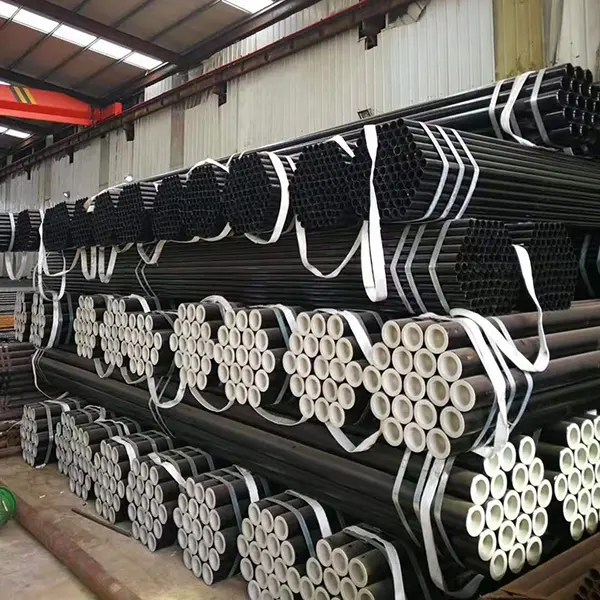
40mm steel pipe refers to a seamless or welded steel tube with an outer diameter of 40 millimeters. It is a fundamental component in various industrial applications, including structural engineering, fluid transport, mechanical systems, and infrastructure development. Its position within the industry chain is as a semi-finished product, typically manufactured from steel billets or coils, then processed through drawing, rolling, or welding procedures. Core performance characteristics center around its mechanical strength, pressure handling capability, corrosion resistance (depending on grade and coating), dimensional accuracy, and weldability. The selection of 40mm steel pipe is often dictated by application-specific requirements for load bearing, fluid conveyance, and longevity in service environments. This guide provides an in-depth technical overview of its material science, manufacturing processes, performance considerations, potential failure modes, and relevant industry standards.
Material Science & Manufacturing
The primary raw material for 40mm steel pipe is carbon steel, with common grades including ASTM A53 Grade B, ASTM A106 Grade B, and API 5L X42. Alloy steels, such as those containing chromium and molybdenum, are also used for enhanced strength, corrosion resistance, and high-temperature applications. The material's physical properties are critically dependent on its chemical composition, heat treatment, and processing methods. Carbon steel typically exhibits a tensile strength ranging from 400 to 550 MPa, a yield strength from 250 to 350 MPa, and an elongation percentage of 18-25%. Manufacturing processes fall into two main categories: seamless and welded. Seamless pipe is produced by piercing a solid billet of steel and then drawing it to the desired diameter and wall thickness. This process results in a homogeneous structure with superior strength. Welded pipe, conversely, is manufactured by rolling or pressing steel strips into a cylindrical shape and then welding the seam, typically using Electric Resistance Welding (ERW), Submerged Arc Welding (SAW), or High-Frequency Induction Welding (HFIW). Critical parameters during manufacturing include controlled cooling rates to prevent cracking, precise dimensional control to ensure consistent outer diameter and wall thickness, and thorough non-destructive testing (NDT) – including ultrasonic testing, radiographic testing, and hydrostatic testing – to detect defects. Surface treatments, such as galvanizing, epoxy coating, or internal lining, are applied to enhance corrosion resistance.
Performance & Engineering
The performance of 40mm steel pipe is governed by several engineering principles. Stress analysis, utilizing finite element methods (FEM), is crucial for determining the pipe's ability to withstand internal or external pressure, bending moments, and axial loads. The Barlow's formula (S = (P D) / (2 t)) provides a basic calculation for hoop stress (S) in pressurized pipes, where P is the internal pressure, D is the outer diameter, and t is the wall thickness. Environmental resistance is a significant factor. Corrosion, particularly in marine or chemical processing environments, can lead to material degradation. Protective coatings and cathodic protection systems are commonly employed. Compliance requirements depend on the application and geographic location. For pressure vessels and piping systems, adherence to ASME B31.3 (Process Piping) or ASME B31.1 (Power Piping) is essential. In the oil and gas industry, API 5L standards dictate material specifications, manufacturing processes, and testing requirements. The impact of temperature on material properties must be considered. At elevated temperatures, steel's yield strength decreases, and creep deformation can occur. Conversely, at low temperatures, steel can become brittle, increasing the risk of fracture. Fatigue analysis is critical for applications involving cyclic loading. Repeated stress cycles can lead to fatigue cracking, even at stress levels below the material's yield strength.
Technical Specifications
| Parameter | Unit | ASTM A53 Grade B | API 5L X42 |
|---|---|---|---|
| Outer Diameter | mm | 40 | 40 |
| Wall Thickness | mm | 2.0 - 6.35 | 2.0 - 12.7 |
| Tensile Strength | MPa | 450 - 550 | 485 - 555 |
| Yield Strength | MPa | 250 - 350 | 345 - 415 |
| Elongation (%) | - | 18 - 25 | 20 - 23 |
| Hydrostatic Test Pressure | MPa | 6.2 | Variable, per API 5L |
Failure Mode & Maintenance
Common failure modes for 40mm steel pipe include corrosion (uniform, pitting, galvanic), erosion (due to abrasive fluids), fatigue cracking (from cyclic loading), stress corrosion cracking (SCC – a combination of stress and corrosive environment), and weld defects (porosity, incomplete fusion, cracking). Corrosion is often localized, initiating at surface imperfections or weld seams. Fatigue cracking typically begins at stress concentrators, such as notches or weld toes. Stress corrosion cracking is particularly prevalent in chloride-containing environments. Failure analysis often involves microscopic examination of fracture surfaces to determine the root cause. Maintenance strategies include regular inspections (visual, ultrasonic, radiographic), application of protective coatings, cathodic protection, and timely repair or replacement of damaged sections. For pressurized systems, hydrostatic testing should be performed periodically to verify the integrity of the pipe. Internal cleaning to remove scale, rust, and debris is also crucial for maintaining flow capacity and preventing corrosion. A preventative maintenance program, incorporating scheduled inspections and repairs, significantly extends the service life of 40mm steel pipe. Proper storage is important during transport and before installation, minimizing exposure to moisture and corrosive elements.
Industry FAQ
Q: What is the difference between seamless and welded 40mm steel pipe in terms of pressure handling capability?
A: Generally, seamless pipe exhibits a higher pressure handling capability than welded pipe due to the absence of a weld seam, which represents a potential point of weakness. The weld seam, even with high-quality welding processes, introduces residual stresses and can be susceptible to corrosion or cracking. However, advancements in welding technology, particularly SAW and HFIW, have significantly improved the quality and reliability of welded pipe, narrowing the performance gap. The selection should be based on specific application requirements and rigorous NDT procedures.
Q: How does the carbon equivalent (CE) affect the weldability of 40mm steel pipe?
A: Carbon equivalent is a measure of the steel's tendency to form martensite during welding, which can lead to cracking. A higher CE value indicates lower weldability. Lower carbon steel grades generally have better weldability. Preheating and post-weld heat treatment (PWHT) are often employed to reduce the risk of cracking in high-CE steels.
Q: What are the typical corrosion prevention methods for 40mm steel pipe used in seawater applications?
A: Common corrosion prevention methods include galvanizing (zinc coating), epoxy coating, polyurethane coating, and cathodic protection. Galvanizing provides sacrificial protection, while epoxy and polyurethane coatings create a barrier between the steel and the seawater. Cathodic protection, using impressed current or sacrificial anodes, alters the electrochemical potential of the steel, reducing the corrosion rate. A combination of these methods is often used for optimal protection.
Q: What NDT methods are typically used to inspect 40mm steel pipe for defects?
A: Common NDT methods include Ultrasonic Testing (UT) for detecting internal flaws, Radiographic Testing (RT) for identifying weld defects, Magnetic Particle Inspection (MPI) for detecting surface cracks, and Hydrostatic Testing for assessing the overall integrity of the pipe under pressure. Eddy Current Testing (ECT) can also be used to detect surface and near-surface defects.
Q: What is the impact of wall thickness on the pressure rating of 40mm steel pipe?
A: Wall thickness has a significant inverse relationship with the pressure rating. Increasing the wall thickness substantially increases the pipe's ability to withstand internal pressure. As dictated by Barlow’s formula, pressure rating is directly proportional to wall thickness. A thicker wall provides greater resistance to hoop stress. However, increasing wall thickness also increases the pipe's weight and cost.
Conclusion
40mm steel pipe remains a critical component across a diverse range of industrial sectors. Its performance is inextricably linked to material selection, manufacturing quality, and adherence to established engineering principles and industry standards. Understanding the potential failure modes – primarily corrosion, fatigue, and weld-related defects – and implementing proactive maintenance strategies are paramount to ensuring long-term reliability and structural integrity.
Looking ahead, advancements in materials science, such as the development of high-strength, low-alloy (HSLA) steels and corrosion-resistant alloys, will continue to enhance the performance characteristics of 40mm steel pipe. Furthermore, the integration of smart sensors and data analytics will enable real-time monitoring of pipe condition, facilitating predictive maintenance and minimizing the risk of catastrophic failures. Continued research and development in welding techniques will also contribute to improving the quality and reliability of welded pipe.
