
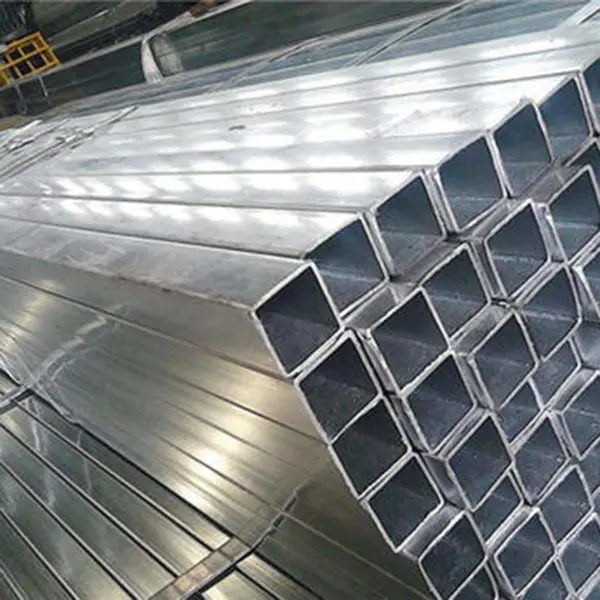
Introduction
5/8 inch Outer Diameter (OD) steel tubing represents a fundamental component in a vast array of industrial applications, ranging from structural support and fluid conveyance to precision instrumentation and automotive systems. Typically manufactured from carbon steel (ASTM A53 Grade B being common), stainless steel (304/316 grades), or alloy steels, its prevalence stems from a favorable strength-to-weight ratio, cost-effectiveness, and ease of fabrication. This guide provides a comprehensive technical overview of 5/8” OD steel tubing, encompassing material science, manufacturing processes, performance characteristics, failure modes, and relevant industry standards. A critical pain point in B2B procurement revolves around consistent dimensional accuracy and material traceability to ensure adherence to stringent engineering specifications. Furthermore, understanding the specific alloy's resistance to corrosion and high-temperature environments is paramount for long-term operational reliability, driving the need for detailed material certifications.
Material Science & Manufacturing
The dominant material for 5/8” OD steel tubing is carbon steel, specifically low-carbon grades like 1018 or 1020. These exhibit good ductility and weldability, essential for many fabrication processes. Stainless steel alloys, such as 304 and 316, are employed when corrosion resistance is crucial. Alloy steels (e.g., 4130 chrome-moly) offer enhanced strength and toughness, suitable for high-stress applications. Raw material properties, including yield strength, tensile strength, and elongation, are tightly controlled. Manufacturing processes typically involve Electric Resistance Welding (ERW), which is cost-effective for high-volume production. ERW utilizes high-frequency electrical current to fuse the edges of a steel strip. Seamless tubing is produced via piercing and drawing processes, offering superior strength and resistance to pressure. Key parameter control during manufacturing includes precise control of welding current, feed rate, and cooling rate in ERW, and mandrel diameter and reduction ratio in seamless tubing production. Surface finishing often involves pickling (acid cleaning) to remove mill scale and galvanizing or powder coating for corrosion protection. Critical concerns during manufacturing include maintaining tight tolerances on OD and wall thickness, as well as ensuring consistent weld integrity in ERW tubing through non-destructive testing (NDT) methods such as ultrasonic testing.

Performance & Engineering
Performance of 5/8” OD steel tubing is governed by its mechanical properties and its behavior under various loading conditions. Buckling analysis is critical for structural applications, particularly when the tubing is used as a column or beam. The Euler buckling formula, accounting for end conditions and material properties, dictates the maximum allowable load before instability. For fluid conveyance, pressure ratings are determined by hoop stress calculations (Lame’s equation), factoring in wall thickness, OD, and internal pressure. Fatigue resistance is paramount in applications involving cyclic loading, necessitating consideration of stress concentration factors at weld seams and bends. Environmental resistance is heavily dependent on the alloy composition. Carbon steel tubing requires protective coatings to mitigate corrosion from exposure to moisture, salts, and chemicals. Stainless steel alloys provide inherent corrosion resistance, but may be susceptible to pitting corrosion in chloride-rich environments. Compliance requirements vary by industry; for example, ASME B31.3 covers power piping, while API 5L applies to pipeline transportation. Finite Element Analysis (FEA) is commonly employed to simulate stress distribution and predict performance under complex loading scenarios, optimizing tubing design and ensuring structural integrity.
Technical Specifications
| Parameter | Carbon Steel (ASTM A53 Grade B) | Stainless Steel (304) | Alloy Steel (4130) | Unit |
|---|---|---|---|---|
| Outer Diameter | 0.625 | 0.625 | 0.625 | inches |
| Wall Thickness | 0.065 - 0.120 | 0.065 - 0.120 | 0.083 - 0.154 | inches |
| Yield Strength | 36,000 | 30,000 | 65,000 | psi |
| Tensile Strength | 58,000 | 75,000 | 80,000 | psi |
| Elongation | 23 | 30 | 18 | % |
| Corrosion Resistance | Low (requires coating) | Excellent | Moderate (requires coating) | Qualitative |
Failure Mode & Maintenance
Common failure modes for 5/8” OD steel tubing include corrosion-induced failures (rusting, pitting), fatigue cracking (especially at weld seams), yielding or buckling under excessive load, and denting from impact. Corrosion is accelerated by exposure to corrosive environments and can lead to wall thinning and eventual perforation. Fatigue cracking initiates from stress concentrations and propagates over time under cyclic loading. Buckling occurs when compressive loads exceed the critical buckling load. Failure analysis often involves microscopic examination of fracture surfaces to identify the root cause of failure. Maintenance strategies include regular visual inspections for corrosion or damage, application of protective coatings (paint, galvanizing), and periodic non-destructive testing (ultrasonic testing, radiographic testing) to detect hidden defects. For carbon steel tubing, preventative maintenance involves removing rust and re-applying protective coatings. For stainless steel tubing, cleaning to remove contaminants is crucial. Proper storage is also important; tubing should be stored in a dry, protected environment to prevent corrosion.
Industry FAQ
Q: What is the typical lead time for custom lengths of 5/8” OD steel tubing?
A: Lead times vary depending on the quantity, alloy, and required processing. Standard carbon steel tubing in common lengths typically has a lead time of 2-4 weeks. Custom lengths, particularly those requiring special alloys or heat treatment, may require 6-8 weeks or longer. The availability of raw materials also significantly impacts lead time.
Q: Can you provide material certifications (MTRs) for the steel tubing?
A: Yes, Material Test Reports (MTRs) compliant with EN 10204 3.1 are standard for all our steel tubing. These reports detail the chemical composition, mechanical properties, and traceability of the raw material used in manufacturing. We can also provide additional certifications upon request, such as those required for specific industry standards.
Q: What level of dimensional tolerance can be achieved on the OD and wall thickness?
A: We can consistently achieve tolerances of +/- 0.005” on the OD and +/- 0.005” on the wall thickness. Tighter tolerances are achievable for specific applications, but may incur additional costs. Our quality control process includes rigorous dimensional inspection using calibrated measurement equipment.
Q: What surface finish options are available for corrosion protection?
A: We offer a range of surface finish options, including galvanizing (hot-dip or electrogalvanizing), powder coating, painting, and oiling. The choice of finish depends on the severity of the corrosive environment and the desired level of protection. Galvanizing provides excellent corrosion resistance, while powder coating offers a durable and aesthetically pleasing finish.
Q: Is the steel tubing suitable for high-pressure hydraulic applications?
A: The suitability of the tubing for high-pressure hydraulic applications depends on the alloy, wall thickness, and operating pressure. Seamless tubing is generally preferred for high-pressure applications due to its superior strength and resistance to bursting. Proper pressure testing and adherence to relevant hydraulic standards (e.g., SAE J514) are essential.
Conclusion
5/8” OD steel tubing remains a versatile and essential material across numerous industries. The selection of the appropriate alloy, manufacturing process, and surface finish is crucial to ensure optimal performance and longevity. Understanding the potential failure modes and implementing preventative maintenance strategies are vital for minimizing downtime and maximizing return on investment. Careful consideration of dimensional tolerances, material traceability (via MTRs), and compliance with relevant industry standards are paramount for successful procurement and application.
Looking ahead, advancements in alloy development and manufacturing techniques are focused on enhancing strength, corrosion resistance, and fatigue life. The increasing demand for lightweight materials is driving research into high-strength, low-alloy (HSLA) steel tubing. Furthermore, the adoption of advanced inspection methods, such as phased array ultrasonic testing, will improve defect detection capabilities and ensure the highest levels of product quality and safety.
