
Introduction
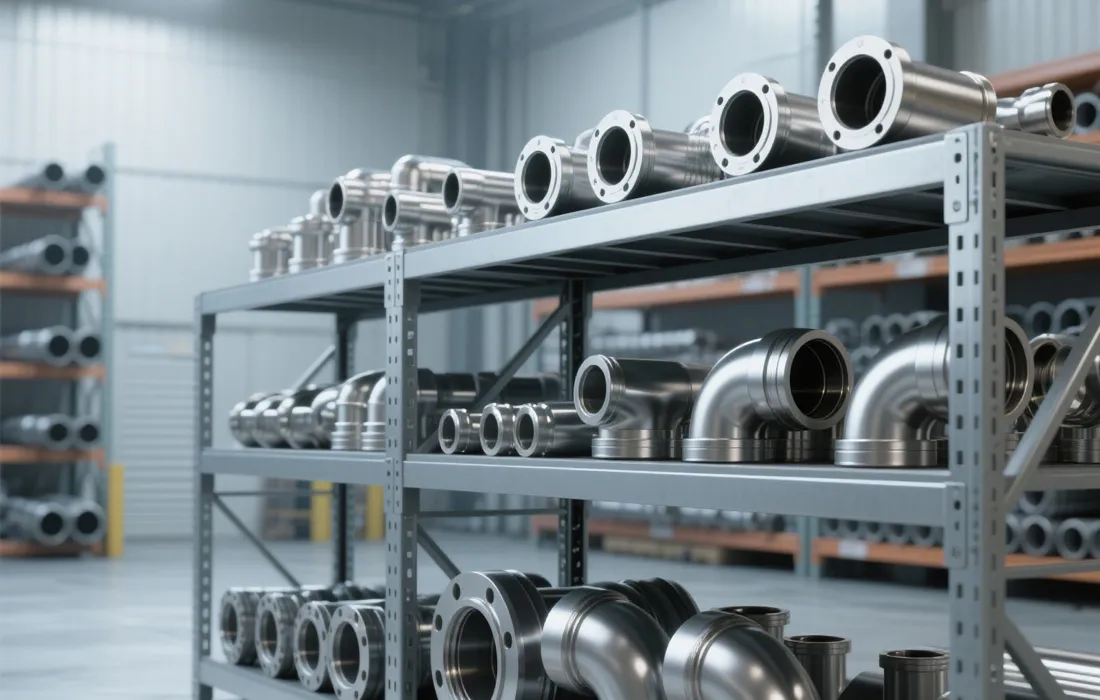
5-inch stainless steel pipe is a foundational component in numerous industrial applications, encompassing fluid transport, structural support, and process piping systems. Positioned within the broader materials supply chain, it represents a semi-finished product derived from stainless steel billet or seamless tube production. Its core performance characteristics – corrosion resistance, high tensile strength, and temperature tolerance – dictate its suitability across sectors like chemical processing, oil & gas, pharmaceuticals, food & beverage, and wastewater treatment. The increasing demand for durable and sanitary piping solutions drives continuous refinement in stainless steel alloys and manufacturing techniques. A critical pain point for procurement managers lies in selecting the appropriate grade of stainless steel to match specific operating conditions and regulatory requirements, while engineers focus on ensuring long-term structural integrity and preventing premature failure due to environmental factors or operational stresses.
Material Science & Manufacturing
The primary raw material for 5-inch stainless steel pipe is stainless steel, typically austenitic grades like 304/304L and 316/316L, though duplex and other alloys are also employed. 304/304L consists of approximately 18-20% chromium, 8-10.5% nickel, and less than 0.08% carbon (in the ‘L’ grade, carbon content is further reduced). This composition imparts excellent corrosion resistance and weldability. 316/316L contains molybdenum (2-3%), enhancing resistance to pitting corrosion, particularly in chloride-rich environments. The physical properties are significantly influenced by alloy composition; tensile strength generally ranges from 500-700 MPa, yield strength from 205-310 MPa, and elongation at break from 30-60%.
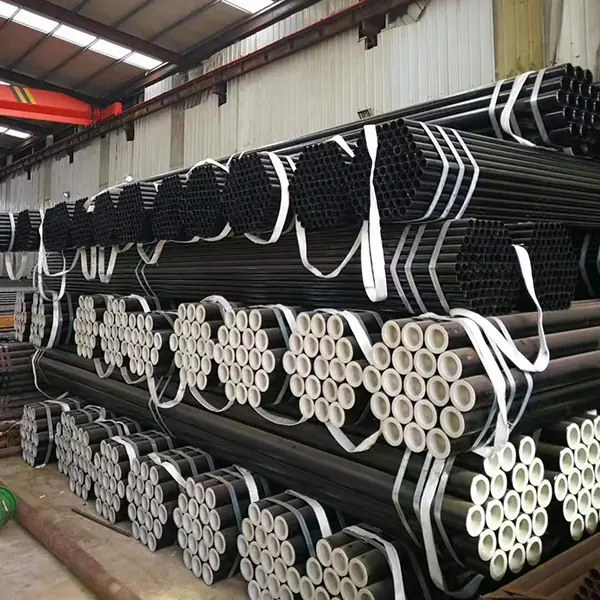
Manufacturing processes generally fall into two categories: welded and seamless. Welded pipe is produced by rolling steel plate into a cylindrical shape and then welding the seam using processes like Electric Resistance Welding (ERW) or Tungsten Inert Gas (TIG) welding. ERW offers high production rates and cost-effectiveness, but the weld seam requires rigorous Non-Destructive Testing (NDT) such as radiography and ultrasonic testing to ensure integrity. TIG welding provides superior weld quality but is slower and more expensive. Seamless pipe is manufactured through extrusion or piercing processes, offering a homogenous structure and eliminating the risk of weld-related failures. Critical parameters in both processes include temperature control during forming, precise welding current/voltage settings (for welded pipe), and dimensional accuracy. Heat treatment, such as annealing, is frequently employed to relieve stress, improve ductility, and refine the metallurgical structure. Surface finishing, including pickling and passivation, further enhances corrosion resistance by removing surface contaminants and forming a protective chromium oxide layer.
Performance & Engineering
The performance of 5-inch stainless steel pipe is fundamentally governed by its ability to withstand internal and external pressures, tensile stresses, and environmental degradation. Force analysis requires consideration of hoop stress (resulting from internal pressure) and longitudinal stress (from bending moments or axial loads). Design calculations must adhere to ASME B31.3 for process piping or other relevant codes depending on the application. Environmental resistance is crucial; prolonged exposure to corrosive media can lead to pitting, crevice corrosion, or stress corrosion cracking (SCC). Chloride ions are particularly aggressive, accelerating corrosion rates. The selection of an appropriate alloy (e.g., 316/316L for chloride-containing environments) and the implementation of corrosion mitigation strategies (e.g., cathodic protection, coatings) are essential. Compliance requirements vary by industry and region, encompassing standards for material traceability (e.g., EN 10204 3.1 material certificates), pressure testing (hydrostatic or pneumatic), and NDT inspection. Furthermore, temperature considerations are vital. Elevated temperatures can reduce the yield strength and creep resistance of stainless steel, necessitating the selection of alloys with appropriate high-temperature properties and accounting for thermal expansion and contraction.
Technical Specifications
| Parameter | 304/304L | 316/316L | Duplex (e.g., 2205) |
|---|---|---|---|
| Nominal Diameter (inches) | 5 | 5 | 5 |
| Wall Thickness (mm) | Schedule 40 (4.2 mm) - Schedule 160 (6.4 mm) | Schedule 40 (4.2 mm) - Schedule 160 (6.4 mm) | Schedule 40 (4.2 mm) - Schedule 160 (6.4 mm) |
| Tensile Strength (MPa) | 517-724 | 517-724 | 700-900 |
| Yield Strength (MPa) | 205-310 | 205-310 | 345-450 |
| Elongation at Break (%) | 30-60 | 30-60 | 25-40 |
| Corrosion Rate (mm/year in seawater) | 0.05-0.15 | 0.02-0.08 | 0.01-0.05 |
Failure Mode & Maintenance
Common failure modes in 5-inch stainless steel pipe include corrosion-induced failures (pitting, SCC, crevice corrosion), fatigue cracking (due to cyclic loading), erosion-corrosion (in high-velocity fluid streams), and weld defects (in welded pipe). Pitting corrosion initiates at surface imperfections and can rapidly penetrate the pipe wall. SCC occurs under tensile stress in the presence of specific corrosive agents. Fatigue cracking is a progressive process initiated by stress concentrations and exacerbated by cyclic loading. Weld defects, such as porosity or incomplete fusion, can act as stress concentrators and initiate failure. Regular inspection is crucial. Visual inspection can identify surface corrosion or cracks. NDT methods, including ultrasonic testing (UT), radiographic testing (RT), and eddy current testing (ECT), can detect subsurface flaws. Preventive maintenance includes applying protective coatings, implementing cathodic protection systems, and ensuring proper drainage to prevent water accumulation. Repair strategies depend on the severity of the damage. Small pits can be blended out, while larger defects may require weld repair or pipe replacement. Regular cleaning to remove corrosive deposits and debris is also essential.
Industry FAQ
Q: What are the key differences between 304L and 316L stainless steel regarding corrosion resistance, and when would I specifically choose 316L?
A: 316L contains molybdenum, which significantly improves its resistance to pitting and crevice corrosion, especially in chloride-containing environments. 304L is generally suitable for less aggressive environments, while 316L is preferred for applications involving seawater, chemical processing with chlorides, or exposure to de-icing salts. The increased cost of 316L is justified when long-term corrosion resistance is paramount.
Q: How does the welding process affect the corrosion resistance of a welded 5-inch stainless steel pipe?
A: Improper welding can create heat-affected zones (HAZ) with reduced chromium content, making them susceptible to corrosion. Using the correct welding procedures (TIG with argon shielding is often preferred), filler metals, and post-weld heat treatment (PWHT) are crucial to maintain corrosion resistance. Thorough NDT inspection of welds is essential to identify defects.
Q: What is the impact of temperature on the mechanical properties of stainless steel pipe, and how should this be considered during design?
A: Elevated temperatures generally reduce the yield strength and creep resistance of stainless steel. Design calculations must account for these temperature-dependent properties, and the appropriate alloy should be selected based on the operating temperature. Thermal expansion and contraction must also be considered to avoid stress concentrations.
Q: What Non-Destructive Testing (NDT) methods are commonly used to inspect 5-inch stainless steel pipe for defects, and what are their limitations?
A: Common NDT methods include Ultrasonic Testing (UT) for detecting internal flaws, Radiographic Testing (RT) for identifying weld defects, and Eddy Current Testing (ECT) for surface crack detection. UT is sensitive to planar defects, RT provides a visual image of the weld, and ECT is suitable for surface flaws. Limitations include UT's difficulty in detecting small flaws, RT's safety concerns, and ECT's limited penetration depth.
Q: What maintenance procedures are recommended to extend the service life of a 5-inch stainless steel pipe system in a chemical processing plant?
A: Recommended maintenance includes regular visual inspections, NDT inspections (at least annually), cleaning to remove corrosive deposits, and the implementation of cathodic protection or coatings in corrosive environments. Periodic pressure testing can verify system integrity. Record keeping of all inspections and maintenance activities is crucial for tracking performance and identifying potential issues.
Conclusion
5-inch stainless steel pipe represents a critical component in diverse industrial sectors, demanding a comprehensive understanding of material science, manufacturing processes, and performance characteristics. The selection of the appropriate alloy – 304/304L, 316/316L, or duplex – is fundamentally driven by the specific operating environment and the need to mitigate corrosion risks. Rigorous adherence to industry standards, meticulous quality control during manufacturing, and proactive maintenance practices are paramount to ensuring long-term structural integrity and preventing costly failures.
Looking ahead, advancements in stainless steel alloy development – focusing on enhanced corrosion resistance and higher strength-to-weight ratios – will continue to expand the application range of these pipes. Furthermore, the adoption of advanced inspection technologies, such as phased array ultrasonic testing and remote visual inspection, will enable more efficient and reliable monitoring of pipe system health, thereby optimizing maintenance schedules and extending service life. A holistic approach, encompassing materials selection, manufacturing excellence, and proactive maintenance, remains the cornerstone of successful implementation.
