
Introduction
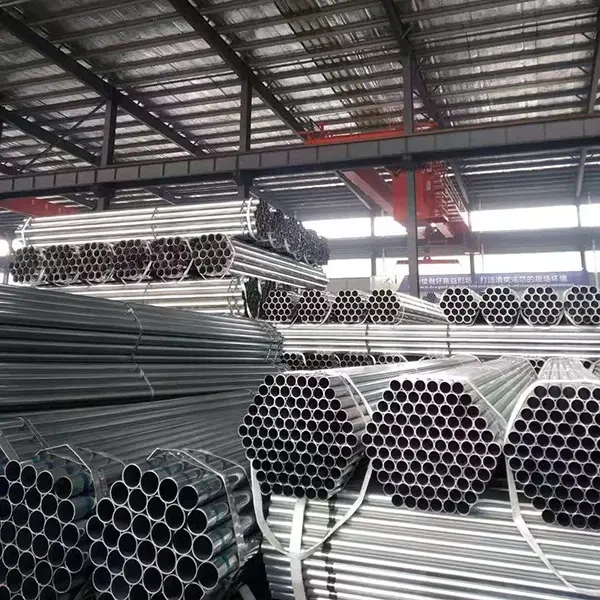
50mm square tubing is a hollow structural section (HSS) characterized by a square cross-section with 50mm dimensions on each side. Predominantly manufactured from carbon steel, it serves as a fundamental building block in diverse industries including construction, infrastructure, manufacturing, automotive, and agriculture. Its applications span structural frameworks, scaffolding, vehicle chassis components, signage, furniture, and protective guardrails. The material’s inherent strength-to-weight ratio, ease of fabrication (welding, cutting, bending), and cost-effectiveness establish it as a preferred alternative to solid steel sections in many applications. Critical performance characteristics include yield strength, tensile strength, wall thickness consistency, dimensional accuracy, and weldability. This guide details the material science, manufacturing processes, performance parameters, potential failure modes, and maintenance practices specific to 50mm square tubing, addressing key industry concerns regarding structural integrity, durability, and compliance.
Material Science & Manufacturing
The primary raw material for 50mm square tubing is typically carbon steel, specifically grades such as ASTM A500 Grade B or EN 10210-1 S235JR. These steels consist primarily of iron with controlled additions of carbon (typically 0.05-0.25% by weight), manganese, silicon, and phosphorus. The carbon content dictates hardness and strength, while manganese enhances strength and weldability. Silicon acts as a deoxidizer during steelmaking. The manufacturing process generally involves several stages. First, steel coils or sheets are cut to length and fed into a forming machine. This machine progressively bends the flat material into a square shape using a series of rollers. High-frequency electric resistance welding (ERW) is then commonly employed to seam-weld the longitudinal edges, creating a closed square tube. Alternative welding processes include submerged arc welding (SAW) for thicker-walled tubing. Following welding, the tubes undergo normalizing or annealing heat treatments to relieve stresses induced during forming and welding, improving ductility and dimensional stability. Critical parameters during manufacturing include controlled cooling rates post-welding to minimize distortion, precise roller alignment to ensure dimensional accuracy (50mm +/- tolerances), and consistent weld penetration for optimal joint strength. Surface finishing processes such as pickling, oiling, or galvanizing are often applied to enhance corrosion resistance.
Performance & Engineering
The structural performance of 50mm square tubing is governed by its section modulus (S), moment of inertia (I), and torsional rigidity (J). These geometric properties define its resistance to bending, buckling, and twisting forces. A key engineering consideration is the slenderness ratio (L/r), where L is the unsupported length of the tube and r is the radius of gyration. High slenderness ratios increase the susceptibility to buckling. Finite Element Analysis (FEA) is frequently used to model stress distribution under various load conditions, optimizing tube wall thickness and bracing strategies. Environmental resistance is crucial; carbon steel is prone to corrosion, particularly in marine or industrial environments. Galvanizing (zinc coating) or epoxy powder coating provides effective corrosion protection. Compliance requirements dictate specific performance standards. For construction applications, adherence to codes such as AISC (American Institute of Steel Construction) or Eurocode 3 is essential. Automotive applications require compliance with relevant safety standards regarding crashworthiness and fatigue resistance. Weld quality is paramount; all welds must meet specified radiographic or ultrasonic inspection criteria to ensure structural integrity. Fatigue performance is assessed through S-N curve analysis, determining the number of cycles to failure under cyclic loading. Consideration must also be given to thermal expansion and contraction, particularly in structures exposed to significant temperature variations.
Technical Specifications
| Parameter | Typical Value (ASTM A500 Grade B) | Unit | Testing Standard |
|---|---|---|---|
| Yield Strength | 36 | ksi | ASTM A500 |
| Tensile Strength | 58 | ksi | ASTM A500 |
| Wall Thickness | 2.0 - 6.35 | mm | ASTM E29 |
| Outside Dimension | 50 | mm | Dimensional Tolerance per ASTM A500 |
| Weight per Meter | 1.48 - 4.44 | kg/m | Calculated based on dimensions and steel density |
| Elongation | 23 | % | ASTM E8 |
Failure Mode & Maintenance
50mm square tubing is susceptible to several failure modes. Corrosion is a primary concern, leading to section loss and reduced load-bearing capacity. Pitting corrosion, particularly in chloride-rich environments, can initiate localized failures. Fatigue cracking can occur under cyclic loading, initiating at stress concentrators such as welds or notches. Buckling is a common failure mode in compression members, especially with high slenderness ratios. Denting can occur due to impact loads, reducing the effective cross-sectional area. Welding defects, such as porosity or incomplete fusion, can significantly weaken the joint. Maintenance strategies include regular visual inspections for signs of corrosion, cracks, or deformation. Protective coatings should be inspected and repaired as needed. Periodic cleaning to remove dirt and debris is essential, especially in corrosive environments. For heavily loaded structures, non-destructive testing (NDT) methods such as ultrasonic testing or radiographic inspection can detect internal flaws. Proper drainage should be ensured to prevent water accumulation and accelerate corrosion. Regular tightening of bolted connections is also critical. When cracks are detected, immediate repair or replacement of the affected section is recommended.
Industry FAQ
Q: What is the impact of different welding techniques on the corrosion resistance of 50mm square tubing?
A: Welding processes like ERW and SAW can create heat-affected zones (HAZs) with altered metallurgical properties. These HAZs are often more susceptible to corrosion than the base metal. Shielded Metal Arc Welding (SMAW) can introduce slag inclusions if proper technique isn't employed. The choice of welding consumables (electrode or wire) plays a crucial role. Low-hydrogen electrodes are preferred to minimize hydrogen-induced cracking. Post-weld heat treatment (PWHT) can reduce residual stresses and improve corrosion resistance by homogenizing the HAZ. Protective coatings should be applied after welding to ensure complete coverage, including weld seams.
Q: How does wall thickness affect the buckling resistance of 50mm square tubing used as a column?
A: Buckling resistance is directly proportional to the square of the wall thickness. Increasing the wall thickness significantly enhances the section modulus and moment of inertia, increasing resistance to bending and buckling. However, increased wall thickness also increases material cost and weight. An optimal wall thickness must be determined through structural analysis, considering the applied load, column length, and end support conditions. The slenderness ratio (L/r) remains a critical parameter regardless of wall thickness.
Q: What are the primary concerns regarding the fatigue performance of 50mm square tubing in a dynamic loading application?
A: Fatigue performance is strongly influenced by stress concentration points (welds, holes, corners), the amplitude and frequency of the loading cycle, and the surface finish. Surface imperfections can act as crack initiation sites. Residual stresses from manufacturing processes can also contribute to fatigue failure. Fatigue life can be improved by minimizing stress concentrations through careful design, using smooth surface finishes, and applying shot peening to introduce compressive residual stresses. Regular inspection for crack initiation is essential.
Q: What are the advantages and disadvantages of galvanized versus powder-coated finishes for corrosion protection?
A: Galvanizing provides sacrificial corrosion protection; the zinc coating corrodes preferentially, protecting the steel. It’s highly durable and cost-effective for many applications. However, galvanizing can create a rough surface finish and may not offer the same aesthetic appeal as powder coating. Powder coating offers a wider range of colors and a smoother finish, providing excellent resistance to UV degradation. However, it relies on an intact coating for protection; damage to the coating exposes the steel to corrosion. Powder coating is generally less effective in highly corrosive environments than galvanizing.
Q: How do different steel grades (e.g., A36, A500) impact the selection of 50mm square tubing for specific applications?
A: Steel grade selection directly influences yield strength, tensile strength, and ductility. A36 steel is a common general-purpose structural steel with lower strength than A500. A500 Grade B offers higher strength and better weldability. Applications requiring high load-bearing capacity or fatigue resistance generally benefit from using A500. The choice also depends on cost considerations and the specific design requirements. The appropriate steel grade must be specified in accordance with relevant industry codes and standards.
Conclusion
50mm square tubing remains a versatile and cost-effective structural material across numerous industries. Understanding its material properties, manufacturing processes, and performance characteristics is crucial for ensuring structural integrity and longevity. Careful consideration of potential failure modes, coupled with appropriate maintenance practices and adherence to relevant industry standards, is essential for maximizing the service life and reliability of structures utilizing this material.
Future developments in steel alloys and coating technologies will continue to enhance the performance and corrosion resistance of 50mm square tubing. Furthermore, advancements in non-destructive testing methods will enable more accurate and efficient inspection of structures, contributing to improved safety and durability. The continued optimization of manufacturing processes will focus on achieving tighter dimensional tolerances and improved weld quality.
