
Introduction
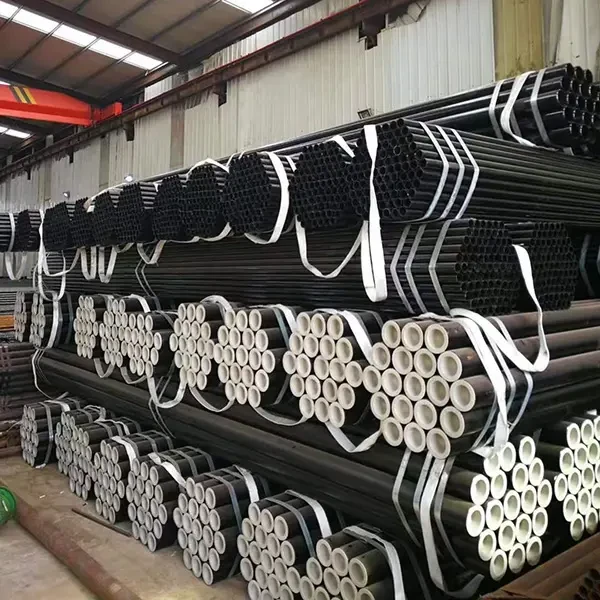
50mm stainless steel pipe represents a standardized dimension within a broader family of corrosion-resistant alloy tubes used extensively across diverse industrial sectors. Positioned within the supply chain as a semi-finished product, its technical significance stems from providing a fluid transfer and structural support medium demanding high durability, hygiene, and resistance to environmental degradation. Core performance characteristics include pressure containment, temperature resistance, weldability, and compatibility with various process fluids. The selection of 50mm as a nominal pipe size balances flow capacity requirements with cost-effectiveness for numerous applications, including process piping, instrumentation, and structural frameworks. This guide details the material science, manufacturing processes, performance attributes, failure modes, and relevant standards pertaining to this critical component.
Material Science & Manufacturing
The predominant material for 50mm stainless steel pipe is typically Austenitic stainless steel, most commonly 304/304L or 316/316L. 304/304L derives its corrosion resistance from a minimum of 18% chromium, forming a passive oxide layer. The 'L' designation indicates low carbon content, minimizing carbide precipitation during welding and improving weld decay resistance. 316/316L incorporates molybdenum (2-3%), enhancing resistance to chloride pitting and crevice corrosion, crucial in marine and chemical processing environments. Raw material composition is tightly controlled via techniques like X-ray fluorescence (XRF) to ensure adherence to ASTM A249 and A276 standards.
Manufacturing commences with the production of seamless or welded pipe. Seamless pipes are produced via extrusion or piercing processes, offering superior pressure ratings and consistency. Welded pipes, manufactured through Electric Resistance Welding (ERW) or Longitudinal Submerged Arc Welding (LSAW), offer cost advantages. Key parameters during welding include amperage, voltage, welding speed, and shielding gas composition (typically Argon-based for TIG/GTAW and Argon/CO2 mixes for GMAW/MIG). Post-weld heat treatment (PWHT) is often employed to relieve residual stresses and enhance mechanical properties. Dimensional accuracy is maintained through stringent quality control checks including hydrostatic testing (ASTM A530) and Non-Destructive Examination (NDE) such as radiography, ultrasonic testing, and eddy current testing. Surface finishing often involves pickling and passivation to remove surface contaminants and maximize corrosion resistance. The final product undergoes rigorous dimensional inspection to conform to ANSI/ASME B36.10 standards.
Performance & Engineering
The performance of 50mm stainless steel pipe is fundamentally dictated by its ability to withstand internal pressure, external loads, and environmental stresses. Pressure containment is calculated based on Barlow's formula (P = 2St/D), where P is pressure, S is tensile strength, t is wall thickness, and D is outer diameter. Wall thickness selection considers a safety factor, typically between 3.5 and 4, depending on the application and governing codes (ASME B31.3 for process piping, for example). Stress analysis, employing Finite Element Analysis (FEA) software, is often performed for complex loading scenarios, accounting for bending moments, torsional stresses, and thermal expansion. Environmental resistance is critical; pitting corrosion, crevice corrosion, and stress corrosion cracking (SCC) represent significant failure mechanisms. Proper material selection (316/316L in chloride environments) and passivation are crucial mitigation strategies. Thermal expansion coefficients (approximately 16.5 x 10⁻⁶ /°C for 304/316 stainless steel) must be considered in piping system design to prevent excessive stresses during temperature fluctuations. Compliance with pressure vessel directives (e.g., ASME Section VIII Division 1) dictates design, fabrication, and inspection requirements for critical applications.
Technical Specifications
| Parameter | 304/304L | 316/316L | Unit |
|---|---|---|---|
| Nominal Pipe Size | 50 mm | 50 mm | mm |
| Wall Thickness (Typical) | 2-6 mm | 2-8 mm | mm |
| Yield Strength (Minimum) | 205 MPa | 205 MPa | MPa |
| Tensile Strength (Minimum) | 517 MPa | 517 MPa | MPa |
| Elongation (Minimum) | 50% | 40% | % |
| Corrosion Rate (in 1M HCl) | <0.1 mm/year | <0.05 mm/year | mm/year |
Failure Mode & Maintenance
Common failure modes in 50mm stainless steel pipe include pitting corrosion (localized attack due to chloride ions), crevice corrosion (occurring in shielded areas), stress corrosion cracking (SCC – brittle fracture under tensile stress in corrosive environments), fatigue cracking (due to cyclic loading), and erosion-corrosion (material removal by fluid flow combined with corrosive attack). Galvanic corrosion can also occur if the stainless steel is in contact with dissimilar metals in an electrolyte. Failure analysis involves metallographic examination to identify crack initiation sites, fracture surfaces, and corrosion products. Non-destructive testing (NDT) like dye penetrant inspection (DPI) and magnetic particle inspection (MPI) can detect surface cracks. Maintenance strategies include regular visual inspections for signs of corrosion or damage, periodic hydrostatic testing to verify pressure integrity, and preventative measures such as implementing corrosion inhibitors, applying protective coatings, and ensuring proper grounding to prevent galvanic corrosion. Regular cleaning to remove contaminants and deposits is essential. For SCC-prone environments, stress relieving and careful material selection are vital. Replacement of sections showing significant corrosion or cracking is necessary to maintain system reliability.
Industry FAQ
Q: What is the impact of welding on the corrosion resistance of 304/304L stainless steel pipe?
A: Welding can lead to sensitization in 304/304L stainless steel, where chromium carbides precipitate at grain boundaries during cooling, depleting chromium and reducing localized corrosion resistance. Using the low-carbon 304L grade and employing post-weld heat treatment (PWHT) can mitigate this effect by dissolving the carbides and restoring chromium content. Proper shielding gas selection during welding is also critical to prevent oxidation.
Q: How does the wall thickness of a 50mm pipe affect its pressure rating?
A: Pressure rating is directly proportional to wall thickness. Increasing the wall thickness allows the pipe to withstand higher internal pressures, as defined by Barlow’s formula. However, increased thickness also increases cost and weight. The optimal wall thickness is determined by a balance between required pressure rating, cost, and other design considerations.
Q: What are the best practices for preventing crevice corrosion in stainless steel piping systems?
A: Preventing crevice corrosion involves eliminating or minimizing crevices where stagnant fluid can accumulate. This includes using fully welded joints, avoiding overlapping surfaces, and ensuring proper gasket selection. Maintaining a high fluid velocity can also help prevent crevice formation. In particularly aggressive environments, duplex stainless steels or higher alloy materials like 316L are recommended.
Q: What types of non-destructive testing (NDT) are commonly used for inspecting 50mm stainless steel pipe?
A: Common NDT methods include visual inspection, dye penetrant inspection (DPI) for surface cracks, magnetic particle inspection (MPI) for surface and near-surface flaws, ultrasonic testing (UT) for detecting internal flaws, and radiographic testing (RT) for a comprehensive internal inspection. Eddy current testing is used for detecting surface and subsurface defects, and measuring wall thickness.
Q: What is the difference between ASTM A249 and ASTM A276 regarding stainless steel pipe specifications?
A: ASTM A249 covers welded stainless steel sanitary tubing, typically used in hygienic applications like food and pharmaceutical processing. It emphasizes surface finish and cleanliness. ASTM A276 covers stainless steel bars, shapes, and forgings, which can be used as raw material for pipe manufacturing, but doesn’t specifically address pipe dimensions or welding requirements. A249 products tend to have tighter tolerances for dimensional accuracy and surface quality.
Conclusion
50mm stainless steel pipe serves as a crucial component in numerous industrial applications, leveraging the inherent corrosion resistance and mechanical properties of stainless steel alloys. The selection of the appropriate grade (304/304L or 316/316L) is paramount, guided by the specific operating environment and fluid compatibility requirements. Manufacturing processes, from seamless extrusion to welded fabrication, demand stringent quality control to ensure dimensional accuracy and structural integrity. Understanding potential failure modes – including corrosion, cracking, and erosion – is essential for implementing effective preventative maintenance strategies and maximizing the service life of piping systems.
Future advancements in stainless steel technology focus on developing even more corrosion-resistant alloys, optimizing welding techniques to minimize sensitization, and enhancing NDT methods for improved defect detection. Furthermore, the increasing emphasis on sustainability drives research into methods for reducing material waste and improving the recyclability of stainless steel components. A continued commitment to rigorous engineering standards and proactive maintenance practices will ensure the reliable and efficient operation of 50mm stainless steel piping systems across diverse industries.
