
Introduction
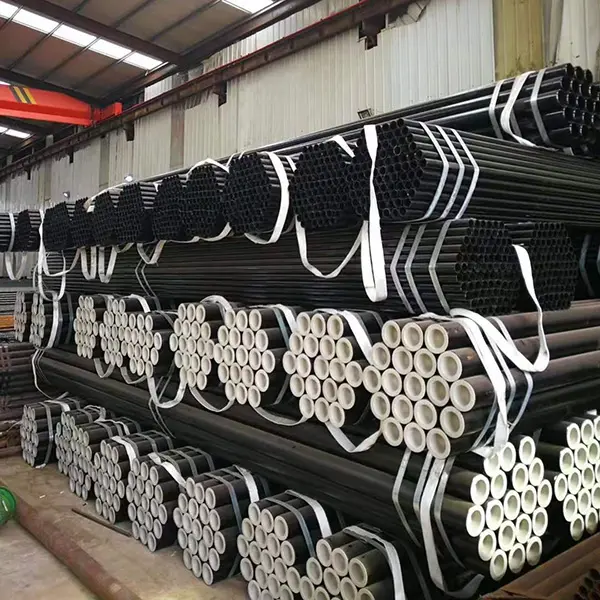
50mm stainless steel tube refers to a hollow cylindrical section manufactured from various grades of stainless steel with an outer diameter of 50 millimeters. These tubes are integral components across diverse industries, including process piping, structural engineering, medical equipment, food and beverage processing, and automotive exhaust systems. Their position within the industry chain is fundamental – serving as a semi-finished product transformed into complex assemblies. Core performance characteristics center around corrosion resistance, mechanical strength, weldability, and hygienic properties. The selection of a specific stainless steel grade (e.g., 304, 316L) dictates the tube’s suitability for particular applications based on operating temperature, pressure, and chemical exposure. A key industry pain point lies in specifying the appropriate grade and wall thickness to balance cost with long-term operational reliability and preventing premature failure due to corrosion or mechanical stress. Furthermore, ensuring traceability of material composition and manufacturing processes is paramount for compliance with industry regulations.
Material Science & Manufacturing
The primary raw material for 50mm stainless steel tubes is stainless steel, an alloy of iron, chromium (minimum 10.5%), nickel, and other elements like molybdenum, titanium, and niobium. Chromium is critical for forming a passive layer of chromium oxide on the surface, providing corrosion resistance. Different grades exhibit varying compositions. 304 stainless steel, containing 18-20% chromium and 8-10.5% nickel, is commonly used for general-purpose applications. 316L stainless steel, with the addition of molybdenum (2-3%), enhances resistance to chloride corrosion. Manufacturing typically involves extrusion, seamless drawing, or welding followed by forming. Seamless tubes are produced by piercing a solid billet of steel and subsequently drawing it through dies to achieve the desired diameter and wall thickness. Welded tubes are formed by rolling and welding steel strips, followed by similar drawing processes. Critical parameters during manufacturing include controlled heating and cooling rates to achieve desired metallurgical structures, precise dimensional control to maintain consistent diameter and wall thickness, and effective surface finishing to remove scale and improve corrosion resistance. Welding processes, such as TIG (Tungsten Inert Gas) and laser welding, require precise control of welding parameters (current, voltage, shielding gas composition) to ensure weld integrity and prevent porosity or cracking. Post-weld heat treatment is often employed to relieve residual stresses and enhance mechanical properties.

Performance & Engineering
The performance of 50mm stainless steel tubes is governed by several engineering principles. Force analysis dictates the tube’s ability to withstand internal pressure, external loads, and bending moments. Wall thickness is a critical parameter in determining burst pressure, calculated using Barlow’s formula (P = 2St/D, where P is pressure, S is tensile strength, t is wall thickness, and D is diameter). Environmental resistance, particularly corrosion resistance, is paramount. Pitting corrosion, crevice corrosion, and stress corrosion cracking are common failure mechanisms in chloride-rich environments. Selecting the appropriate stainless steel grade and employing passivation treatments are crucial mitigation strategies. Compliance requirements vary depending on the application. For food and beverage applications, tubes must comply with FDA (Food and Drug Administration) regulations regarding material leachability and hygienic surface finish (Ra < 0.8 μm). For pressure vessels, adherence to ASME Boiler and Pressure Vessel Code is mandatory. Functional implementation often involves joining techniques like welding, brazing, or mechanical fittings. Welding requires qualified welders and procedures to ensure weld integrity and prevent distortion. Non-destructive testing (NDT) methods, such as radiography, ultrasonic testing, and dye penetrant inspection, are used to verify weld quality. Furthermore, the thermal expansion coefficient of stainless steel must be considered in system design to prevent stresses caused by temperature fluctuations.
Technical Specifications
| Parameter | 304 Stainless Steel | 316L Stainless Steel | Duplex Stainless Steel (2205) |
|---|---|---|---|
| Outer Diameter (mm) | 50 ± 0.5 | 50 ± 0.5 | 50 ± 0.5 |
| Wall Thickness (mm) | 1.0 - 6.0 | 1.0 - 6.0 | 1.5 - 8.0 |
| Tensile Strength (MPa) | 517 - 724 | 517 - 724 | 700 - 900 |
| Yield Strength (MPa) | 205 - 275 | 205 - 275 | 345 - 450 |
| Corrosion Resistance | Good (General Purpose) | Excellent (Chloride Resistance) | Superior (Pitting & Crevice Corrosion) |
| Weldability | Excellent | Excellent | Good (Requires Special Procedures) |
Failure Mode & Maintenance
50mm stainless steel tubes are susceptible to several failure modes. Fatigue cracking can occur under cyclic loading, particularly at weldments or areas of stress concentration. Pitting corrosion and crevice corrosion can initiate in the presence of chlorides, leading to localized material loss. Stress corrosion cracking (SCC) can occur in high-temperature, high-chloride environments. Galvanic corrosion can occur when stainless steel is in contact with dissimilar metals in the presence of an electrolyte. Oxidation at elevated temperatures can lead to scale formation and reduced mechanical properties. Maintenance strategies include regular visual inspections to detect signs of corrosion or damage. Surface cleaning to remove contaminants and prevent localized corrosion. Passivation treatments to restore the protective chromium oxide layer. Hydrostatic testing to verify structural integrity. For welded tubes, periodic non-destructive testing (NDT) is recommended to monitor weld condition. If corrosion is detected, localized repair or replacement of the affected section may be necessary. Preventing dissimilar metal contact through proper isolation techniques is crucial. Regularly reviewing operating conditions to minimize exposure to corrosive environments extends service life.
Industry FAQ
Q: What is the difference between 304 and 316L stainless steel in terms of corrosion resistance, and when should 316L be preferred?
A: 316L stainless steel contains molybdenum, which significantly enhances its resistance to chloride corrosion, particularly pitting and crevice corrosion. 304 stainless steel offers good general corrosion resistance, but it's susceptible to chloride attack in marine environments or when exposed to de-icing salts. 316L should be preferred in applications involving exposure to chlorides, such as coastal environments, chemical processing plants, or food processing facilities handling salty solutions.
Q: How does wall thickness affect the pressure rating of a 50mm stainless steel tube?
A: Wall thickness is directly proportional to the pressure rating. A thicker wall provides greater resistance to bursting under internal pressure. The pressure rating is calculated using formulas like Barlow’s formula (P = 2St/D), where wall thickness (t) is a key parameter. Increasing the wall thickness increases the tube’s ability to withstand higher pressures, but also increases its weight and cost.
Q: What non-destructive testing (NDT) methods are commonly used to inspect welded 50mm stainless steel tubes?
A: Common NDT methods include visual inspection, dye penetrant inspection (PT), magnetic particle inspection (MT), radiographic testing (RT), and ultrasonic testing (UT). RT and UT are considered more reliable for detecting internal flaws, while PT and MT are effective for detecting surface cracks. Visual inspection is always the first step in assessing weld quality.
Q: What surface finish is recommended for 50mm stainless steel tubes used in food and beverage processing?
A: A hygienic surface finish is critical in food and beverage processing to prevent bacterial adhesion and facilitate cleaning. A surface roughness (Ra) of less than 0.8 μm is typically recommended. Electropolishing is often used to achieve a smooth, passive surface finish that enhances corrosion resistance and cleanliness.
Q: How can galvanic corrosion be prevented when using 50mm stainless steel tubes in contact with other metals?
A: Galvanic corrosion occurs when dissimilar metals are in contact in the presence of an electrolyte. To prevent it, isolate the stainless steel tube from the dissimilar metal using non-conductive materials like plastic or rubber gaskets. Alternatively, use a compatible metal or apply a protective coating to the dissimilar metal. Selecting metals that are close together in the galvanic series minimizes the potential difference and reduces corrosion risk.
Conclusion
50mm stainless steel tubes represent a versatile engineering material, indispensable across a wide spectrum of industries. Their performance relies heavily on a careful selection of grade, manufacturing process, and adherence to relevant engineering principles. Understanding the interplay between material science, mechanical properties, and environmental factors is paramount for ensuring long-term reliability and preventing premature failure. The industry continues to push boundaries through the development of advanced stainless steel alloys and sophisticated manufacturing techniques.
Looking ahead, advancements in non-destructive testing methods and predictive maintenance strategies will further enhance the lifespan and safety of stainless steel tube systems. The increasing demand for sustainable and corrosion-resistant materials will drive the adoption of duplex and super-duplex stainless steels, offering superior performance in challenging environments. Careful consideration of lifecycle costs, including material selection, manufacturing, installation, and maintenance, remains essential for optimizing the value of these critical components.
