
Introduction
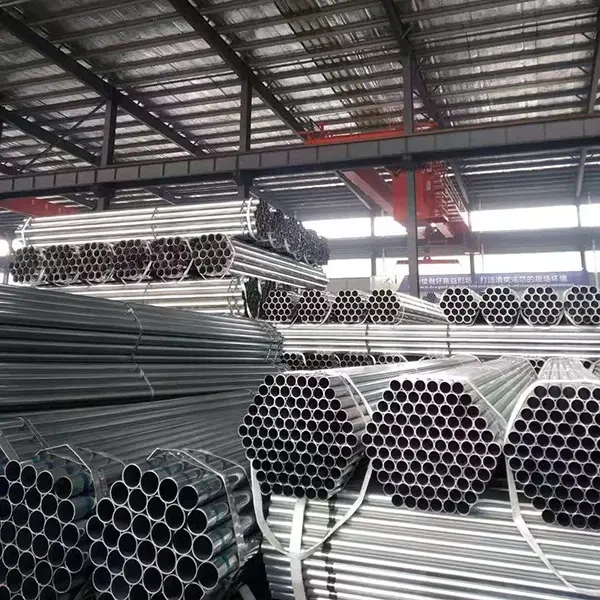
6-inch diameter steel pipe is a foundational component in numerous industrial applications, serving as a conduit for fluids and gases across sectors including oil and gas, water distribution, construction, and manufacturing. Its technical position within the industrial chain is as a finished product resulting from steel production, forming, and joining processes. Core performance characteristics center on its ability to withstand internal and external pressures, resist corrosion, maintain structural integrity under varying temperatures, and provide a reliable, long-lasting flow path. The selection of appropriate steel grade, wall thickness, and coating are paramount to fulfilling these performance demands. A significant industry pain point revolves around balancing cost-effectiveness with the necessity for specific mechanical properties and corrosion resistance demanded by different service environments. The pipe's dimensions adhere to standardized specifications, ensuring interoperability and compatibility within larger systems, while also presenting challenges in managing tolerances and variations in material properties.
Material Science & Manufacturing
The primary raw material for 6-inch diameter steel pipe is carbon steel, often supplemented with alloying elements to enhance specific properties. Common steel grades include ASTM A53 Grade B (carbon steel), ASTM A106 Grade B (low alloy steel, often chromium-molybdenum), and API 5L grades (line pipe steel, varying in composition based on application). The chemical composition directly influences the steel's yield strength, tensile strength, ductility, and weldability. Manufacturing typically involves the following processes: steelmaking (basic oxygen furnace or electric arc furnace), hot rolling to create a seamless or welded tube, forming (expanding the diameter and reducing the wall thickness), heat treatment (normalizing, annealing, or quenching and tempering) to refine the microstructure and achieve desired mechanical properties, and finishing operations like threading, coating, and testing. For seamless pipe, mandrel mills are frequently employed. Welded pipe production utilizes Electric Resistance Welding (ERW), Submerged Arc Welding (SAW), or High-Frequency Induction Welding (HFIW). Parameter control is critical throughout; precise temperature control during rolling and heat treatment prevents the formation of undesirable phases (like martensite) and ensures consistent mechanical properties. Welding parameters (current, voltage, travel speed, shielding gas) must be meticulously controlled to avoid defects such as porosity, slag inclusions, and lack of fusion. The cooling rate post-welding influences the microstructure in the heat-affected zone and impacts weld strength. Chemical compatibility of any applied coatings with the steel substrate must be verified to prevent galvanic corrosion.

Performance & Engineering
Performance analysis of 6-inch steel pipe necessitates consideration of several engineering principles. Force analysis, particularly pressure vessel theory, dictates the required wall thickness based on internal pressure, external loads, and a chosen safety factor. Hoop stress (σh = PD/2t) and longitudinal stress (σl = PD/4t) are fundamental calculations, where P is pressure, D is diameter, and t is wall thickness. Environmental resistance is a crucial factor, especially in corrosive environments. Corrosion mechanisms include uniform corrosion, pitting corrosion, galvanic corrosion, and stress corrosion cracking. Protective coatings (epoxy, polyurethane, polyethylene) are commonly applied to mitigate corrosion. Compliance requirements are dictated by industry standards (API, ASTM, ASME) and regulatory bodies. These standards specify material properties, manufacturing processes, testing procedures, and inspection criteria. Functional implementation requires careful attention to joint design. Threaded connections must be properly tightened to ensure leak-tightness and withstand applied loads. Welded connections require qualified welders and adherence to approved welding procedures. Finite Element Analysis (FEA) is often used to model complex loading scenarios and predict stress distribution, especially for critical applications or unusual geometries. Consideration must be given to thermal expansion and contraction, particularly in high-temperature applications, to prevent excessive stress on pipe supports and connections.
Technical Specifications
| Parameter | ASTM A53 Grade B | ASTM A106 Grade B | API 5L X42 | API 5L X70 |
|---|---|---|---|---|
| Outer Diameter (in) | 6.625 | 6.625 | 6.625 | 6.625 |
| Wall Thickness (in) | Schedule 40 (0.218) | Schedule 40 (0.218) | Varying | Varying |
| Yield Strength (psi) | 36,000 | 36,000 | 42,000 | 70,000 |
| Tensile Strength (psi) | 58,000 | 60,000 | 65,000 | 80,000 |
| Elongation (%) | 22 | 20 | 23 | 20 |
| Corrosion Rate (mpy) | Varies by Environment | Varies by Environment | Varies by Environment | Varies by Environment |
Failure Mode & Maintenance
Failure modes in 6-inch steel pipe are diverse and dependent on service conditions. Fatigue cracking can occur under cyclic loading, especially at welds or stress concentrators. Corrosion, as previously mentioned, is a major failure mechanism, leading to wall thinning and potential leaks. Erosion, caused by abrasive particles in the fluid stream, can also erode the pipe wall. Denting or mechanical damage can compromise the structural integrity. Hydrogen embrittlement can occur in high-strength steels exposed to hydrogen sulfide environments. Oxidation at high temperatures weakens the material. Maintenance strategies involve regular inspection using Non-Destructive Testing (NDT) methods like Ultrasonic Testing (UT), Radiographic Testing (RT), and Magnetic Particle Inspection (MPI) to detect cracks, corrosion, and other defects. Cathodic protection (sacrificial anodes or impressed current) can mitigate corrosion. Internal coatings can protect against corrosion and erosion. Preventive maintenance includes ensuring proper support structures, avoiding overpressure conditions, and implementing a regular cleaning schedule to remove debris and prevent blockage. Repair options include weld repair (for cracks and pinholes), composite wraps (for localized corrosion), or pipe replacement. Detailed record-keeping of inspection results and maintenance activities is essential for long-term reliability.
Industry FAQ
Q: What is the primary difference between seamless and welded steel pipe in terms of mechanical properties and application?
A: Seamless pipe generally exhibits superior mechanical properties, particularly in terms of burst strength and resistance to fatigue cracking, due to the absence of a weld seam. This makes it preferable for high-pressure applications and critical services. Welded pipe is typically more cost-effective and suitable for less demanding applications, such as water distribution and low-pressure fluid transport. Modern welding techniques, however, have significantly reduced the property differences between the two types.
Q: How does the carbon equivalent (CE) value influence weldability of the steel pipe?
A: Carbon equivalent (CE) is a calculation used to estimate the weldability of steel. A higher CE value indicates a greater tendency for hardening and cracking during welding. Materials with lower CE values are generally easier to weld. Welding procedures must be adjusted based on the CE value to minimize the risk of weld defects.
Q: What coating options are available for enhancing corrosion resistance, and how do they compare?
A: Common coating options include epoxy coatings (good adhesion, general corrosion resistance), polyurethane coatings (abrasion resistance, UV stability), polyethylene coatings (excellent corrosion resistance, suitable for buried pipelines), and galvanized coatings (sacrificial protection). The choice depends on the corrosive environment and the required lifespan. Polyethylene offers the best corrosion protection but can be more expensive and less abrasion resistant than epoxy or polyurethane.
Q: What are the key considerations when selecting a steel grade for sour service (containing hydrogen sulfide)?
A: For sour service, materials must be resistant to sulfide stress cracking (SSC). Low-alloy steels with controlled chemical compositions (e.g., containing chromium, molybdenum, and nickel) are often specified. NACE MR0175/ISO 15156 provides specific requirements for materials selection in sour environments, including hardness limitations and testing procedures. Hydrogen permeation resistance is also a critical factor.
Q: What is the role of hydrostatic testing in quality control for steel pipe?
A: Hydrostatic testing involves pressurizing the pipe with water to a level significantly higher than the design pressure. This test verifies the structural integrity of the pipe and identifies any leaks or defects. It’s a critical quality control step to ensure the pipe can safely withstand operating conditions. Testing procedures and acceptance criteria are typically defined by relevant industry standards.
Conclusion
6-inch diameter steel pipe remains a vital component in a broad spectrum of industrial infrastructure. The selection process is complex, demanding careful consideration of material properties, manufacturing processes, environmental factors, and regulatory compliance. Understanding the underlying principles of material science, stress analysis, and corrosion mechanisms is essential for ensuring long-term reliability and preventing catastrophic failures.
Future developments in steel pipe technology are focused on advanced materials (high-strength low-alloy steels, corrosion-resistant alloys), improved manufacturing techniques (laser welding, precision forming), and innovative coating systems (nanomaterials, self-healing coatings). Continued refinement of non-destructive testing methods and predictive modeling will further enhance the safety and efficiency of steel pipe systems.
