
Introduction
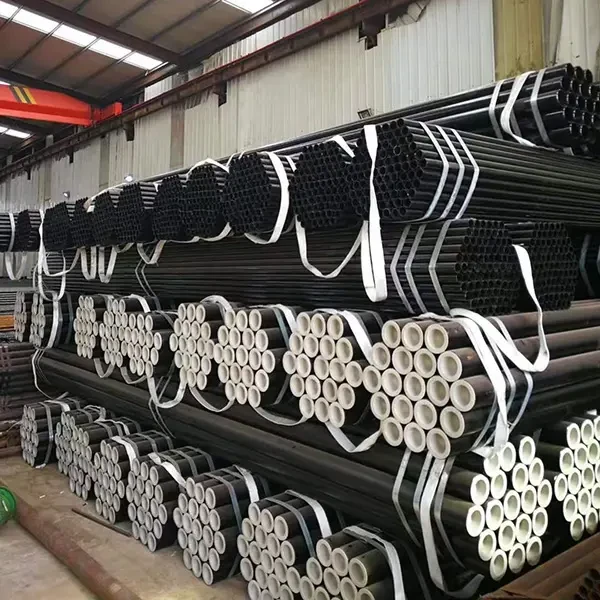
6 inch diameter steel pipe is a fundamental component in numerous industrial applications, primarily serving as a conduit for fluids and gases. Its technical position within the industry chain lies between steel manufacturing (raw material production) and end-user applications such as oil & gas, water distribution, construction, and chemical processing. The core performance characteristics of these pipes center on their ability to withstand internal and external pressures, resist corrosion, and maintain structural integrity over extended periods. A critical pain point in the industry revolves around optimizing pipe wall thickness to balance cost with operational safety and longevity. Selection criteria also strongly consider material grade, manufacturing process, and compliance with relevant industry standards to ensure optimal performance within specific operating environments. The growing demand for infrastructure rehabilitation and new construction projects further drives the need for reliable and durable 6 inch steel pipe solutions.
Material Science & Manufacturing
The primary raw material for 6 inch diameter steel pipe is carbon steel, frequently utilizing grades such as ASTM A53 Grade B, API 5L X42, or X52. These materials comprise predominantly iron with varying percentages of carbon (typically 0.05-0.30%), manganese, silicon, and trace amounts of phosphorus and sulfur. The carbon content dictates hardness and tensile strength, while manganese enhances strength and weldability. Silicon improves strength and deoxidizes the steel during manufacturing. The manufacturing process typically involves seamless or welded construction. Seamless pipes are produced through processes like mandrel rolling or extrusion, resulting in a homogenous structure without weld seams, offering superior pressure resistance. Welded pipes are fabricated by rolling steel plates into cylindrical shapes and then welding the longitudinal seam, often using Electric Resistance Welding (ERW), Submerged Arc Welding (SAW), or High-Frequency Induction Welding (HFIW). SAW generally yields higher strength welds suitable for high-pressure applications. Key parameter control during manufacturing includes precise temperature control during forming and welding, proper alloy composition, and stringent quality checks for dimensional accuracy and weld integrity (Non-Destructive Testing – NDT – including ultrasonic testing, radiographic testing, and magnetic particle inspection). Post-weld heat treatment (PWHT) is often employed to relieve stresses and enhance the mechanical properties of the weld zone. The surface finish is also crucial; pipes are often coated internally and externally to enhance corrosion resistance.
Performance & Engineering
Performance analysis of 6 inch diameter steel pipe necessitates a thorough understanding of force analysis under internal pressure, external loads, and thermal stresses. Hoop stress (circumferential stress) is a critical consideration, calculated using the Barlow's formula (σ = PD/2t, where P is pressure, D is diameter, and t is wall thickness). Sag analysis is essential for long pipeline spans to prevent overstressing and potential buckling. Environmental resistance is paramount, particularly in corrosive environments. Soil composition, moisture levels, and the presence of chlorides or sulfates directly impact corrosion rates. Protective coatings (epoxy, polyurethane, polyethylene) and cathodic protection systems are frequently employed to mitigate corrosion. Compliance requirements are dictated by governing bodies and industry standards, including ASME B31.3 (Process Piping), ASME B31.4 (Pipeline Transportation Systems), and API 5L (Line Pipe). Functional implementation also demands careful consideration of fluid flow characteristics, pressure drop calculations (Darcy-Weisbach equation), and the potential for erosion or cavitation. Proper pipe support design (shoes, anchors, guides) is critical to distribute loads evenly and prevent stress concentrations. Furthermore, understanding the impact of temperature variations on material properties, specifically thermal expansion and contraction, is crucial for maintaining structural integrity.
Technical Specifications
| Parameter | ASTM A53 Grade B | API 5L X42 | API 5L X52 | Unit |
|---|---|---|---|---|
| Outer Diameter | 6.625 | 6.625 | 6.625 | inches |
| Wall Thickness | 0.280 | 0.375 | 0.438 | inches |
| Minimum Yield Strength | 36,000 | 42,000 | 52,000 | psi |
| Minimum Tensile Strength | 58,000 | 65,000 | 75,000 | psi |
| Elongation | 20 | 20 | 18 | % |
| Hydrostatic Test Pressure | 2,400 | 2,880 | 3,000 | psi |
Failure Mode & Maintenance
Failure modes in 6 inch diameter steel pipe are diverse and dependent on operational conditions. Corrosion is a primary concern, manifesting as general corrosion, pitting corrosion, or stress corrosion cracking (SCC). Fatigue cracking can occur due to cyclic loading, particularly in areas of stress concentration (welds, dents). Erosion, especially in pipelines transporting abrasive fluids or solids, wears away the pipe material. External loads, such as soil settlement or third-party damage, can cause bending or crushing failures. Delamination can occur in coated pipes due to poor coating adhesion or under-film corrosion. Oxidation at high temperatures weakens the material. Maintenance solutions include regular inspections using methods like ultrasonic thickness testing (UTT) to monitor wall loss due to corrosion, visual inspections for external damage, and radiographic testing (RT) to detect internal flaws. Internal cleaning (pigging) removes debris and scale buildup. Cathodic protection systems require periodic monitoring and adjustment. Coating repairs are essential to maintain corrosion resistance. For pipelines subject to seismic activity, regular integrity assessments are necessary. Preventive maintenance schedules should be implemented based on risk assessments and operating conditions, adhering to standards like ASME B31.8 (Gas Transmission and Distribution Piping Systems).
Industry FAQ
Q: What is the impact of varying carbon equivalent (CE) on the weldability of 6 inch steel pipe?
A: Higher carbon equivalent values indicate increased hardenability during welding, potentially leading to cracking in the heat-affected zone (HAZ). Careful selection of welding parameters, pre- and post-weld heat treatments, and potentially the use of low-hydrogen electrodes are necessary to mitigate this risk. Lower CE values generally promote better weldability.
Q: How does the pipe’s surface roughness affect internal flow and pressure drop?
A: Increased surface roughness leads to higher frictional resistance, resulting in increased pressure drop and reduced flow capacity. Smooth internal surfaces minimize frictional losses and enhance flow efficiency. Internal coating or polishing can reduce surface roughness.
Q: What is the significance of Charpy V-notch impact testing, and how do low temperatures affect results?
A: Charpy V-notch impact testing measures the toughness of the steel, indicating its resistance to brittle fracture. Lower temperatures generally reduce the impact energy, making the steel more susceptible to brittle failure. Material selection must account for the minimum operating temperature.
Q: What are the considerations when selecting a coating for a pipeline buried in highly corrosive soil?
A: Coating selection depends on soil chemistry, pH levels, and the presence of specific corrosive agents. Epoxy coatings offer good general corrosion protection. Polyurethane coatings provide enhanced abrasion resistance. FBE (Fusion Bonded Epoxy) is a common choice for long-term corrosion protection. Cathodic protection should be considered as a supplementary measure.
Q: How often should hydrostatic testing be performed on in-service pipelines?
A: The frequency of hydrostatic testing is governed by regulatory requirements and risk assessments. Typically, it’s performed after significant alterations, repairs, or if corrosion monitoring indicates substantial wall loss. Regulations like DOT (Department of Transportation) guidelines specify inspection intervals.
Conclusion
6 inch diameter steel pipe remains a critical infrastructure component, demanding rigorous attention to material science, manufacturing processes, and performance engineering. Maintaining structural integrity and mitigating failure modes requires a comprehensive understanding of stress analysis, corrosion mechanisms, and relevant industry standards. The selection of appropriate materials, coatings, and maintenance procedures are paramount to ensure long-term reliability and operational safety.
Future advancements in materials (e.g., high-strength low-alloy steels, corrosion-resistant alloys) and inspection technologies (e.g., advanced NDT methods, robotic inspection systems) will further enhance the performance and longevity of these critical pipelines. Continued adherence to evolving regulatory standards and best practices is essential for responsible pipeline operation and environmental protection.
