Introduction
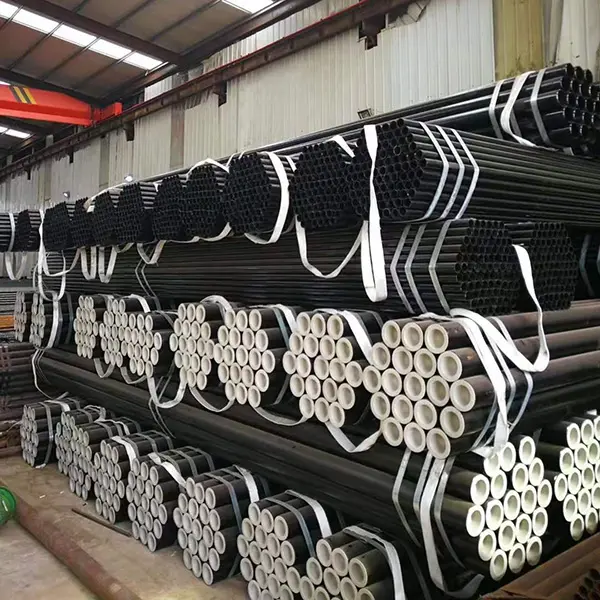
6-inch steel pipe represents a critical component within numerous industrial applications, serving as a conduit for fluids and gases across sectors like oil & gas, water conveyance, and construction. The ‘price’ of this commodity is not simply a monetary figure but a complex interplay of material grade, manufacturing process, coating specifications, and prevailing market conditions. Understanding these factors is paramount for procurement professionals aiming to optimize cost while maintaining required performance and safety standards. This guide offers a detailed examination of 6-inch steel pipe, encompassing material science, manufacturing intricacies, performance characteristics, potential failure modes, and relevant industry standards, offering a comprehensive perspective beyond a mere price quotation.
Material Science & Manufacturing
The foundation of 6-inch steel pipe lies in its material composition, primarily carbon steel, although alloy steels like chromium-molybdenum (Cr-Mo) are frequently employed for enhanced strength and corrosion resistance. Common grades include ASTM A53 Grade B (general purpose), ASTM A106 Grade B (high-temperature service), and API 5L X42/X52/X60 (pipeline applications). The raw material, typically steel billets or blooms, undergoes a series of manufacturing processes. Seamless pipe is produced via rotary piercing or mandrel milling, offering superior pressure resistance and uniform wall thickness. Welded pipe, a more cost-effective option, is manufactured by forming steel plates into cylinders and subsequently welding the seam using Electric Resistance Welding (ERW), Submerged Arc Welding (SAW), or High-Frequency Induction Welding (HFIW). Critical parameters during manufacturing include controlled cooling rates to manage microstructure – influencing yield strength and ductility – precise welding parameters to minimize defects (porosity, inclusions, incomplete fusion), and rigorous non-destructive testing (NDT) methods like ultrasonic testing (UT) and radiographic testing (RT) to ensure integrity. Surface preparation, involving pickling and phosphating, precedes coating application, enhancing corrosion protection. The chemical composition is vital, controlling properties like hardenability and weldability.
Performance & Engineering
The performance of 6-inch steel pipe is dictated by several engineering considerations. Pressure containment capability is paramount, calculated using Barlow’s formula (P = 2St/D, where P=pressure, S=tensile strength, t=wall thickness, D=diameter). Wall thickness is directly proportional to the required pressure rating. Force analysis includes consideration of internal pressure, external loads (soil pressure, weight of contained fluid), and bending moments caused by support spacing and thermal expansion. Environmental resistance is critical; corrosion is a significant concern, especially in aggressive environments. Coating systems (epoxy, polyurethane, polyethylene) and cathodic protection are employed to mitigate corrosion. Compliance requirements depend on the application and region. For instance, pipelines must adhere to DOT (Department of Transportation) regulations in the US and equivalent standards in other countries. Fatigue analysis is crucial for applications involving cyclic loading, assessing the pipe's resistance to crack initiation and propagation under repeated stress. Thermal expansion and contraction must be accounted for in pipeline design, utilizing expansion loops or bellows to prevent stress buildup. Hydrostatic testing, involving pressurizing the pipe to a specified level, verifies its structural integrity prior to service.
Technical Specifications
| Parameter | ASTM A53 Grade B | ASTM A106 Grade B | API 5L X42 | API 5L X60 |
|---|---|---|---|---|
| Outside Diameter (inches) | 6.625 | 6.625 | 6.625 | 6.625 |
| Wall Thickness (inches) | Schedule 40 (0.218) - Schedule 80 (0.280) | Schedule 40 (0.218) - Schedule 80 (0.280) | Various (0.154 - 0.500) | Various (0.154 - 0.500) |
| Yield Strength (psi) | 36,000 | 35,000 | 42,000 | 60,000 |
| Tensile Strength (psi) | 58,000 | 60,000 | 65,000 | 80,000 |
| Elongation (%) | 23 | 22 | 21 | 19 |
| Hydrostatic Test Pressure (psi) | 600 | 600 | Varies based on grade & size | Varies based on grade & size |
Failure Mode & Maintenance
6-inch steel pipe is susceptible to several failure modes. Corrosion, both general and localized (pitting, crevice corrosion), is a primary concern, weakening the pipe wall and leading to leaks or rupture. Fatigue cracking can occur under cyclic loading, particularly at weld seams or areas of stress concentration. Erosion, caused by abrasive particles in the fluid stream, gradually removes material, reducing wall thickness. Stress corrosion cracking (SCC) results from the combined action of tensile stress and a corrosive environment. Defects introduced during manufacturing (porosity, inclusions, laminations) can propagate under stress, leading to catastrophic failure. Maintenance practices include regular inspections (visual, ultrasonic thickness testing, radiographic examination) to detect corrosion or cracks. Coating repair and replacement are essential for maintaining corrosion protection. Cathodic protection systems require monitoring and adjustment to ensure effectiveness. Proper support and anchoring are crucial to prevent overstressing the pipe. Periodic hydrostatic testing can verify the continued integrity of the pipeline. Internal cleaning to remove deposits and debris minimizes erosion and corrosion potential.
Industry FAQ
Q: What is the impact of sulfur content on the weldability of 6-inch steel pipe?
A: Higher sulfur content in steel can reduce its weldability, leading to the formation of iron sulfide in the weld zone. This can cause hot cracking during cooling. Lower sulfur content grades, or the addition of manganese to counteract the sulfur's effect, are preferred for welding applications. Careful control of welding parameters and pre/post-weld heat treatment are also crucial.
Q: How does the manufacturing process (seamless vs. welded) affect the price and performance of 6-inch steel pipe?
A: Seamless pipe is generally more expensive to manufacture due to the complex process involved. However, it offers superior strength and pressure resistance, making it suitable for critical applications. Welded pipe is more cost-effective but requires rigorous quality control of the weld seam to ensure comparable performance. The choice depends on the specific application requirements and budget constraints.
Q: What are the critical considerations when selecting a coating for 6-inch steel pipe exposed to seawater?
A: Seawater is a highly corrosive environment. Coatings must provide excellent barrier protection against chloride ions and have good adhesion to the steel surface. Epoxy coatings, polyurethane coatings, and fusion-bonded epoxy (FBE) are commonly used. Cathodic protection is often employed in conjunction with coatings to provide additional corrosion protection.
Q: What is the significance of the Charpy V-notch impact test in evaluating the toughness of 6-inch steel pipe, particularly at low temperatures?
A: The Charpy V-notch impact test measures the energy absorbed by a notched steel specimen when subjected to a single blow. This assesses the steel's toughness – its ability to resist fracture under impact loading, especially at low temperatures. For pipelines operating in cold climates, adequate impact toughness is crucial to prevent brittle failure.
Q: How does the yield-to-tensile strength ratio influence the performance and safety of 6-inch steel pipe under pressure?
A: A higher yield-to-tensile strength ratio indicates a steel with greater ductility and a lower tendency for brittle fracture. This is beneficial for pressure applications, as it allows the pipe to undergo some plastic deformation before reaching its ultimate tensile strength, providing a margin of safety. Lower ratios may indicate a higher risk of sudden, catastrophic failure.
Conclusion
The ‘price’ of 6-inch steel pipe is a superficial indicator of value. A holistic assessment requires a thorough understanding of the underlying material science, manufacturing processes, and performance characteristics. Selecting the appropriate grade, manufacturing method, and coating system, alongside adherence to relevant industry standards, is crucial for ensuring the long-term reliability and safety of pipeline systems and other applications.
Ongoing maintenance, including regular inspections and corrosion control measures, further contributes to the lifecycle cost-effectiveness of this essential infrastructure component. Future advancements in materials science and coating technology will continue to refine the performance and durability of 6-inch steel pipe, further optimizing its role in critical industrial applications.
