
Introduction
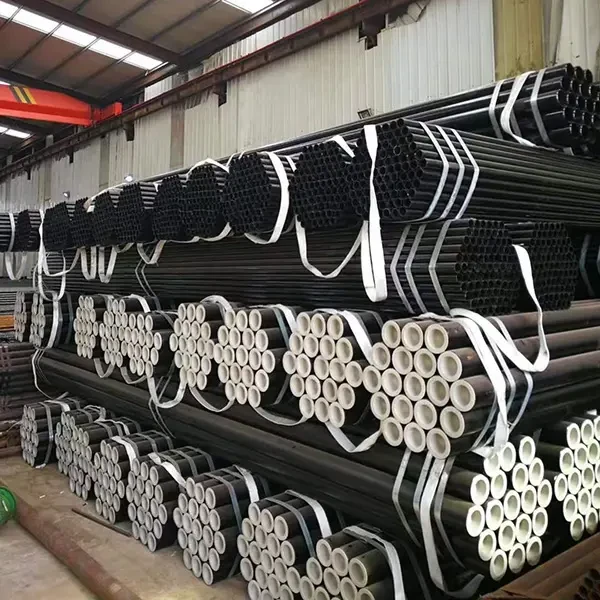
Seamless steel pipe with a nominal pipe size (NPS) of 6 inches represents a critical component in numerous industrial applications, serving as a conduit for the transportation of fluids and gases across diverse sectors, including oil and gas, petrochemicals, water conveyance, and structural engineering. Its technical position within the industry chain lies between raw steel production (typically carbon or alloy steel) and the final application, requiring rigorous manufacturing processes and quality control. Core performance characteristics of NPS 6 steel pipe encompass its pressure-bearing capacity, resistance to corrosion and erosion, dimensional accuracy, and weldability, all of which are dictated by the specific steel grade and manufacturing standards employed. Understanding these factors is paramount for ensuring the long-term integrity and safe operation of pipeline systems. The industry frequently faces challenges related to maintaining consistent wall thickness, mitigating corrosion under insulation (CUI), and adhering to increasingly stringent safety regulations. This guide provides a comprehensive technical overview of NPS 6 steel pipe, covering material science, manufacturing, performance, failure modes, and maintenance best practices.
Material Science & Manufacturing
NPS 6 steel pipe is commonly manufactured from carbon steel (ASTM A53 Grade B, API 5L X42, X52) and alloy steel (ASTM A335 P11, P22, P91) depending on the intended application. Carbon steel offers cost-effectiveness and good weldability, while alloy steels provide enhanced strength, corrosion resistance, and high-temperature performance. Raw material properties are crucial: yield strength, tensile strength, elongation, impact toughness (Charpy V-notch), and chemical composition (carbon equivalent – CE) all influence the final pipe characteristics. Manufacturing processes predominantly involve seamless and welded fabrication. Seamless pipe is produced through rotary piercing or extrusion, offering superior strength and pressure resistance due to the absence of a weld seam. Welded pipe, manufactured via Electric Resistance Welding (ERW) or submerged arc welding (SAW), is generally more cost-effective. Key parameter control during manufacturing includes precise temperature regulation during heating and cooling cycles to avoid phase transformations and maintain desired mechanical properties. Wall thickness is monitored continuously via ultrasonic testing. Hydrostatic testing is performed to verify the pipe’s ability to withstand internal pressure. Surface finishing, including pickling and coating, is critical for corrosion prevention. The heat-affected zone (HAZ) in welded pipes requires careful consideration, as it can exhibit reduced ductility and increased susceptibility to corrosion. Post-weld heat treatment (PWHT) is often employed to restore the HAZ’s mechanical properties and mitigate stress corrosion cracking.
Performance & Engineering
The performance of NPS 6 steel pipe is fundamentally governed by its ability to withstand internal and external pressures, axial loads, bending moments, and torsional stresses. Force analysis, often employing Finite Element Analysis (FEA) software, is critical for pipeline design. Considerations include hoop stress, longitudinal stress, and stress concentration at fittings and weld joints. Environmental resistance is a key performance parameter; factors like temperature, humidity, and exposure to corrosive media (acids, chlorides, hydrogen sulfide) significantly impact the pipe’s service life. Compliance requirements, dictated by standards like ASME B31.3 (Process Piping), ASME B31.4 (Pipeline Transportation Systems), and API 5L, stipulate minimum material properties, welding procedures, inspection criteria, and safety factors. Functional implementation details depend on the application; for example, in high-pressure steam lines, creep resistance and high-temperature strength are paramount. Cathodic protection (CP) and protective coatings are widely used to mitigate external corrosion. Internal coatings, such as epoxy resins, are applied to reduce friction and prevent internal corrosion. The selection of appropriate gaskets and sealing materials is essential to prevent leakage at connections. Cyclic loading, such as that encountered in offshore pipelines due to wave action, requires fatigue analysis to ensure long-term structural integrity. The pipe's thermal expansion coefficient is also crucial for designing expansion loops and mitigating thermal stress.
Technical Specifications
| Parameter | ASTM A53 Grade B | API 5L X52 | ASTM A335 P11 | Units |
|---|---|---|---|---|
| Nominal Pipe Size | 6 inch | 6 inch | 6 inch | inch |
| Minimum Yield Strength | 36 | 52 | 20 | ksi |
| Minimum Tensile Strength | 58 | 65 | 75 | ksi |
| Elongation (2 inch gauge length) | 22 | 20 | 18 | % |
| Charpy V-Notch Impact Toughness (at -20°F) | 20 ft-lbs | 20 ft-lbs | 20 ft-lbs | ft-lbs |
| Maximum Carbon Equivalent (CE) | 0.31 | 0.31 | 0.35 | - |
Failure Mode & Maintenance
Common failure modes in NPS 6 steel pipe include corrosion (uniform, pitting, galvanic, crevice, erosion), stress corrosion cracking (SCC), fatigue cracking (due to cyclic loading), and weld defects (porosity, inclusions, lack of fusion). Corrosion under insulation (CUI) is a particularly prevalent issue in insulated pipelines. Fatigue cracking often initiates at weld toes or geometric discontinuities. Failure analysis typically involves visual inspection, non-destructive testing (NDT) – radiography, ultrasonic testing, liquid penetrant testing, magnetic particle inspection – and metallographic examination to determine the root cause of failure. Maintenance strategies include regular inspections (visual, NDT), protective coating maintenance (repairing damaged coatings, applying new coatings), cathodic protection system monitoring and maintenance, and internal cleaning to remove debris and scale. Pigging operations are used to clean pipelines and inspect the internal surface. Periodic hydrostatic testing verifies the pipe’s structural integrity. For alloy steel pipes operating at high temperatures, creep damage assessment is crucial. Repair welding requires qualified welders and adherence to established welding procedures. Regular monitoring of wall thickness using ultrasonic thickness gauging (UTG) is essential for detecting corrosion and erosion. Proper drainage and ventilation around insulated pipelines are crucial to prevent CUI. Replacement of severely corroded or damaged sections is often necessary to maintain pipeline integrity.
Industry FAQ
Q: What is the impact of sulfur content on the weldability of NPS 6 steel pipe?
A: Higher sulfur content increases the likelihood of hydrogen-induced cracking (HIC) during welding. Sulfur forms iron sulfide inclusions, which act as stress concentrators and reduce ductility. Low-sulfur steels are preferred for critical weldments. Controlled cooling rates and the use of appropriate welding consumables are essential to mitigate HIC risk.
Q: How does the carbon equivalent (CE) affect the preheating requirements for welding?
A: Higher CE values indicate a greater susceptibility to cold cracking. Higher CE materials require more extensive preheating to reduce the cooling rate and minimize the formation of martensite in the HAZ. The preheat temperature is determined based on the CE value, material thickness, and ambient temperature.
Q: What are the key considerations for selecting a coating system for external corrosion protection in a buried pipeline application?
A: Soil resistivity, pH, moisture content, and the presence of chlorides and sulfates are critical factors. Fusion-bonded epoxy (FBE) coatings, polyethylene (PE) coatings, and polypropylene (PP) coatings are commonly used. The coating must be mechanically robust and resistant to the specific environmental conditions.
Q: What is the significance of NDT methods like phased array ultrasonic testing (PAUT) in pipeline inspection?
A: PAUT provides high-resolution imaging of weld defects, corrosion, and erosion. It allows for volumetric inspection and accurate sizing of flaws, providing a more comprehensive assessment of pipeline integrity than conventional UT methods. It's particularly useful for detecting cracks and corrosion in complex geometries.
Q: How can cathodic protection be optimized to prevent corrosion in NPS 6 steel pipelines?
A: Proper design of the CP system (sacrificial anode or impressed current), regular monitoring of CP potentials, and soil resistivity surveys are crucial. Ensuring adequate current distribution and addressing any shielding effects are essential for effective corrosion prevention. Interference testing should be conducted to avoid stray current corrosion.
Conclusion
NPS 6 steel pipe remains a fundamental component in countless industrial infrastructures. Its performance and longevity are intrinsically linked to careful material selection, precise manufacturing processes, rigorous quality control, and proactive maintenance strategies. Understanding the nuanced interplay between material science, engineering principles, and industry-specific standards is paramount for ensuring safe and reliable operation. Addressing failure modes like corrosion, cracking, and weld defects requires a comprehensive approach, encompassing advanced NDT techniques and appropriate preventative measures.
Continued advancements in materials science, coating technologies, and inspection methodologies will further enhance the durability and lifespan of NPS 6 steel pipelines. Future trends include the development of high-strength, low-alloy (HSLA) steels with improved corrosion resistance, the adoption of robotic inspection systems, and the integration of digital technologies for real-time monitoring and predictive maintenance. The enduring relevance of NPS 6 steel pipe underscores the importance of a technically informed and proactive approach to pipeline management.
