
Introduction
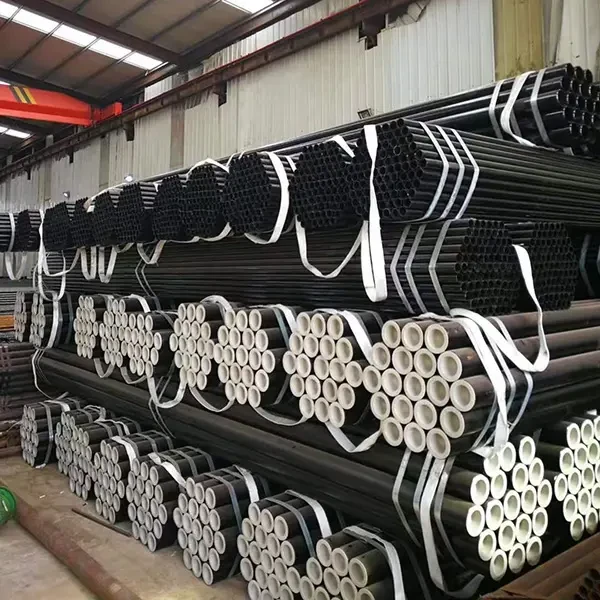
63mm stainless steel pipe represents a standardized dimension within the broader family of stainless steel piping products. Its primary function is the conveyance of fluids and gases across a wide array of industrial applications, including chemical processing, food and beverage production, pharmaceutical manufacturing, water treatment, and structural engineering. The selection of 63mm diameter is based on optimizing flow rates, minimizing pressure drop, and ensuring compatibility with standard fitting sizes. Stainless steel, typically an austenitic grade such as 304 or 316, is chosen for its corrosion resistance, high tensile strength, and ability to withstand elevated temperatures and pressures. This guide provides an in-depth examination of the material science, manufacturing processes, performance characteristics, potential failure modes, and maintenance protocols associated with 63mm stainless steel pipe, aligning with relevant international standards.
Material Science & Manufacturing
The core material for 63mm stainless steel pipe is typically AISI 304 or 316 stainless steel. 304 stainless steel comprises approximately 18-20% chromium, 8-10.5% nickel, and less than 0.08% carbon. The chromium content is crucial for the formation of a passive chromium oxide layer on the surface, providing excellent corrosion resistance. 316 stainless steel adds 2-3% molybdenum, enhancing resistance to chloride corrosion, making it suitable for marine environments and chemical processing applications involving halides. Raw materials are sourced as steel billets, which undergo a hot rolling process to create seamless or welded pipes. Seamless pipes are manufactured via extrusion or piercing of the billet, offering superior pressure rating and resistance to failure. Welded pipes are produced by forming steel strips into a cylindrical shape and then welding the seam – typically using Tungsten Inert Gas (TIG) or Plasma Arc Welding (PAW) – followed by heat treatment to ensure weld integrity. Key manufacturing parameters include controlled cooling rates post-welding to prevent sensitization (chromium carbide precipitation), precise dimensional control during rolling and drawing to achieve the 63mm outer diameter and specified wall thickness, and rigorous non-destructive testing (NDT) methods such as radiographic testing, ultrasonic testing, and hydrostatic testing to detect defects. Surface finishing, including pickling and passivation, is performed to remove scale and enhance corrosion resistance. The austenitic structure achieved through controlled composition and heat treatment dictates the pipe’s ductility and weldability.
Performance & Engineering
The performance of 63mm stainless steel pipe is primarily governed by its mechanical strength, corrosion resistance, and ability to withstand thermal stresses. Force analysis, particularly pressure containment, is critical. The hoop stress (σh) in a cylindrical pipe under internal pressure (P) is calculated as σh = (P D) / (2 t), where D is the outer diameter and t is the wall thickness. Design engineers utilize this equation, incorporating safety factors, to determine the appropriate wall thickness for specific operating pressures and temperatures. Corrosion resistance is dependent on the grade of stainless steel and the operating environment. Pitting corrosion, crevice corrosion, and stress corrosion cracking are potential concerns, particularly in chloride-containing environments. Passivation treatment enhances the protective chromium oxide layer. Thermal expansion coefficients are also important considerations in piping system design, requiring the incorporation of expansion loops or flexible connectors to accommodate temperature fluctuations. Compliance requirements vary depending on the application. For potable water systems, pipes must comply with NSF/ANSI 61 standards for lead content and extractables. For pharmaceutical applications, adherence to ASME BPE (Bioprocessing Equipment) standards is essential to ensure sanitary design and surface finish. The pipe’s ability to transmit hydraulic energy is also a key engineering factor, influencing pump selection and system efficiency.
Technical Specifications
| Parameter | AISI 304 | AISI 316 | Unit |
|---|---|---|---|
| Outer Diameter | 63 | 63 | mm |
| Typical Wall Thickness | 2-6 | 2-6 | mm |
| Yield Strength (0.2% Offset) | 205 | 210 | MPa |
| Tensile Strength | 517 | 524 | MPa |
| Elongation (20mm Gauge) | 40 | 45 | % |
| Corrosion Rate (in 3.5% NaCl) | <0.1 | <0.1 | mm/year |
Failure Mode & Maintenance
63mm stainless steel pipe can experience several failure modes. Fatigue cracking can occur under cyclic loading, particularly at weld joints or areas of stress concentration. Pitting corrosion, initiated by localized defects in the passive layer, can lead to through-wall penetration. Crevice corrosion develops in shielded areas, such as under gaskets or in stagnant fluids. Stress corrosion cracking (SCC) can occur in the presence of chlorides and tensile stress. Galvanic corrosion can arise when stainless steel is coupled with dissimilar metals in an electrolyte. Oxidation at high temperatures can also degrade the material over time. Maintenance protocols include regular visual inspections for signs of corrosion or cracking. Non-destructive testing (NDT) methods, such as ultrasonic testing and radiographic testing, can detect subsurface defects. Hydrostatic testing verifies the integrity of the piping system. Preventive maintenance should include proper cleaning to remove corrosive contaminants and the application of protective coatings in harsh environments. Weld joints should be periodically inspected and re-certified. Proper grounding and bonding are essential to prevent galvanic corrosion. For systems handling critical fluids, a corrosion monitoring program should be implemented.
Industry FAQ
Q: What is the primary difference between 304 and 316 stainless steel for piping applications?
A: The key difference lies in the molybdenum content. 316 stainless steel contains 2-3% molybdenum, which significantly enhances its resistance to chloride corrosion. This makes 316 preferable for environments with high chloride concentrations, such as marine applications or chemical processing involving chlorides, whereas 304 is generally suitable for less corrosive environments.
Q: What wall thickness is recommended for a 63mm stainless steel pipe operating at 10 bar pressure?
A: Wall thickness calculations depend on the material grade (304 or 316), operating temperature, and desired safety factor. As a general guideline, for 304 stainless steel at ambient temperature and a safety factor of 3, a wall thickness of approximately 2.5-3mm would be suitable for 10 bar. A detailed stress analysis is always recommended to confirm suitability.
Q: How can I prevent pitting corrosion in a 63mm stainless steel pipe system?
A: Preventing pitting corrosion requires maintaining a passive chromium oxide layer. This involves avoiding stagnant fluids, removing chloride contaminants, using corrosion inhibitors, and ensuring proper passivation after welding or fabrication. Electropolishing can also enhance corrosion resistance.
Q: What are the recommended welding procedures for 63mm stainless steel pipe?
A: TIG (GTAW) or Plasma Arc Welding (PAW) are the preferred welding methods for stainless steel pipe due to their ability to provide high-quality, precise welds. Use appropriate filler metals, maintain a clean welding environment, and employ post-weld heat treatment to prevent sensitization and restore corrosion resistance.
Q: What NDT methods are commonly used to inspect 63mm stainless steel pipe welds?
A: Radiographic testing (RT) is used to detect volumetric defects such as porosity and inclusions. Ultrasonic testing (UT) can detect both surface and subsurface defects. Liquid penetrant testing (PT) identifies surface cracks. Hydrostatic testing verifies the overall integrity of the welded joint and pipe.
Conclusion
63mm stainless steel pipe is a versatile and reliable fluid conveyance solution across numerous industries. Its selection hinges on a thorough understanding of material properties, manufacturing processes, and potential failure mechanisms. The appropriate grade of stainless steel (304 or 316) must be chosen based on the specific operating environment and fluid being transported. Adherence to established engineering principles, rigorous quality control during manufacturing, and consistent implementation of preventive maintenance protocols are paramount to ensuring long-term performance and system integrity.
Future advancements in stainless steel alloy development, coupled with improvements in non-destructive testing techniques, will further enhance the reliability and lifespan of 63mm stainless steel pipe systems. Furthermore, the integration of digital monitoring systems for corrosion detection and predictive maintenance will allow for proactive intervention and optimization of operational efficiency.
