
Introduction
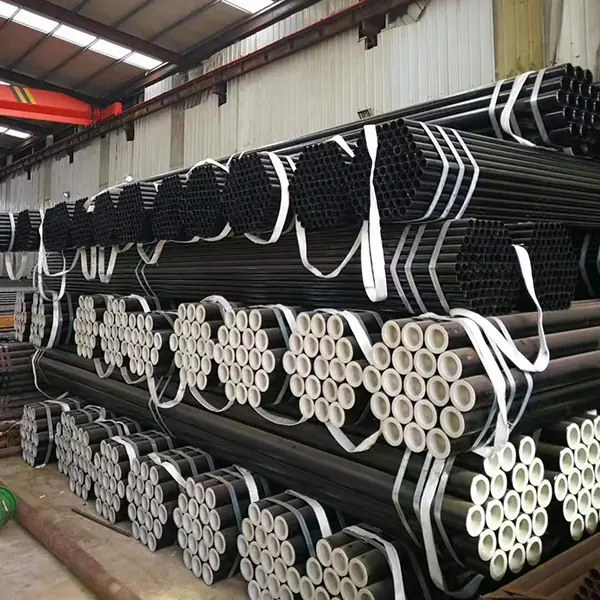
7/8 inch Outer Diameter (OD) steel tubing represents a foundational component across numerous industrial sectors, including automotive, construction, agricultural equipment, and fluid power systems. This specification denotes a nominal outer diameter of 0.875 inches, with wall thickness varying based on application requirements. Its widespread adoption stems from a combination of high strength-to-weight ratio, weldability, machinability, and cost-effectiveness. The tubing is typically manufactured from carbon steel grades like 1010, 1020, or alloy steels such as 4130, each offering specific mechanical properties tailored to the intended application. Understanding the nuances of its material composition, manufacturing processes, and performance characteristics is critical for ensuring long-term reliability and safety. This guide provides a comprehensive technical overview, addressing material science, manufacturing, performance, failure modes, and industry standards related to 7/8” OD steel tubing.
Material Science & Manufacturing
The primary raw material for 7/8” OD steel tubing is carbon steel, frequently AISI 1018, 1026 or similar grades. These steels consist predominantly of iron, with carbon content ranging between 0.15% and 0.30%. Manganese, silicon, and trace amounts of phosphorus and sulfur are also present, impacting mechanical properties such as tensile strength, ductility, and weldability. Alloy steels, like 4130 (chromium-molybdenum), are selected when increased strength, toughness, and corrosion resistance are required. Chromium addition (typically 0.8-1.1%) contributes to hardenability and corrosion protection, while molybdenum (0.15-0.25%) refines grain structure and enhances high-temperature strength.
Manufacturing typically involves either seamless or welded processes. Seamless tubing is produced through processes like mandrel piercing or extrusion, resulting in a homogeneous structure without weld seams. Welded tubing is manufactured by forming steel strips into a cylindrical shape and then welding the seam, commonly using Electric Resistance Welding (ERW) or High-Frequency Induction Welding (HFI). ERW utilizes electrical resistance to generate heat for fusion, while HFI employs electromagnetic induction. Post-welding processes include heat treatment (normalizing, annealing) to relieve stresses, improve ductility, and refine grain structure. Critical parameters monitored during manufacturing include temperature control during forming and welding, cooling rates post-welding to minimize distortion, and dimensional tolerances achieved through drawing and sizing operations. Surface finish is also meticulously controlled to ensure adherence to specifications for coating or subsequent machining. Wall thickness is a crucial parameter, directly influencing the tubing’s burst pressure and load-bearing capacity. Precise control over the reduction ratio during drawing is necessary to achieve the desired wall thickness and mechanical properties.
Performance & Engineering
The performance of 7/8” OD steel tubing is dictated by its mechanical properties, including yield strength, tensile strength, elongation, and impact toughness. Yield strength, the stress at which permanent deformation begins, is critical for resisting buckling under compressive loads. Tensile strength defines the maximum stress the tubing can withstand before fracture. Elongation indicates ductility – the ability to deform plastically before failure. Impact toughness assesses the tubing’s resistance to brittle fracture under sudden loads, particularly at low temperatures. These properties are heavily influenced by the steel grade, heat treatment, and manufacturing process.
Engineering applications require careful consideration of stress analysis, particularly under pressure loading, bending, and torsional forces. Thin-walled tubing is susceptible to buckling, necessitating rigorous calculations to determine critical buckling loads. Fatigue analysis is crucial for applications involving cyclic loading, identifying potential failure points and establishing safe operating limits. Environmental factors, such as temperature and corrosive media, also influence performance. Corrosion resistance can be enhanced through surface treatments like galvanizing, painting, or the use of corrosion-resistant alloy steels. Furthermore, weld integrity is paramount; non-destructive testing (NDT) methods like ultrasonic testing (UT) and radiographic testing (RT) are employed to detect defects and ensure weld quality. Consideration must also be given to the tubing’s compatibility with fluids conveyed within it, ensuring no adverse reactions or material degradation occurs.
Technical Specifications
| Parameter | AISI 1018 (Typical) | AISI 1026 (Typical) | AISI 4130 (Typical) | ASTM A53 Grade B (Typical) |
|---|---|---|---|---|
| Outer Diameter (in) | 0.875 | 0.875 | 0.875 | 0.875 |
| Wall Thickness (in) | 0.065 - 0.188 | 0.065 - 0.250 | 0.083 - 0.218 | 0.083 - 0.250 |
| Yield Strength (psi) | 36,000 | 58,000 | 70,000 | 36,000 |
| Tensile Strength (psi) | 58,000 | 75,000 | 90,000 | 60,000 |
| Elongation (%) | 25 | 20 | 18 | 22 |
| Corrosion Resistance | Low | Low | Moderate | Low |
Failure Mode & Maintenance
Common failure modes in 7/8” OD steel tubing include corrosion, fatigue cracking, denting, and weld defects. Corrosion, particularly in humid or corrosive environments, leads to material degradation and loss of strength. Fatigue cracking initiates at stress concentration points (e.g., weld seams, dents) and propagates under cyclic loading. Denting, caused by impact or excessive external pressure, reduces the tubing’s load-carrying capacity and can initiate cracks. Weld defects, such as porosity or incomplete fusion, weaken the weld seam and create potential failure points. Oxidation at high temperatures can also lead to material thinning and eventual failure.
Preventive maintenance is crucial for extending the service life of steel tubing. Regular visual inspections should be conducted to identify signs of corrosion, dents, or cracks. Protective coatings, such as paint or galvanizing, can mitigate corrosion. For applications involving cyclic loading, monitoring stress levels and implementing periodic inspections for fatigue cracks is essential. Proper handling and storage procedures can prevent denting. If cracks are detected, repair welding may be possible, but must be performed by qualified personnel following established welding procedures and accompanied by thorough NDT. Regular cleaning and lubrication (where applicable) can also help prevent corrosion and wear. Periodic hydrostatic testing can verify the tubing’s integrity and detect leaks or weaknesses. Proper documentation of inspection and maintenance activities is critical for tracking performance and identifying potential issues.
Industry FAQ
Q: What is the difference between seamless and welded 7/8” OD steel tubing, and when would you choose one over the other?
A: Seamless tubing is manufactured without a weld seam, offering superior strength and consistency, particularly under high pressure or stress. It’s preferred for critical applications like hydraulic cylinders and high-pressure pipelines. Welded tubing is generally more cost-effective and readily available, suitable for less demanding applications such as structural supports or low-pressure fluid transfer. The weld seam introduces a potential weakness, so welded tubing requires more stringent quality control and NDT.
Q: How does carbon content affect the weldability of 7/8” OD steel tubing?
A: Higher carbon content generally reduces weldability. Increased carbon leads to a harder, more brittle microstructure, making it more susceptible to cracking during welding. Lower carbon steels like 1018 are easier to weld than higher carbon steels like 1045. Alloy steels, even with lower carbon content, can also present welding challenges requiring specific welding procedures and pre/post-weld heat treatment.
Q: What surface treatments are commonly used to enhance the corrosion resistance of 7/8” OD steel tubing?
A: Common surface treatments include galvanizing (zinc coating), painting, powder coating, and chrome plating. Galvanizing provides sacrificial protection, corroding preferentially to the steel. Painting and powder coating create a barrier between the steel and the environment. Chrome plating offers excellent corrosion and wear resistance, but can be more expensive.
Q: What Non-Destructive Testing (NDT) methods are typically used to inspect 7/8” OD steel tubing?
A: Common NDT methods include Visual Testing (VT), Ultrasonic Testing (UT), Radiographic Testing (RT), and Magnetic Particle Inspection (MPI). UT detects internal flaws using sound waves. RT uses X-rays to reveal internal defects. MPI detects surface and near-surface cracks using magnetic fields. VT is a preliminary inspection for surface defects.
Q: What is the impact of wall thickness on the burst pressure of 7/8” OD steel tubing?
A: Burst pressure is directly proportional to wall thickness. A thicker wall provides greater resistance to internal pressure, increasing the burst pressure. The relationship is not linear; it’s governed by Barlow’s formula: P = (2 S t) / D, where P is the burst pressure, S is the tensile strength, t is the wall thickness, and D is the outer diameter.
Conclusion
7/8” OD steel tubing remains a versatile and cost-effective material for a wide spectrum of industrial applications. Its performance is intrinsically linked to the selection of appropriate steel grades, precise manufacturing control, and diligent maintenance practices. A thorough understanding of material science principles, coupled with rigorous engineering analysis, is vital for ensuring the structural integrity and longevity of tubing systems. Proper consideration of failure modes, coupled with regular inspections and preventative maintenance, minimizes the risk of unexpected failures and enhances operational safety.
Future advancements in steel alloy development and manufacturing techniques will likely focus on enhancing corrosion resistance, improving weldability, and increasing strength-to-weight ratios. The adoption of advanced NDT methods and predictive maintenance strategies will also contribute to optimized tubing performance and reduced life-cycle costs. Continuous innovation in surface treatments and protective coatings will further extend the service life of steel tubing in increasingly demanding environments.
